October 1, 2013
Are you tired all the time? You have plenty of company. About 10 million doctor visits each year are attributed to fatigue. And all of those bottomless cups of strong coffee won’t help. Too much caffeine actually saps energy and makes fatigue worse.
 The only way to beat fatigue is to create the conditions that bring more energy into your days and remove the obstacles that drain it away.
Most people know that exercise is energizing. It increases blood flow and circulates oxygen to the brain and other tissues. It also increases brain-derived neurotrophic factor (BDNF), a protein that improves alertness and focus, along with physical energy.
Other energy-boosters that really work...
1. Green drinks. We are always being told to eat more greens, but drinking them can be a much better choice when your energy flags during the day.
What to do: Take advantage of the liquid greens in health-food stores. Juices made from wheatgrass, barley and other vegetable extracts are alkalizing. They increase pH and shift the body’s balance to a less acid state. Too much acidity—a consequence of all the meat and grains in the American diet—impairs energy as well as health.
The grasses used in green drinks contain chlorophyll and related substances that remove energy-depleting toxins from the body. The drinks typically have little or no added sugar, so they won’t cause the spike and drop in blood sugar that you get from sweetened soft drinks or fruit juices.
Green drinks are not delicious. They have a slightly grassy taste that takes some getting used to. My favorite is Barlean’s Greens, which is readily available online and in health-food stores and tastes surprisingly good.
2. Whole eggs. You need plenty of protein to satisfy your appetite, keep your energy humming and prevent the postmeal slump that occurs when you eat too much.
For years, people thought that egg-white omelets were the perfect high-protein meal. Not true. Whole eggs are better because the yolks are high in choline, a B vitamin that reduces inflammation—and the fatigue that accompanies it.
Don’t worry about the saturated fat in egg yolks. It’s not the enemy that people once thought. When researchers from Harvard and other institutions analyzed 21 previous studies that looked at the relationship between saturated fat and heart disease, they found that saturated fat did not cause an increase in heart disease or stroke.
What to do: Include a source of protein with every meal. It could be eggs, nuts, fish, grass-fed meat, beans or tofu.
3. Coenzyme Q10 (CoQ10). This is probably the most important energy-producing nutrient that most people don’t get enough of.
CoQ10 increases the activity of mitochondria, the energy-producing structures within cells. The body naturally produces CoQ10, but it’s a complicated process that involves at least seven vitamins. Since many people don’t get enough of these nutrients—including vitamin C and a variety of B vitamins—levels of CoQ10 tend to be too low to boost energy.
What to do: Supplement with 100 milligrams (mg) of CoQ10 daily if you’re generally healthy. If you have been diagnosed with a heart condition or are taking a cholesterol-lowering statin, increase the daily dose to 200 mg. Statins deplete CoQ10 from the body. It’s particularly important for heart patients to get enough because the heart requires CoQ10 to beat efficiently.
4. High-glycemic foods occasionally. You probably have heard that the best carbohydrates for long-term energy have a low-glycemic load. Fiber-filled foods such as lentils, peanuts, carrots and chickpeas are absorbed slowly into the intestine. They keep blood sugar and insulin at steady levels—not too low or too high.
There’s one possible exception. If you’re trying to lose weight and still keep your energy high, you might want to have occasional servings of high-glycemic foods. There’s some evidence that people who mainly eat low-glycemic carbs but allow themselves a high-glycemic meal every four to seven days help the body to overcome its tendency to burn fewer calories during a weight-loss diet.
My advice: Suppose that you eat mainly low-glycemic carbs but still want to lose a few pounds. Once or twice a week, have one meal that includes faster-burning carbohydrates, such as pasta, white potatoes or white rice. Scientists speculate that the jump in insulin overcomes the slowing of your metabolism that comes along with dieting.
5. Replenish your bacteria. You might not think that digestion has much to do with energy, but the action inside your intestines greatly affects how you feel.
A study published in Journal of Psychiatric Research found that probiotics (live, beneficial bacteria) may have antidepressant effects. The same organisms improve immunity and make it easier to fight off the fatiguing effects of viruses and bacteria.
My advice: Eat one or more daily servings of live-culture yogurt. Look for the letters LAC (Live and Active Cultures) on the label. It means that the yogurt contains at least 100 million live organisms per gram.
6. Lights out. Nothing saps your energy more than a poor night’s sleep. And what people don’t realize is that even very dim lights—such as the small LED indicators on computers, cell phones and bedside clocks—can make it difficult to get a decent night’s rest. Sleep scientists have found that even trace amounts of ambient light inhibit the production of melatonin, a sleep-promoting hormone.
My advice: Minimize the amount of light. Turn your digital clock so that it faces away from the bed, for example, or drape something over the computer to cover up the “on” light.
If you don’t get enough sleep, take a nap. Napping improves memory, lowers stress and improves all-day energy. Studies done by NASA have found that a short 26-minute nap can increase performance by 34% and alertness by 54%. Limit your naps to 26 minutes or less, preferably late in the morning or early in the afternoon.
7. Breathe deeply and well. You would think that nothing is more natural than breathing, but many people don’t breathe the way that nature intended.
Reason: We live in a very fast-paced world…and we spend a lot of time hunched over desks, staring at computer screens. Both stress and poor posture tighten muscles in the upper body and make it harder for the lungs to expand. We have become shallow breathers, which decreases oxygen and causes mental and physical fatigue.
My advice: Every few hours, take a breathing break. While sitting or lying down, place one hand on your abdomen and one hand on your chest. Slowly breathe in through your nose, then exhale just as deeply through your mouth. Make sure that the hand on your belly rises and falls while the hand on your chest barely moves.
During the day, if you notice that you’re breathing shallowly or more quickly than usual, remind yourself to relax and breathe in more fully.
Source: Jonny Bowden, PhD, CNS, a nutritionist and weight-loss expert based in Los Angeles. He is board-certified by the American College of Nutrition and is a member of the American Society of Nutrition. He is author of The Most Effective Ways on Earth to Boost Your Energy and coauthor with Stephen Sinatra, MD, of The Great Cholesterol Myth (both by Fair Winds). JonnyBowden.com
 The only way to beat fatigue is to create the conditions that bring more energy into your days and remove the obstacles that drain it away.
Most people know that exercise is energizing. It increases blood flow and circulates oxygen to the brain and other tissues. It also increases brain-derived neurotrophic factor (BDNF), a protein that improves alertness and focus, along with physical energy.
Other energy-boosters that really work...
1. Green drinks. We are always being told to eat more greens, but drinking them can be a much better choice when your energy flags during the day.
What to do: Take advantage of the liquid greens in health-food stores. Juices made from wheatgrass, barley and other vegetable extracts are alkalizing. They increase pH and shift the body’s balance to a less acid state. Too much acidity—a consequence of all the meat and grains in the American diet—impairs energy as well as health.
The grasses used in green drinks contain chlorophyll and related substances that remove energy-depleting toxins from the body. The drinks typically have little or no added sugar, so they won’t cause the spike and drop in blood sugar that you get from sweetened soft drinks or fruit juices.
Green drinks are not delicious. They have a slightly grassy taste that takes some getting used to. My favorite is Barlean’s Greens, which is readily available online and in health-food stores and tastes surprisingly good.
2. Whole eggs. You need plenty of protein to satisfy your appetite, keep your energy humming and prevent the postmeal slump that occurs when you eat too much.
For years, people thought that egg-white omelets were the perfect high-protein meal. Not true. Whole eggs are better because the yolks are high in choline, a B vitamin that reduces inflammation—and the fatigue that accompanies it.
Don’t worry about the saturated fat in egg yolks. It’s not the enemy that people once thought. When researchers from Harvard and other institutions analyzed 21 previous studies that looked at the relationship between saturated fat and heart disease, they found that saturated fat did not cause an increase in heart disease or stroke.
What to do: Include a source of protein with every meal. It could be eggs, nuts, fish, grass-fed meat, beans or tofu.
3. Coenzyme Q10 (CoQ10). This is probably the most important energy-producing nutrient that most people don’t get enough of.
CoQ10 increases the activity of mitochondria, the energy-producing structures within cells. The body naturally produces CoQ10, but it’s a complicated process that involves at least seven vitamins. Since many people don’t get enough of these nutrients—including vitamin C and a variety of B vitamins—levels of CoQ10 tend to be too low to boost energy.
What to do: Supplement with 100 milligrams (mg) of CoQ10 daily if you’re generally healthy. If you have been diagnosed with a heart condition or are taking a cholesterol-lowering statin, increase the daily dose to 200 mg. Statins deplete CoQ10 from the body. It’s particularly important for heart patients to get enough because the heart requires CoQ10 to beat efficiently.
4. High-glycemic foods occasionally. You probably have heard that the best carbohydrates for long-term energy have a low-glycemic load. Fiber-filled foods such as lentils, peanuts, carrots and chickpeas are absorbed slowly into the intestine. They keep blood sugar and insulin at steady levels—not too low or too high.
There’s one possible exception. If you’re trying to lose weight and still keep your energy high, you might want to have occasional servings of high-glycemic foods. There’s some evidence that people who mainly eat low-glycemic carbs but allow themselves a high-glycemic meal every four to seven days help the body to overcome its tendency to burn fewer calories during a weight-loss diet.
My advice: Suppose that you eat mainly low-glycemic carbs but still want to lose a few pounds. Once or twice a week, have one meal that includes faster-burning carbohydrates, such as pasta, white potatoes or white rice. Scientists speculate that the jump in insulin overcomes the slowing of your metabolism that comes along with dieting.
5. Replenish your bacteria. You might not think that digestion has much to do with energy, but the action inside your intestines greatly affects how you feel.
A study published in Journal of Psychiatric Research found that probiotics (live, beneficial bacteria) may have antidepressant effects. The same organisms improve immunity and make it easier to fight off the fatiguing effects of viruses and bacteria.
My advice: Eat one or more daily servings of live-culture yogurt. Look for the letters LAC (Live and Active Cultures) on the label. It means that the yogurt contains at least 100 million live organisms per gram.
6. Lights out. Nothing saps your energy more than a poor night’s sleep. And what people don’t realize is that even very dim lights—such as the small LED indicators on computers, cell phones and bedside clocks—can make it difficult to get a decent night’s rest. Sleep scientists have found that even trace amounts of ambient light inhibit the production of melatonin, a sleep-promoting hormone.
My advice: Minimize the amount of light. Turn your digital clock so that it faces away from the bed, for example, or drape something over the computer to cover up the “on” light.
If you don’t get enough sleep, take a nap. Napping improves memory, lowers stress and improves all-day energy. Studies done by NASA have found that a short 26-minute nap can increase performance by 34% and alertness by 54%. Limit your naps to 26 minutes or less, preferably late in the morning or early in the afternoon.
7. Breathe deeply and well. You would think that nothing is more natural than breathing, but many people don’t breathe the way that nature intended.
Reason: We live in a very fast-paced world…and we spend a lot of time hunched over desks, staring at computer screens. Both stress and poor posture tighten muscles in the upper body and make it harder for the lungs to expand. We have become shallow breathers, which decreases oxygen and causes mental and physical fatigue.
My advice: Every few hours, take a breathing break. While sitting or lying down, place one hand on your abdomen and one hand on your chest. Slowly breathe in through your nose, then exhale just as deeply through your mouth. Make sure that the hand on your belly rises and falls while the hand on your chest barely moves.
During the day, if you notice that you’re breathing shallowly or more quickly than usual, remind yourself to relax and breathe in more fully.
Source: Jonny Bowden, PhD, CNS, a nutritionist and weight-loss expert based in Los Angeles. He is board-certified by the American College of Nutrition and is a member of the American Society of Nutrition. He is author of The Most Effective Ways on Earth to Boost Your Energy and coauthor with Stephen Sinatra, MD, of The Great Cholesterol Myth (both by Fair Winds). JonnyBowden.com
http://www.bottomlinepublications.com/content/article/diet-a-exercise/the-7-best-energy-boosters#at_pco=tcb-1.0&at_tot=5&at_ab=-&at_pos=3


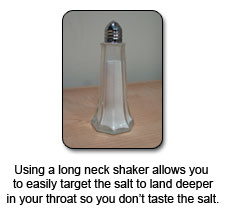
 or the tip your tongue (this way you will not suffer from any unpleasant taste). After that, do not swallow your saliva, just let the salt dissolve right there on the back of your throat, letting the salt stay there for as long as you possibly can. If you're using a salt shaker, shake 2 to 6 times depending how bad your sore throat is. If you're using a fast food style paper saltshaker, you should shake about 1/4 of the packet directly into your throat.
 preserve meat and fish. Why? Because salt attracts water and attacks the bacteria cell walls, causing the bacteria to dehydrate and self-destruct in the process.