Pages

Friday, 16 July 2021

COVID: Are mix-and-match vaccines the way forward?

 A new British study confirms reports that a combination of the AstraZeneca and BioNTech vaccines triggers a stronger immune response than two doses of AstraZeneca.

  • Date 29.06.2021
  • Author Carla Bleiker
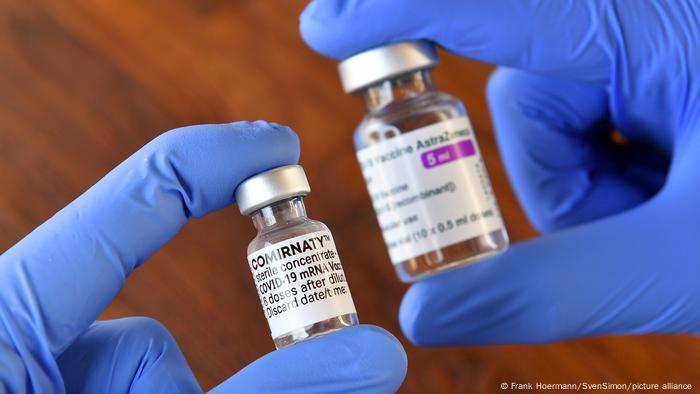
Doses of the BioNTech-Pfizer and AstraZeneca vaccines

Does it make more sense to switch to BioNTech after the first AstraZeneca shot?

Following its approval by the European Medicines Agency in January, the COVID-19 AstraZeneca vaccine  was administered to all adults in Germany. After discovering that especially younger women who received the shot faced an increased risk of dangerous blood clots in the brain, Germany's Standing Committee on Vaccination (Stiko) in April recommended limiting the use of AstraZeneca to people aged over 60.

That meant quite a few people who had received their first dose of AstraZeneca had to then get BioNTech-Pfizer or Moderna for their second shot. Today, all adults in Germany, no matter their age, can be vaccinated with AstraZeneca again, if the patient and doctor have a conversation about the risks prior to the jab.

British study: Mix more effective than two AstraZeneca shots

But new studies show that combining two different vaccines could be more than just an emergency solution. Researchers at the University of Oxford have found that patients who received a dose of AstraZeneca followed by a dose of the BioNTech-Pfizer vaccine four weeks later developed a higher number of antibodies than those who had received two shots of AstraZeneca.

As part of their Com-COV trial, the Oxford researchers administered various vaccine combinations to 830 volunteers over the age of 50. Their results showed the highest number of antibodies was developed by people who had received two BioNTech jabs, followed by those who had gotten a shot of AstraZeneca first and BioNTech second. The reverse order still yielded more antibodies on average than two shots of AstraZeneca. 

Lead researcher Matthew Snape, an associate professor of paediatrics and vaccinology, told the BBC that the Com-COV findings didn't undermine the use of two AstraZeneca jabs in the fight against COVID. 

"We already know that both standard schedules are very effective against severe disease and hospitalizations, including against the Delta variant," he said.  

In the UK, the period between the two jabs is usually eight to 12 weeks, not four as in the Com-COV study. Results from trials with a period of 12 weeks between mixed doses will be available in July, Snape told the BBC.

German study: Mix-and-match more effective than two shots of any vaccine

Researchers at Saarland University in western Germany have found that people whose first shot was AstraZeneca and whose second shot was BioNTech-Pfizer showed an immune response stronger than that in patients who had received two doses of the same vaccine, be it AstraZeneca or BioNTech.

So, does that mean it's time to switch the world's immunization approach to a mix-and-match vaccination for everyone?

Not quite yet.

Volume 90%
 
Watch video02:21

COVID: Germany drops vaccine priority system

Preliminary results

The results from the Com-COV study have been published as a pre-print, meaning they haven't gone through the peer-review process yet, where independent scientists evaluate them. 

The findings coming out of Saarland University are also preliminary and have not yet been fully evaluated scientifically, the university emphasized in the press statement sharing the results. Before the researchers officially publish their findings, they will look into the role played by the age and gender of the patients, for example, and also delve deeper into which combinations can potentially trigger more severe side effects.

Even though a full data evaluation hasn't been completed yet, the team conducting the study was surprised by the clear results. 

"That's why we wanted to share our outcomes now and not wait for the scientific evaluation process to be completed," Martina Sester, professor for transplantation- and infection immunology at Saarland University, said in the press statement.

10 times the antibodies

There were more than 200 people that participated in the trial conducted at the University Hospital in Homburg, Saarland, over the last few months. Some of them received two AstraZeneca shots, some received two BioNTech-Pfizer shots and a third group received an AstraZeneca shot followed by one from BioNTech. 

The researchers compared the strength of participants' immune responses two weeks after the second shot. "We didn't just look at the number of antibodies against the coronavirus [the participants] developed, but also how effective the so-called neutralizing antibodies were," Sester explained. "That tells us how good the antibodies are at preventing the virus from entering our cells."

In terms of antibody development, the double-BioNTech as well as the combined AstraZeneca-BioNTech vaccination was significantly more effective than the double-AstraZeneca alternative. Participants who had one of the first two combinations of shots produced around 10 times more antibodies than those with two AstraZeneca jabs. And looking at the neutralizing antibodies, results with the mix-and-match vaccine approach were "even slightly better" than those achieved with two BioNTech shots, Sester said.

For vaccines that require two jabs, health officials have typically recommended the second shot be the same as the first. 

Volume 90%
 
Watch video02:15

COVID-19: Germany immunizes its homeless

'Remarkable' boost in antibody production

The Spanish CombivacS trial, conducted with 663 participants at the Carlos III Health Institute in Madrid, came to a similar conclusion. The study's preliminary results were reported in the scientific journal Nature. Like the results from Saarland University, they are not yet final ― the publication in Nature is an overview of what the researchers in Spain have found so far, and not a full, peer-reviewed article.

Two-thirds of participants received a shot of the BioNTech-Pfizer vaccine after their initial AstraZeneca jab. The last third had not received a second shot at the time the initial results were shared. Magdalena Campins, an investigator on the CombivacS study at the Vall d’Hebron University Hospital in Barcelona, reported that those who had received the full mix-and-match vaccine combination began producing much higher levels of antibodies after their second shot, and these antibodies were able to recognize and inactivate SARS-CoV-2 in laboratory tests. 

"It appears that the [BioNTech-]Pfizer vaccine boosted antibody responses remarkably in one-dose AstraZeneca vaccines," said Zhou Xing, an immunologist at McMaster University in Hamilton, Canada, who was not involved in the study, in the Nature article. Xing added that the boost appeared to be even more pronounced than the one in people who had received their second dose of the AstraZeneca vaccine.

However, aside from the fact that its results aren't yet finalized and peer-reviewed, one problem with this study out of Spain is that it doesn't include a control group of people who received two shots of the same vaccine — so no direct comparison between the two groups was possible.
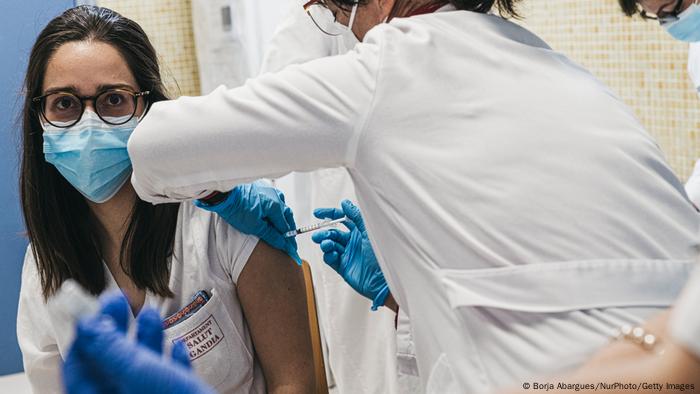
A young woman receives her BioNTech-Pfizer vaccine in Valencia, Spain

So far, a little less than one quarter of Spain's population is fully vaccinated against COVID.

Mix-and-match vaccination not always recognized

Even though initial results are promising, the World Health Organization (WHO) still advises against combining vaccines. As of yet, there is not sufficient data to assess whether this is a safe approach, says WHO spokeswoman Margaret Harris.

In Germany, however, someone is considered fully vaccinated if they have received two shots of the same vaccine, as well as if they have had a mix-and-match vaccination. The German government follows the guidelines of the Paul Ehrlich Institute (PEI).

That isn't the case for all countries, though. In Canada, for example, mix-and-match vaccination is approved, whereas in the US studies are still underway. And in the EU, it remains to be seen whether combined vaccines will be recognized by the digital vaccination pass, planned to come into effect in July.

Vaccine combination 'should be seriously considered'

If the initial results are anything to go by, the combination of AstraZeneca and BioNTech-Pfizer appears to be a promising way to immunize people against COVID.

That's not because the two vaccines are in any way similar, though. They represent two types of COVID vaccines currently on the market.

The AstraZeneca shot is a traditional vector vaccine. It uses a harmless version of a different virus to deliver instructions to human cells, which learn to build up antibodies against the coronavirus.

The BioNTech jab is an mRNA vaccine, a new kind of immunization method. MRNA vaccines teach human cells how to make a protein that in turn triggers an immune response and the production of antibodies.

Researchers don't yet have enough information to know why the combination of these two vaccines can result in boosted immunity. Saarland University professor Sester said she was looking forward to seeing more research done on combining different types of vaccines and how they interact. "We believe that if other research teams reach conclusions similar to ours, the combination of vector- and mRNA vaccines should be seriously considered," she said.

This article was last updated on June 29, 2021.

https://www.dw.com/en/mix-and-match-vaccines-biontech-astrazeneca-better-than-one-shot/a-57819127

BioNTech shot produces 10 times more antibodies than Sinovac, study finds

(July 16): There is a substantial gap in the amount of antibodies that mRNA and inactivated vaccines can generate against the virus that causes Covid-19, according to a Hong Kong study, in the latest finding on what may have contributed to the varied outcomes following mass vaccination using different types of shots.

Bloomberg

/

Bloomberg

July 16, 2021 13:16 pm +08


The research, published in The Lancet on Thursday, found that antibody levels among Hong Kong health workers who have been fully vaccinated with BioNTech SE's mRNA shot are about 10 times higher than those observed in the recipients of the inactivated vaccine from Sinovac Biotech Ltd.

While disease-fighting antibodies don’t account for the full picture when it comes to measuring the ability to generate immunity and the effectiveness of Covid vaccines, “the difference in concentrations of neutralizing antibodies identified in our study could translate into substantial differences in vaccine effectiveness,” the researchers said.

The finding adds to a growing body of evidence suggesting the superiority of mRNA vaccines in providing potent and comprehensive protection against Sars-CoV-2 and its variants, compared to vaccines developed by more traditional methods such as inactivated shots.

Countries from Israel to the US that have relied mostly on mRNA vaccines from Pfizer Inc and its German partner BioNTech, as well as Moderna Inc, have seen a marked reduction in infections. Those using mostly inactivated shots from China’s Sinovac and Sinopharm haven’t experienced as much of a dent in case numbers, though the use of both kinds has significantly prevented more severe Covid and fatalities.

The lower effectiveness of inactivated vaccines has prompted countries from Thailand to the United Arab Emirates to offer already fully vaccinated people another booster shot as the more infectious delta variant fuels a resurgence in infections.

The Hong Kong study also suggested that future research could look into how booster shots can shore up antibody levels and protection among people vaccinated with inactivated shots.

https://www.theedgemarkets.com/article/biontech-shot-produces-10-times-more-antibodies-sinovac-study-finds

ALSO:

https://www.theedgemarkets.com/article/malaysia-stop-using-sinovac-vaccine-after-supply-ends-says-health-minister


Tuesday, 13 July 2021

Covid: China's coronavirus vaccines - What do we know about them?

Chinese vaccine producers Sinovac and Sinopharm have signed on to global vaccine sharing scheme Covax, which aims to distribute vaccines to poorer countries.

13 July 2021

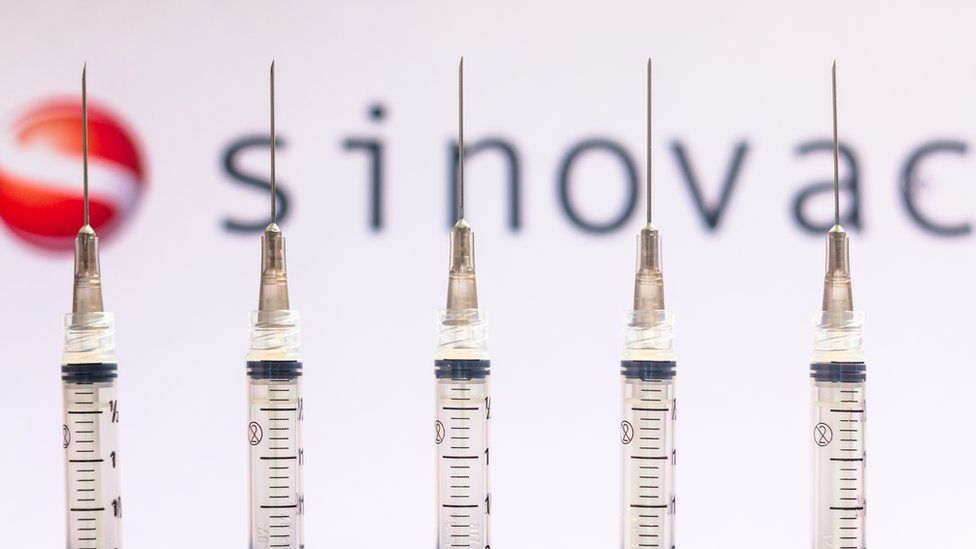
Various medical syringes seen with Sinovac Biotech company logo displayed on a screen in the background.IMAGE COPYRIGHTGETTY IMAGES
image captionSinovac is a Beijing-based pharmaceutical company

The Global Alliance for Vaccines and Immunization (Gavi) said it would make 110 million doses of the vaccines available as part of the scheme.

Covax has agreements with the manufacturers of 11 vaccines and plans to provide 2 billion doses across the world by early 2022.

Both Sinopharm and Sinovac, which have been approved by the World Health Organization (WHO) for emergency use, are already being used in China and dozens of countries around the world.

But what do we know about China's vaccines and how do they compare to those being developed elsewhere?

media captionHow will the new Pfizer vaccine work?

How does the Sinovac vaccine work?

The Beijing-based biopharmaceutical company Sinovac is behind the CoronaVac, an inactivated vaccine.

It works by using killed viral particles to expose the body's immune system to the virus without risking a serious disease response.

By comparison the Moderna and Pfizer vaccines are mRNA vaccines. This means part of the coronavirus' genetic code is injected into the body, triggering the body to begin making viral proteins, but not the whole virus, which is enough to train the immune system to attack.

"CoronaVac is a more traditional method [of vaccine] that is successfully used in many well known vaccines like rabies," Associate Prof Luo Dahai of the Nanyang Technological University told the BBC.

On paper, one of Sinovac's main advantages is that it can be stored in a standard refrigerator at 2-8 degrees Celsius, like the Oxford vaccine, which is made from a genetically engineered virus that causes the common cold in chimpanzees.

In contrast Moderna's vaccine needs to be stored at -20C and Pfizer's vaccine at -70C.

It means that both Sinovac and the Oxford-AstraZeneca vaccine are a lot more useful to developing countries which may not have the facilities to store large amounts of vaccine at such low temperatures.

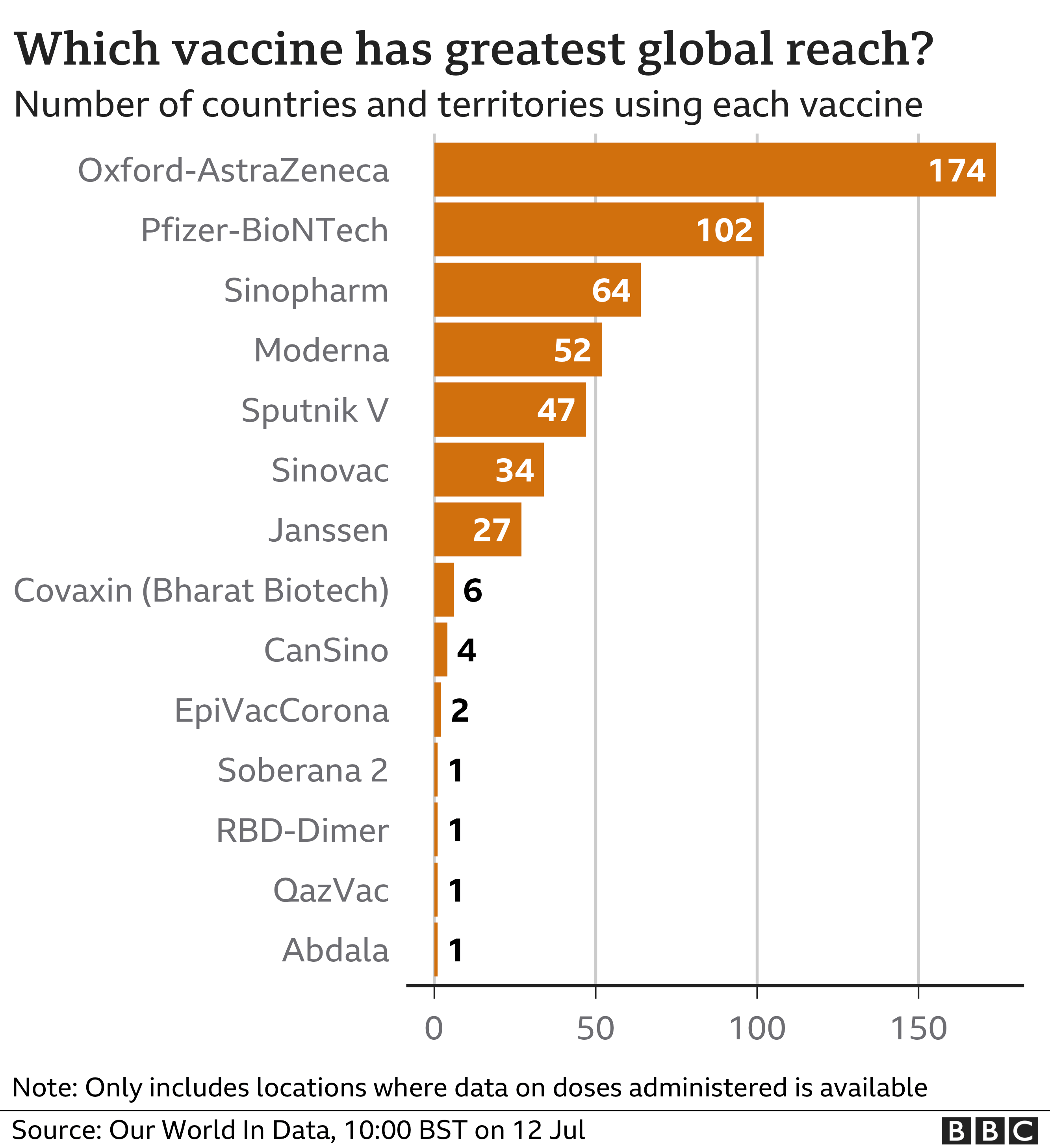
Chart showing which vaccines are being used the most: Oxford-AstraZeneca top, followed by Pfizer-BioNTech

How effective is it?

The WHO said studies showed the Sinovac vaccine "prevented symptomatic disease in 51% of those vaccinated and prevented severe Covid-19 and hospitalization in 100% of the studied population" for adults aged 18 and older, when it approved the jab in June.

It added that only a few adults over the age of 60 were enrolled in clinical trials, so efficacy could not be estimated for that age group.

According to a study published in the New England Journal of Medicine showing results from Chile, Sinovac has an efficacy rate of 65.9% against Covid-19, is 87.5% effective at preventing hospitalisation and 86.3% effective at preventing death.

However, there is little data about its effectiveness against the Delta variant.

What about the Sinopharm vaccine?

The WHO approved the Sinopharm vaccine which is produced by a Chinese state-owned company.

Like Sinovac, it is an inactivated vaccine which triggers the production of antibodies that fight the coronavirus.

The virus is killed before being injected into people's bodies, so it can't transmit Covid-19.

At the time, the WHO said: "Vaccine efficacy for symptomatic and hospitalized disease was estimated to be 79%, all age groups combined."

However, it added once again that there wasn't enough over 60s enrolled in clinical trials to estimate the efficacy for the age group. It still recommends the vaccine for older people though.

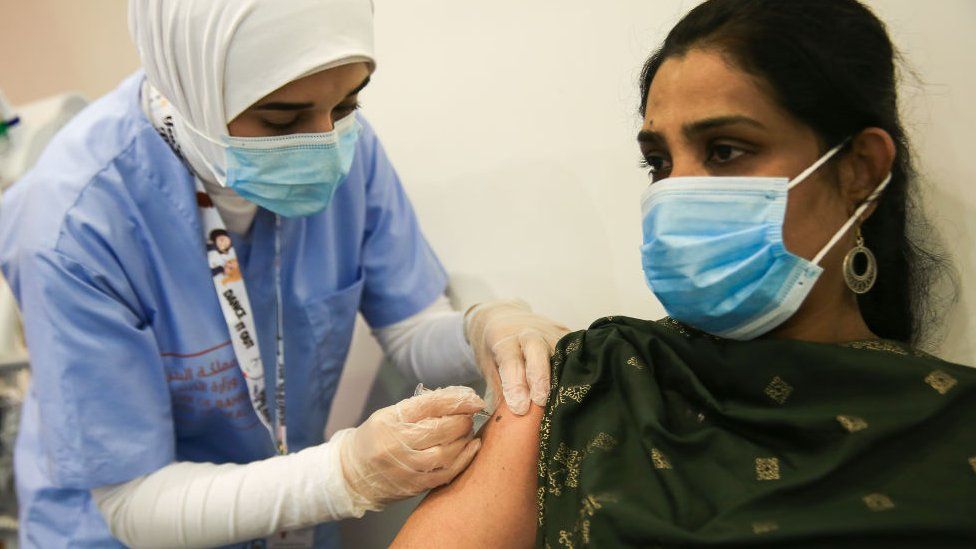
A woman is vaccinated with a syringe of a Chinese COVID-19 vaccine, developed by medicine company SinopharmIMAGE COPYRIGHTGETTY IMAGES
image captionBoth the UAE and Bahrain are using Chinese vaccines

China has administered more than a billion doses of its vaccines to its residents, according to China's National Health Commission.

The spread of the coronavirus within China has for the most part been contained - and the country has largely opened up.

Which countries are administering China's vaccines?

More than 80 countries are using China's Covid vaccines, including many in Asia, among them Indonesia, Thailand, Malaysia, Vietnam and the Philippines.

However, some countries that opted for the Chinese jabs have high vaccination rates, and are still seeing a surge in infection numbers.

For instance, Chile re-imposed a curfew and brought back restrictions on travelling in response to the Delta variant, which is more transmissible than previous variants.

More than 70% of Chileans are fully vaccinated, most with the Sinovac vaccine.

The Seychelles and Mongolia, meanwhile, have recently recorded some of the highest increase in cases per capita, despite their small populations.

Both are relying heavily on Sinopharm and their vaccination programmes are advanced: 68% of adults are fully vaccinated in the Seychelles and 55% in Mongolia.

Thailand has changed its vaccine policy to mix China's Sinovac with the AstraZeneca vaccine in a bid to boost protection after hundreds of medical workers caught Covid despite being fully vaccinated with Sinovac.

Meanwhile in Indonesia, the main doctors and nurses' association said at least 30 healthcare workers died despite receiving two doses of the Sinovac vaccine.

The country is now planning to switch to different Covid-19 vaccines for second doses or administer booster shots to increase efficacy.

So are the vaccines failing?

Vaccines are not the only factor to explain what's going on in these countries.

One reason could be that the efficacy of vaccines might be waning or they are not as effective against new variants.

Pfizer has said recently that it will seek authorisation for a booster shot in the United States to improve immunity.

Indonesia man gets the Sinovac jabIMAGE COPYRIGHTEPA
image captionIndonesia has very low vaccination rates despite having access to the Chinese vaccines

In Indonesia, the main doctors' association said comorbidities may have played some part in the death of healthcare workers.

The country also has extremely low vaccination rates - with just over 5% of its population receiving both doses.

In Chile, some experts have blamed the spike in cases on people mingling too soon after getting the first dose of the vaccine.

Prof Ben Cowling, head of epidemiology and biostatics at University of Hong Kong, said despite having a "modest efficacy" against symptomatic Covid, both Sinovac and Sinopharm give "very high level of protection" against severe disease.

"That means that these inactivated vaccines would have already saved a lot of lives," he told the BBC.

How do variants affect vaccines?

The Sinovac and Sinopharm studies, however, tested the efficacy of vaccines against the virus that was first found in the Chinese city of Wuhan. No new data has been published on how they fare against variants.

Based on studies trying to model immune protection from the virus, Prof Cowling estimates the protection offered by inactivated virus vaccines against the Delta variant could be as much as 20% lower compared to the original strain.

His calculations suggest an even larger reduction against the Beta variant first found in South Africa, which is the one that most differs from the original virus.

Professor Jin Dong-yan, a virologist also from the University of Hong Kong, told the BBC it's "expected" that the efficacy of the Chinese vaccines will go down against the variants, including Delta.

But he said "Sinovac and Sinopharm are good vaccines" and people who do not have access to vaccines with higher efficacy should still receive their injections.

However, he said, they should continue to follow social distancing rules and other measures to curb infections.

Reporting by Pablo Uchoa and Yvette Tan

You may also be interested in:

media captionHundreds of people queued in Yiwu, China to get an experimental Covid-19 vaccine

More on this story

https://www.bbc.com/news/world-asia-china-57817591