Pages

Showing posts with label MSG. Show all posts

Wednesday, 15 January 2020

The Secret Racist History of MSG

Do you have or know anyone with an allergy to MSG? The panic surrounding MSG has been around for decades, with people claiming that it gives them all kinds of strange symptoms after consumption.


What is MSG?

Monosodium glutamate (MSG) was discovered by Professor Kikunae Ikeda, a Japanese chemist from Tokyo Imperial University.
In 1907, he began research on a traditional Japanese seaweed broth after he tasted how delicious the dashi broth was with the addition of kelp.
MSG is the chemical basis for the umami (savoury) flavour- one of the five basic tastes along with sweet, bitter, sour, and salty. Ikeda then named it Ajinomoto, the “essence of flavor”, and in 1907 invented and patented the process of mass-producing MSG in its more common salt-form.
a bowl of soup: Clear broth soup that packs a punch? There’s definitely MSG in it. Credit: TRP© Provided by The Rakyat Post Clear broth soup that packs a punch? There’s definitely MSG in it. Credit: TRP
However, the glutamic acid is naturally present in our bodies, and in many natural foods. In fact, MSG is long been part of our diet- we just didn’t have a particularly name for the thing that makes food taste really good.
The amino acid glutamate is found in meat, eggs, cheese, tomatoes, fish, seafood, sauces, and almost everything else we eat. The more free (unbound) glumate there is, the more umami flavour there will be.
For example, a ripe tomato has more glutamate than an unripe, pale-coloured tomato. A cured meat will also have more free glutamate than fresh meat, as aging a meat by curing or fermenting will break down proteins to release the free glutamate.

So why all the fuss?

The first mention of MSG appeared in a letter published in the New England Journal of Medicine in 1968 by Dr Ho Man Kwok, describing the “Chinese Restaurant Syndrome” of numbness in the neck, weakness, and palpitations after eating at Chinese restaurants.
According to Colgate Magazine, however, was that Dr Ho Man Kwok was actually Robert Steel, writing the letter with a fake name from a fake medical institution on a dare for $10.
Historically, the New England Journal of Medicine published letters of satire for a knowing audience, and responding letters from other doctors seem to point that Robert Steel’s “Chinese Restaurant Syndrome” letter was correctly identified as a joke piece.
Unfortunately, the letter took off and exploded when mainstream media who weren’t in the know picked it up and reported it, as fear is often the fastest driver of misinformation.
Another reason for this fear was the tension within America at the time. In the late 1900’s, America was coming to terms with over a century’s worth of racism and exclusion of the Chinese people.
America was very upfront about how ‘strange and dirty’ they found Asians to be, and MSG was an easy way to visualize the way they felt. (Credit: Library of Congress)© Provided by The Rakyat Post America was very upfront about how ‘strange and dirty’ they found Asians to be, and MSG was an easy way to visualize the way they felt. (Credit: Library of Congress)
It was only in 1943 that the Chinese were allowed to immigrate into the US for the first time since the Chinese Exclusion Act of 1882. However, internalized racism lives on, and the general public latched on to the Chinese Restaurant Syndrome to make digs on the Chinese identity and their stereotypical food.

If MSG is so natural, why do I get the so-called “dry mouth” after Chinese food?

Despite the overwhelming fact that MSG is heavily prevalent in all foods such as pizzas, potato chips, burgers, and everything else, Chinese food still tends to be the unfortunate culprit of “MSG syndrome”, even within Malaysia.
a plate of food: Did you think “western food” is magically free of MSG? (Credit: TRP)© Provided by The Rakyat Post Did you think “western food” is magically free of MSG? (Credit: TRP)
Dai chows and soup noodles are commonly cited to contain “a lot of MSG”, with patrons then later complaining of everything from headaches and a dry mouth to difficulty breathing.
However, the human psyche is a tricky thing. Confirmation bias and the self-fulfilling prophecy affirms your subconscious belief in the Chinese Restaurant Syndrome.
Even if you don’t believe in the Chinese Restaurant Syndrome, it’s easy to link any feeling of discomfort to recently-eaten Chinese food, because it’s a convenient explanation with a strong correlation that has already been reinforced numerous times in your life.
Yet, you may not make that same kind of connection even if you feel incredibly thirsty after a large burger, because your subconscious has never made that mental link between MSG and a burger before.

How do I remove that negative bias?

Simple: The next time you consume Chinese food and feel thirsty after, consider other factors: the food may be dry or salty, the weather may be hot, or you may simply not have had enough water that day.
a bowl of food on a plate on a table: Some people worry that a meal at a Chinese restaurant can cause discomfort and will preemptively request for no MSG to be used in their food. (Credit: TRP)
© Provided by The Rakyat Post Some people worry that a meal at a Chinese restaurant
can cause discomfort and will preemptively request for no MSG to be used in their food. (Credit: TRP)

Ajinomoto is not your enemy. Numerous studies have been done that prove MSG has no negative effect on us.
Correlation does not equal causation, and to keep an open mind about other reasons for your “Chinese Restaurant Syndrome” could possibly help you feel a lot more comfortable in the long run.
https://www.msn.com/en-my/foodanddrink/foodnews/the-secret-racist-history-of-msg/ar-BBYEU6u

MSG - McDonald's New Secret Ingredient in the Chicken Sandwich Wars

In McDonald’s push to make a fried-chicken sandwich that better competes with Chick-fil-A, it picked up something extra in the recipe: MSG, the flavor enhancer that has both fans and foes.
 11 hrs ago 
a close up of a sign: McDonald's
© Rafael Henrique–SOPA Images/LightRocket/ Getty Images McDonald's
The world’s biggest restaurant chain is currently testing chicken sandwiches with monosodium glutamate, an ingredient that adds a savory taste but has also drawn health concerns from consumers. The additive is popping up beyond the new sandwich undergoing trials in Knoxville, Tennessee, and Houston, as well as appearing at other locations in tests of sausage, soup bases and different crispy-chicken fillets.
Chicken is a big deal in fast food. Americans eat more of it each year than any other meat, and consumption is growing. McDonald’s for years has also tried to make a fried-chicken sandwich to rival Chick-fil-A, the Atlanta chain with a cult following. Chick-fil-A also uses MSG in its classic chicken sandwich among other menu items, as does Popeyes Louisiana Kitchen, which last summer introduced a sandwich that sold out amid a social media frenzy.
“We are always listening to our customers regarding our menu offerings,” a spokeswoman for McDonald’s said in response to questions about its addition of MSG. Feedback and insights from the test will inform its future decisions, she said.
A representative for Chick-fil-A declined to comment while representatives at Popeyes didn’t respond to a request for comment.

Positive Response

MSG is a flavor enhancer that’s been used for decades after commercial production started in the early 20th century. It’s now commonly associated with takeout food and processed soups and meats. While the ingredient is generally safe, according to the Food and Drug Administration, its use is controversial and some people complain of bad side effects including headache, numbness and heart palpitations.
McDonald’s does not use MSG in products on its national menu currently and lists ingredients in its national menu on its website, according to the company.
McDonald’s customers in Houston and Knoxville have responded positively to the testing of its Crispy Chicken Sandwich and Deluxe Crispy Chicken sandwich, offered at more than 230 stores, according to the spokeswoman. The trial will continue for a few more weeks. It’s also testing a Portuguese sausage and a soup base with added MSG in select locations in Hawaii, as well as more crispy chicken fillets in Augusta, Georgia, and Seattle.
“We use real, quality ingredients to elevate the taste of our food so our customers all over the world can enjoy,” McDonald’s chief nutritionist Cindy Goody said in a statement. “We’re passionate about our food and take great care to offer delicious, quality menu options to our customers that are produced and sourced in a responsible way.”
In the past four years, the Chicago-based company has tried to clean up its ingredients including removing artificial preservatives from its chicken nuggets. It’s also moving its U.S. egg supply to cage free.
–With assistance from Lisa Wolfson.
https://www.msn.com/en-my/foodanddrink/foodnews/mcdonalds-has-a-new-secret-ingredient-in-the-chicken-sandwich-wars-msg/ar-BBYW7nX

Monday, 12 June 2017

How to count on food – Part 3

You are probably aware that humans have five main taste sensitivities in the mouth; namely bitter, salt, sweet, sour and umami. There are claims of other taste sensations such as kokumi (an extension of umami expressed as heartiness or “richness”, such as in mature cheeses and slow-cooked foods ...


How to count on food – Part 3
The most common additive in the E6xx range by far is E621 (monosodium glutamate or MSG), the umami-inducing chemical often vilified by self-righteous health websites. Photo: Visualhunt.com


Read Part 1 and Part 2

You are probably aware that humans have five main taste sensitivities in the mouth; namely bitter, salt, sweet, sour and umami. There are claims of other taste sensations such as kokumi (an extension of umami expressed as heartiness or “richness”, such as in mature cheeses and slow-cooked foods), fats, and perhaps also starches (particularly the shorter-chain carbohydrates) – and on the surface, the claims seem quite plausible though due to genetic differences in humans, it is possible that these additional tastes may not be experienced as commonly as the main five tastes.
Regardless of whether humans experience five, seven or eight tastes, food scientists know a lot about the chemicals that trigger taste cells in human taste buds (a taste bud is normally a collection of different taste cells) – and hence there is an assortment of compounds which can be introduced to processed foods to render them much more attractive to eat.

The bitter problem

At this point, the bitter taste sense warrants a little further discourse – it is the most sensitive taste in most humans and probably evolved to protect us from ingesting poisonous foods.
As a result, humans generally do not like food which is significantly bitter, apart from coffee, tea, beers, certain vegetables and some alcoholic cocktails. Children also have up to three times as many taste cells as adults and this explains why many kids are particularly averse to bitter foods such as broccoli, sprouts, mushrooms, cabbages, et cetera – they tend to slowly lose this antipathy as they grow up.
The sense of bitter is actually pretty interesting as humans can sense bitter in many, many thousands of separate compounds, and if you are curious about how this works, here’s a little summary.
The problem is that some common food additives are particularly bitter chemicals and mass-produced food needs to address the general taste preferences of large populations – hence bitterness in processed foods is a problem which needs to be eliminated, or at least masked.
A classic example is drinks containing caffeine, which is a very bitter compound in its natural state – as a result practically all commercially packaged caffeine drinks are severely overloaded with sugars or sweeteners to mask the bitterness of caffeine.
There are around a dozen synthetic compounds which can block some of the bitter sensation – however, they are not very efficient as they cannot block all the bitter taste cells, so these compounds are not so commonly used.
food additives
The next time you read a food label at the grocery store, you will know a bit more about what those E6xx numbers stand for. Photo: AFP
Therefore, bitterness in processed foods usually need some form of masking, usually with sugars and salt. If there exists an effective way to reduce the taste of bitterness in foods, it is feasible that the sugar or salt content in many processed foods can be reduced by very significant amounts.
As a little digression, when looking into bitter-tasting food chemicals like E202 (potassium sorbate), E326 (potassium lactate), et cetera, I came across E211 (sodium benzoate) which is commonly used as a preservative agent in dairy, meat and other products due to its antiseptic properties – E211 is a curious compound as it can taste either salty, sweet, bitter or have no taste at all. How this happens, I have no idea but it appears to be linked to genetics.

The savouries

Returning back to the main subject, apart from some exceptions, the E6xx numbers deal mostly with additives which enhance the umami aspects of food – basically, the savoury taste that we enjoy when eating good meats, fine cheeses and delicious stocks.
The most common additive in this range by far is E621 (monosodium glutamate or MSG), the umami-inducing chemical often vilified by self-righteous health websites and various uninformed people – and this gauche prejudice warrants some comment.

Reality and MSG

food additives

Much research have confirmed very low levels of MSG toxicity in humans – poor research results in the past obtained using test rodents ignored the facts that (i) infant rodents are susceptible to MSG due to differences in their Blood-Brain Barrier (BBB), and (ii) they were injected with doses of MSG impossible to achieve when scaled up to human dietary consumption levels – in any case, humans do not inject themselves with strong solutions of MSG.
However, some asthmatics may react to pure MSG ingested without food and there may be a very small sub-set of humans who may experience a minor allergy to MSG (possibly due to genetics), though no such gene has currently been identified.
Importantly, to date, there are no known human deaths which can be directly linked to the consumption of MSG. There is also no conclusive evidence of any link between MSG and obesity, though it is likely humans might prefer to eat more food enhanced with MSG.
Once digested, the sodium and glutamate molecules in MSG get unlinked and the freed glutamate is chemically equivalent to glutamic acid which is an amino acid found in practically all proteins – the residual sodium is used by the body as an electrolyte or removed via the kidneys.
The body also produces glutamate itself as part of its metabolic processes.
Some confusion may have arisen from the fact that excess MSG in the brain can be an excitotoxin (a compound which kills brain cells) – however, there is no proof that dietary MSG can cross the human BBB and kill cells in the brain (though this is not true of test baby rodents).
As such, all the evidence suggests that MSG is a safe compound when ingested normally with food – therefore the Chinese restaurant syndrome that some people complain about is more likely linked to foods with possibly excessive salt, sugar or other ingredients rather than MSG.

Objections to MSG

By the way, please do not think that I am defending the use of MSG and other umami additives – because I am not.
In many cases, the use of these additives in processed food is primarily to enhance or disguise the use of poor-quality ingredients, and this is clearly objectionable.
However, it is often claimed that MSG disturbingly causes human health issues or brain damage – but this is simply scientifically untrue for the general human population.

The curious umami receptor

The taste receptor for umami is rather unusual in that it is a folded protein which elongates upon contact with MSG. Two other types of chemicals, inosinates and guanylates, can also bind to the extended umami receptor and this stimulates the sensation of umami by up to 15 times.
Hence, for many people, an unfair and wholly irresistible umami bomb would be foods containing all three chemicals – that is the reason why many snack foods tend to contain E621, E627 (disodium guanylate), E631 (disodium inosinate) or perhaps permutations of the following additives.
food additives

The combination of MSG, inosinate and guanylate in this label for a potato-based snack makes it irresistible for many humans.
There are variants of MSG used as additives, such as E620 (glutamic acid), E622 (monopotassium glutamate), E623 (calcium diglutamate), E624 (monoammonium glutamate) and E625 (magnesium diglutamate). For guanylates, other variations are E626 (guanylic acid), E628 (dipotassium guanylate) and E629 (calcium guanylate). And alternatives for inosinates are E630 (inosinic acid), E632 (dipotassium inosinate) and E633 (calcium inosinate).
As a side note, there may be some unspecific evidence of digestive issues for some people related to the potassium-based compounds.
Combination additives are E634 (calcium 5’-ribonucleotides) and E635 (disodium 5’-ribonucleotides) – these are effectively pre-mixed inosinates and guanylates and used where food already contains a lot of natural MSG (such as meat extracts) or added MSG.

The non-savouries

Produced from the gelatin derived from animal bones, E640 (glycine) is a very simple amino acid found in all animal or fish proteins and often sold as a health supplement in its own right (though the claimed benefits are somewhat extravagant). In food, it is used as a bread enhancer by providing nutrients for fermenting yeast.
E641 (l-leucine) is another amino acid used in the same way as E640 to enhance breads and is also sold as a health supplement as it can promote the synthesis of muscle proteins (though it does not seem to improve the muscle mass of older people).
Curiously, this essential amino acid is also sold for use as a weight control treatment – however, a normal diet would provide adequate l-leucine for healthy humans.
E636 (maltol) and E637 (ethyl maltol) can be used to improve the flavour of chocolates, candies and beverages but they are not included in the EU list of allowed additives, though their use appears to be permitted in the United States and other countries.
Again, please note that over-consumption of many additives may lead to possible health hazards and side-effects – and it is simply not possible to cover all potential reactions due to the numbers and combinations of additives.
However, most food additives are regulated in their use and therefore should not cause problems when processed foods are consumed in reasonable amounts by healthy humans.
The next part covers how processed food can be made to taste sweet without the use of sugar – and reviews a bitter scientific controversy which is currently still not wholly resolved to everyone’s satisfaction, even after over 40 years. You should be interested because it very probably affects you or someone you know.
http://www.star2.com/food/food-news/2017/06/11/count-on-food-3/

Read:  PART 4

Friday, 23 October 2015

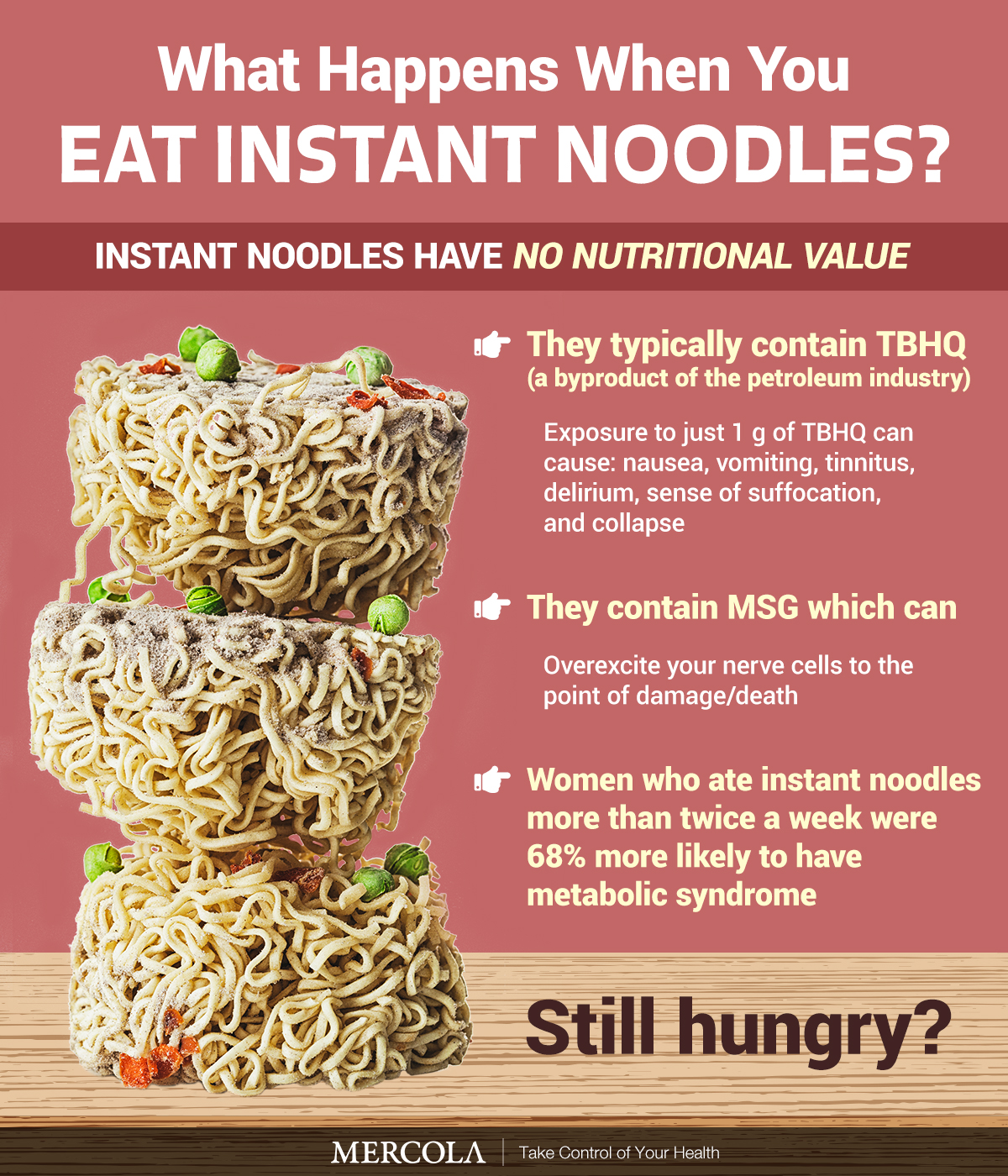
Instant Noodles - What Happens to Your Body When You Eat It ?

Instant noodles are a popular food for lunch or dinner, but did you know that eating instant noodles is linked to metabolic syndrome?

Article - Instant Noodles


What Happens Inside Your Stomach When You Eat Instant Noodles?


September 03, 2014 

By Dr. Mercola

Story at-a-glance

  • Researchers used a pill-sized camera to see what happens inside your stomach and digestive tract after you eat instant noodles
  • Even after two hours, the instant noodles were remarkably intact, much more so than the homemade noodles, which were used as a comparison
  • During this long digestive time, your stomach gets prolonged exposure to the toxic preservative tertiary-butyl hydroquinone (TBHQ) and other additives, like MSG, found in instant noodles
  • Women who consumed more instant noodles had a significantly greater risk of metabolic syndrome than those who ate less, regardless of their overall diet or exercise habits
  • Women who ate instant noodles more than twice a week were 68 percent more likely to have metabolic syndrome


Instant noodles are a popular go-to lunch or dinner for those who are strapped for time (or cash), like college students. While you probably don’t consider them a health food, you may think they’re not that bad, or, at least, not as bad as eating a burger and fries or a fast-food burrito.
In a first-of-its-kind experiment, however, Dr. Braden Kuo of Massachusetts General Hospital may make you reconsider your love of instant noodles (assuming you have one).
He used a pill-sized camera to see what happens inside your stomach and digestive tract after you eat ramen noodles, one common type of instant noodles. The results were astonishing…

Ramen Noodles Don’t Break Down After Hours of Digestion

In the video above, you can see ramen noodles inside a stomach. Even after two hours, they are remarkably intact, much more so than the homemade ramen noodles, which were used as a comparison. This is concerning for a number of reasons.
For starters, it could be putting a strain on your digestive system, which is forced to work for hours to break down this highly processed food (ironically, most processed food is so devoid of fiber that it gets broken down very quickly, interfering with your blood sugar levels and insulin release).
When food remains in your digestive tract for such a long time, it will also impact nutrient absorption, but, in the case of processed ramen noodles, there isn’t much nutrition to be had. Instead, there is a long list of additives, including the toxic preservative tertiary-butyl hydroquinone (TBHQ).
This additive will likely remain in your stomach along with the seemingly invincible noodles, and no one knows what this extended exposure time may do to your health. Common sense suggests it’s not going to be good…

Five Grams of Noodle Preservative, TBHQ, Is Lethal

TBHQ, a byproduct of the petroleum industry, is often listed as an "antioxidant," but it's important to realize it is a synthetic chemical with antioxidant properties– not a natural antioxidant. The chemical prevents oxidation of fats and oils, thereby extending the shelf life of processed foods.
It's a commonly used ingredient in processed foods of all kinds (including McDonald’s chicken nuggets, Kellogg’s CHEEZ-IT crackers, Reese’s peanut butter cups, Wheat Thins crackers, Teddy Grahams, Red Baron frozen pizza, Taco Bell beans, and much more).
But you can also find it in varnishes, lacquers, and pesticide products, as well as cosmetics and perfumes to reduce the evaporation rate and improve stability. 

At its 19th and 21st meetings, the Joint FAO/WHO Expert Committee on Food Additives determined that TBHQ was safe for human consumption at levels of 0-0.5 mg/kg of body weight.1
However, the Codex commission set the maximum allowable limits up to between 100 to as much as 400 mg/kg, depending on the food it's added to.2(Chewing gum is permitted to contain the highest levels of TBHQ.) In the US, the Food and Drug Administration requires that TBHQ must not exceed 0.02 percent of its oil and fat content.3
So there’s quite a discrepancy in supposedly "safe" limits, but it’s probably best to have little or no exposure to this toxicant, as exposure to five grams can be lethal and, according to A Consumer's Dictionary of Food Additives, exposure to just one gram of TBHQ can cause:4
  • Nausea and vomiting
  • Ringing in the ears (tinnitus)
  • Delirium
  • Sense of suffocation
  • Collapse
While TBHQ is not suspected to be a persistent toxicant, meaning your body is probably able to eliminate it so that it does not bioaccumulate, if you eat instant noodles your body might be getting prolonged exposures. This is concerning, to say the least. According to the Environmental Working Group (EWG), based on animal studies health hazards associated with TBHQ include:5
  • Liver effects at very low doses
  • Positive mutation results from in vitro tests on mammalian cells
  • Biochemical changes at very low doses
  • Reproductive effects at high doses

Eating Instant Noodles Linked to Metabolic Syndrome

If you’re still considering ramen noodles for lunch, you should know a new study published in the Journal of Nutrition found that women who consumed more instant noodles had a significantly greater risk of metabolic syndrome than those who ate less, regardless of their overall diet or exercise habits.6
Women who ate instant noodles more than twice a week were 68 percent more likely to have metabolic syndrome -- a group of symptoms such as central obesity, elevated blood pressure, elevated fasting blood sugar, elevated fasting triglycerides, and low levels of HDL cholesterol.
Having three or more of the symptoms increases your risk of developing diabetes and cardiovascular disease. Past research also analyzed overall nutrient intake between instant-noodle consumers and non-consumers, and found, as you might suspect, that eating instant noodles contributes little value to a healthy diet.
The instant-noodle consumers had a significantly lower intake of important nutrients like protein, calcium, phosphorus, iron, potassium, vitamin A, niacin, and vitamin C compared with non-consumers.7 Those who ate instant noodles also had an excessive intake of energy, unhealthy fats and sodium (just one package may contain 2,700 milligrams of sodium).8

What Else Is in a Package of Instant Noodles?

Aside from a lot of sodium and the preservative TBHQ, what else is found in a typical serving of instant noodles? Prevent Disease reported:9
“The dried noodle block was originally created by flash frying cooked noodles, and this is still the main method used in Asian countries, though air-dried noodle blocks are favored in Western countries. The main ingredients of the dried noodle are wheat flour, palm oil, and salt. Common ingredients of the flavoring powder are salt, monosodium glutamate, seasoning, and sugar.
…In June 2012, the Korea Food and Drug Administration (KFDA) found Benzopyrene (a cancer-causing substance) in six brands of noodles made by Nong Shim Company Ltd. Although the KFDA said the amounts were minuscule and not harmful, Nong Shim did identify particular batches of noodles with a problem, prompting a recall by October 2012.”
The monosodium glutamate (MSG) in instant noodles is reason enough to avoid them. MSG is an excitotoxin, which means it overexcites your nerve cells to the point of damage or death, causing brain dysfunction and damage to varying degrees -- and potentially even triggering or worsening learning disabilities, Alzheimer's disease, Parkinson's disease, Lou Gehrig's disease, and more.
Part of the problem is that free glutamic acid (MSG is approximately 78 percent free glutamic acid) is the same neurotransmitter that your brain, nervous system, eyes, pancreas, and other organs use to initiate certain processes in your body. Not to mention, MSG is also used to fatten up mice for scientific study. Yes, MSG is the perfect obesity drug. If you want to achieve your ideal body weight and health, avoid MSG at all costs.

Return to Whole, Living Foods for Optimal Health

Occasionally eating a package of instant noodles clearly won’t kill you, but when you make a habit of substituting convenience foods for real food, it’s only a matter of time before health problems will likely develop. Instant noodles are a prime example of the types of processed foods you want to avoid as much as possible, as they are virtually guaranteed to make you sick and fat if you indulge too much (and “too much” may be as little as a couple of times a week).
Processed foods encourage weight gain and chronic disease because they’re high in sugar, fructose, refined carbohydrates, and artificial ingredients, and low in nutrients and fiber. Processed foods are addictive and designed to make you overeat; they also encourage excessive food cravings, leading to weight gain. Eating processed foods also promotes insulin resistance and chronic inflammation, which are hallmarks of most chronic and/or serious diseases. On the other hand, people have thrived on vegetables, meats, eggs, fruits, and other whole foods for centuries, while processed foods were only recently invented.
Ditching processed foods requires that you plan your meals in advance, but if you take it step-by-step as described in mynutrition plan, it's quite possible, and manageable, to painlessly remove processed foods from your diet. You can try scouting out your local farmer's markets for in-season produce that is priced to sell, and planning your meals accordingly, but you can also use this same premise with supermarket sales. You can generally plan a week of meals at a time, making sure you have all ingredients necessary on hand, and then do any prep work you can ahead of time so that dinner is easy to prepare if you're short on time (and you can use leftovers for lunches the next day, so you don’t have to resort to instant noodles).
http://articles.mercola.com/sites/articles/archive/2014/09/03/eating-instant-noodles.aspx

This post is on Healthwise