In the US, a drug called Ivermectin is being touted as a way of treating or preventing for Covid-19, with celebrities such as podcast host Joe Rogan praising its use.
That's despite official advice which says it's not approved for this purpose.
Ivermectin is primarily used for parasitic infections in animals and also has some application for humans in small doses.
Ros Atkins explores why people continue to use the controversial drug.
Claims that Ivermectin causes infertility in men that recently spread online were based on a flawed 2011 study from Nigeria that included only 37 subjects.
A person wearing a lab coat and medical gloves is pictured holding a box containing a bottle of the drug in Cali, Colombia, on July 21, 2020. LUIS ROBAYO/AFP/Getty
Viral claims that the drug Ivermectin causes infertility in 85 percent of men were based on the questionable conclusions of a 2011 study that included only 37 subjects.
Recent news articles and memes made the infertility claim based on a 2011 study conducted in Nigeria. The study focused on Ivermectin as a treatment for river blindness, a parasitic infection endemic to Africa and one of the conditions that the drug is approved to treat in humans. However, infertility is not a known side effect of Ivermectin, according to the Food and Drug Administration (FDA).
The infertility claim spread quickly due to Ivermectin increasingly being used by some as an unapproved, and likely ineffective, treatment for COVID-19. The 85 percent figure did not come from the Nigerian study itself, but rather from a different study that it references, although no record of the study could be found in the journal cited. The Nigerian study, which was conducted without a control group, also tested the drug’s possible effects on male fertility.
Out of the 385 men who were originally included in the Nigerian study, data from only 37 was ultimately investigated, with the remaining men excluded because their sperm counts that were already too low. Of the 37 men who had high enough sperm counts to be studied, it was found that their fertility was negatively impacted, although the effect was small in some subjects, and it was not clear whether it was a temporary effect.
There is little reason to believe that Ivermectin causes infertility in people. The Nigerian study was conducted on a small number of subjects, and questions have been raised over the methodology of the study and the peer-review process of the journal it was published in. Some research has suggested that the drug impacts the fertility of farm animals, but animal research often does not apply to humans.
There is also little reason to believe recent claims that Ivermectin is a “cure” or useful treatment for COVID-19. While a number of small studies have suggested that Ivermectin may have potential as a COVID-19 treatment, many other studies have shown that there is no benefit or have been inconclusive. Some of the studies that showed positive outcomes have been criticized by experts for poor design and other errors.
One large meta-analysis in July that was touted as evidence of Ivermectin’s effectiveness against COVID-19 was quickly retracted when it was discovered that fraudulent data was used. Without the fraudulent data, the analysis found that Ivermectin did not impact the survival of COVID-19 patients. Additional research is ongoing, but the available evidence does not support the assertion that Ivermectin is an effective treatment for COVID-19.
Although the drug is generally well-tolerated when used for approved conditions and at the appropriate doses, the FDA said last week it had “received multiple reports of patients who have required medical attention, including hospitalization, after self-medicating with ivermectin intended for livestock.”
The FDA warned consumers who may baselessly believe that Ivermectin is a COVID-19 cure that the drug should not be used off-label because it can cause a host of unpleasant side effects aside from infertility, even if it is not sourced from veterinary medicine.
“Even the levels of ivermectin for approved human uses can interact with other medications, like blood-thinners,” the FDA notice reads. “You can also overdose on ivermectin, which can cause nausea, vomiting, diarrhea, hypotension (low blood pressure), allergic reactions (itching and hives), dizziness, ataxia (problems with balance), seizures, coma and even death.”
The rush to find a treatment for COVID-19 has cast a spotlight on the anti-parasitic drug ivermectin, but global health experts have warned that clinical trials were still needed to establish its efficacy.
Tuesday, Aug. 24, 12:47
The oral drug is based on a compound discovered by Omura Satoshi, a Distinguished Emeritus Professor at Kitasato University. He was awarded a Nobel Prize for the discovery.
Ivermectin is widely used to treat parasite-borne infectious diseases, mainly in Africa, while it is also approved in Japan to treat scabies.
A report published last year said cell-based lab experiments have shown that ivermectin can suppress multiplication of the coronavirus.
Some Latin American countries have approved the drug to treat COVID-19 patients. But studies are still ongoing around the world, as its efficacy and safety remain unproven.
In Japan, the Kitasato Institute has been conducting a clinical trial since last September, targeting coronavirus patients with mild to moderate symptoms, with blood oxygen levels of 95 percent of more.
In the US, the National Institutes of Health warned in February that ivermectin is not approved for the treatment of any viral infection.
It said it was impossible to draw definitive conclusions on the clinical efficacy of the drug for COVID-19 treatment. The reasons it cited included the limited sample size of studies, the lack of clarity on the severity of COVID-19 in study participants, and other incomplete information.
Ivermectin's US manufacturer Merck also said in February that there was "no scientific basis" for the drug's potential therapeutic effect against COVID-19.
In March, the World Health Organization advised that ivermectin should only be used to treat patients within clinical trials.
It said data from 16 trials involving 2,407 subjects showed that evidence on whether the drug reduces mortality or quickens improvement was of "very low certainty."
Japan's health ministry's COVID-19 treatment guidelines revised in July places ivermectin in a category of drugs whose efficacy and safety have not been established.
The guidelines refer to reports that the drug does not improve mortality, shorten hospitalization or hasten the reduction of viral loads in patients with mild symptoms.
Liver disorders are among the drug's possible side effects. The manufacturer also said it was unclear whether the product could be safely used among elderly people or pregnant women.
Ivermectin is also given in high doses to animals to treat parasitic diseases. The US Food and Drug Administration said in March that it has received multiple reports of patients who have been hospitalized after self-medicating with ivermectin intended for horses.
The FDA said, "You may have heard it's okay to take large doses of ivermectin. That is wrong." It added that overdosing could cause nausea, diarrhea, seizures or even death.
The FDA ramped up its warning via Twitter in August, saying, "You are not a horse. You are not a cow. Seriously y'all. Stop it."
News Navigator: What is ivermectin, and is it effective in treating COVID-19?
(Mainichi Japan)
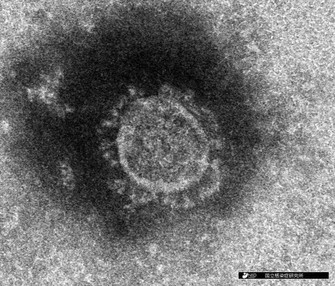
This electron microscope photo provided by the National Institute of Infectious Diseases shows the coronavirus isolated at the facility. (Photo Courtesy of the National Institute of Infectious Diseases)
The Mainichi Shimbun answers some common questions readers may have about ivermectin, which is drawing attention as a possible cure for COVID-19.
Question: What kind of a medicine is ivermectin in the first place?
Answer: It has saved the lives of many people in Asia and Africa as a treatment for onchocerciasis, a parasitic disease that causes blindness, and lymphatic filariasis, which can lead to hardened and enlarged skin.
It is known that Japanese biochemist Satoshi Omura, a distinguished emeritus professor of Kitasato University who received the Nobel Prize in physiology or medicine in 2015, contributed to the medicine's development. In the 1970s, he discovered an antibiotic that is effective against parasites from the chemical substances produced by a new type of fungus in the soil around a golf course. Ivermectin was developed by changing a part of the structure of the substance.
Q: Why would a medicine for parasites be used to treat COVID-19?
A: Ivermectin attracted attention after experiments using cells confirmed that it was effective in suppressing the increase of the coronavirus. It is thought that the medicine prevents the coronavirus from interfering with the function of innate immunity that is inherent in humans. Ivermectin also seems to have the effect of decreasing inflammation that occurs in the body due to an excessive immune reaction.
Q: Is it being used to treat coronavirus patients?
A: Ivermectin is being used to treat COVID-19 patients in Brazil and Peru, among other places, but it has not yet been approved in Japan. In March, the World Health Organization recommended that it be used only in clinical trials as the evidence on its effects is "of very low certainty."
The U.S. Food and Drug Administration is concerned about side effects, and said it received "multiple reports of patients who have required medical support and been hospitalized after self-medicating with ivermectin intended for horses."
Large-scale clinical trials are being conducted in the U.K., and pharmaceutical companies in Japan are also planning to engage in clinical trials. We are hoping for an early judgment as to whether ivermectin is effective in treating the coronavirus.
(Japanese original by Yuki Ogawa, Lifestyle and Medical News Department)
Another false hope in battle against Covid-19...What is Ivermectin?
Scientists from the UK, Italy, Spain and Japan claim a significant reduction in mortality, time to recovery and viral clearance in COVID-19 patients treated with Ivermectin but WHO has recommended against its general use
BusinessToday.In
May 11, 2021
Goa has also announced that all over the age of 18 years will be allowed to use Ivermectin drug irrespective of their coronavirus status to bring down mortality
The World Health Organisation (WHO) has recommended against the general use of Ivermectin for Covid-19 treatment. The drug is typically used for treatment of parasitic roundworm infections. However, some health experts believe it has shown benefits against Covid-19 too. Scientists from the UK, Italy, Spain and Japan claim a significant reduction in mortality, time to recovery and viral clearance in COVID-19 patients treated with Ivermectin. A scientific research paper has also claimed that global Ivermectin use can break the coronavirus chain and reduce the risk of contracting the deadly virus. Meanwhile, German healthcare giant Merck, echoing WHO, has said no scientific basis has been found on Ivermectin's potential therapeutic effect against COVID-19.
What is Ivermectin?
Ivermectin has been approved by the US Food and Drug Administration (FDA) as a prescription medicine against parasitic roundworm infections. Mostly, it's administered to patients with intestinal strongyloidiasis and onchocerciasis. The common antiparasitic Ivermectin is being hailed as a possible cure for Covid-19 by doctors and other care experts across the world. A peer-reviewed research paper, written by three US government senior scientists, published in the American Journal of Therapeutics (AJT), claimed that Ivermectin is effective prophylaxis and treatment for Covid-19.
Scientists claim the regular use of Ivermectin can cut the risk of contracting coronavirus. The AJT research paper, which is the most comprehensive review of the data available on Ivermectin so far, also suggests the regular use of Ivermectin can reduce the risk of contracting Covid-19 . The research paper analysed three RCTs (randomised controlled trials) and five observational controlled trials, including 2,500 patients. Scientists also claim Ivermectin can lead to a significant reduction in mortality, recovery time and viral clearance.
How safe is Ivermectin?
Though approval for the drug as a possible cure against coronavirus is still at the research level. The FDA is yet to review the data related to Covid-19 patients given Ivermectin. Also, the FDA has warned against the consumption of Ivermectin in large quantities.
Dr Soumya Swaminathan, WHO chief scientist, said safety and efficacy are important when using any drug for a new indication, which is why it recommends against using Ivermectin. "Safety and efficacy are important when using any drug for a new indication. WHO recommends against use of 'ivermectin' for COVID-19 except within clinical trials," she tweeted.
German healthcare and life sciences giant Merck also issued similar warning, saying scientists are still examining the findings of all available and emerging studies of Ivermectin against Covid-19. "...to-date, our analysis has identified: No scientific basis for a potential therapeutic effect against COVID-19 from pre-clinical studies; no meaningful evidence for clinical activity or efficacy in patients with COVID-19 disease, and; a concerning lack of safety data in the majority of studies," it said.
Goa to offer Ivermectin to all adults
All over the age of 18 years in Goa will be allowed to use Ivermectin drug irrespective of their coronavirus status to bring down mortality, state health minister Vishwajit Rane has said. The minister said this treatment would not prevent COVID-19 infection but it can help reduce the severity. "The Ivermectin 12 mg tablet will be made available in all the district, sub-district, PHCs, CHCs, sub-health centres, rural dispensaries for people to collect and start treatment immediately, irrespective of any symptoms or anything," Rane said. Goa on Monday recorded 2,804 new cases of coronavirus, taking its tally to 1,21,650, while 50 more fatalities pushed the toll to 1,729.
What Is Ivermectin? A Short Guide on Everything You Must Know
SCIENCEALERT STAFF
Ivermectin is the active ingredient in many widely available anti-parasite medications used to treat infections of worms, scabies, and lice in humans and livestock.
Recently, it has gained popularity in some parts of the world as a potential COVID-19 treatment, despite a lack of scientific evidence for its benefits, and a substantial risk of harmful overdoses.
Ivermectin and its family of parasite-fighting compounds act selectively on a kind of chloride channel only found in invertebrates.
While this makes it a relatively safe drug for knocking out any creepy-crawlies in the body, it is possible to have a toxic reaction or overdose of this medication. At higher concentrations, ivermectin can interact with similar channels in vertebrates like us, interfering with nervous impulses and muscle control.
Since ivermectin already had FDA approval for treating parasites, it seemed like a perfect candidate to test against the SARS-CoV-2 virus – as a potential medication that might limit viral replication in the human body.
Early in 2020, a laboratory study on cell cultures concluded that a single treatment could cause a 5,000-fold reduction in virus particle numbers within just two days. However, this is vastly different from actually using the drug in people.
Several influential studies on the potential benefit of ivermectin as a COVID-19 treatment have resulted in controversy, with independent researchers uncovering substantial scientific fraud in preprint papers that were widely publicized without having received peer review, but ended up being removed from preprint servers or retracted.
"My sincere opinion is that at least a third of the evidence supporting the use of ivermectin as a COVID-19 therapeutic is not just 'based on shaky data', but consists of studies that may never have happened at all," writes Australian epidemiologist Gideon Meyerowitz-Katz.
The latest evidence from a large clinical trial on several repurposed drugs that might be useful for COVID-19 treatment has shown no benefit for ivermectin. More studies are underway, however.
Despite fraud, controversies, and lackluster evidence, ivermectin has been popularized as a COVID-19 treatment around the world, with a number of medical professionals prescribing ivermectin to patients in the hope it might stave off a more serious infection.
If ivermectin has approval, and doctors are prescribing it, what's the harm?
Ivermectin has approval in many government jurisdictions for treating parasitic infections. None have approved it for treating COVID-19, and doing so can be dangerous.
Drug regulators such as the US FDA and Australian TGA have issued strict warnings against treating COVID-19 with ivermectin.
"There's a lot of misinformation around, and you may have heard that it's okay to take large doses of ivermectin. That is wrong," warns the FDA.
If ivermectin does have any antiviral benefits in people, clinical trials are needed to determine precisely what dosage can provide the greatest benefits with the fewest risks, for example. There could be conflicts between medications commonly used to treat advanced cases of COVID-19, which would make either medication ineffective, or worse, cause harm.
All Explainers are determined by fact-checkers to be correct and relevant at the time of publishing. Text and images may be altered, removed, or added to as an editorial decision to keep information current.
Studies are inconclusive and misinformation is rampant. But many Americans now see a deworming medicine as a go-to drug to prevent and fight the Delta variant.
NATIONAL GEOGRAPHIC
BYPRIYANKA RUNWAL
PUBLISHED SEPTEMBER 3, 2021
• 7 MIN READ
Over the last month, Frank Wallmeyer and several other farm supply store owners in some parts of the United States noticed an antiparasitic medication called ivermectin flying off the shelves. At his own store in Jacksonville, Florida, ivermectin sales have nearly tripled, and the phone rings at least a dozen times each day with inquiries about the drug, Wallmeyer says.
But many of those inquiring weren’t looking to get rid of worms in cattle and horse intestines. Rather, they wanted to use the drug for themselves or their loved ones to prevent and treat COVID-19. Touted as a miracle COVID-19 cure by some doctors and campaigners, despite lacking scientific support, ivermectin seems to be in high demand among unvaccinated Americans. As the fast-spreading Delta variant ravages the country, the search for alternative medication has led vaccine sceptics to ivermectin. Although the Food and Drug Administration has approved ivermectin to treat certain parasites in humans and animals, its use against COVID-19 isn’t authorized.
Poison control centers in several states including Florida, Mississippi, and Texas reported a recent surge in calls and cases associated with ivermectin misuse and overdose. Also, the Centers for Disease Control and Prevention reported that in the week ending August 13, 2021, more than 88,000 prescriptions were written for ivermectin, representing a 24-fold increase from the pre-pandemic baseline of 3,600 prescriptions per week. That meant some physicians were prescribing the drug for COVID-19, despite the FDA’s stand.
“It vastly complicates the management of [COVID-19] patients because there are so many and there is so much misinformation,” says John Sinnott, an epidemiologist at University of South Florida’s Morsani College of Medicine who is also affiliated with Tampa General Hospital.
Also, the drug preparations and doses vary for animals and humans, and the FDA warned people of potential harm from consuming the concentrated animal version, which contains inactive ingredients not tested for use in humans.
In an August 21 tweet, the FDA issued a warning:“You are not a horse. You are not a cow. Seriously, y’all. Stop it.”
But even human-grade ivermectin, considered generally safe for approved purposes—worms, head lice, and skin conditions such as rosacea—can cause side effects including headaches, nausea, diarrhea, skin rashes, and spikes in blood pressure. And seizures can result from high doses, leading to hospitalization.
What science tells us
While some studies suggest reduced risk of death, and others hint at fewer COVID-19 patients progressing to severe disease after taking ivermectin at an early stage of infection, the evidence is shaky. “We don't know whether ivermectin is helpful or not in the fight against COVID-19,” says Stephanie Weibel, a biologist at the University of Wuerzburg in Germany. “Trustworthiness of the pool of available studies is limited.”
In a recent review of 14 ivermectin studies, Weibel and her colleagues found that often the trials enrolled few patients or weren’t designed well, sometimes leading researchers to overestimate ivermectin’s impacts. She encourages more robust clinical trials, like the one underway at the University of Oxford in the United Kingdom.
Even Merck, an ivermectin manufacturer, in a February 2021 statement said that its own analysis of the scientific literature didn’t support the drug’s use against COVID-19. However, the argument that supporters sometimes make is that even if ivermectin use may not provide obvious benefits, it can’t hurt.
“If there isn’t evidence that the product works, then any risk the product might convey is unacceptable,” says Peter Lurie, president of the Center for Science in the Public Interest and former associate commissioner at the FDA. “We have people who have gotten ill from ivermectin, who’ve wasted a bunch of money for no proven benefit, and the concern is that ivermectin is diverting people from things that actually work: vaccines, masks, and social distancing.”
Also, ivermectin supporters, who possibly weren’t able to acquire prescriptions for the drug from their physicians, may resort to the animal-version stocked in farm supply stores, not knowing the difference. The recommended dose for animals is much higher, and if people ingest ivermectin at that high dose, they’re likely to be poisoned, says Michael Teng, a health virologist at the University of South Florida.
Some vaccine sceptics are also resorting to ivermectin to prevent getting COVID-19, even though there is no strong scientific evidence to support such behavior and physicians warn against using ivermectin for extended periods. As of now, the FDA states that ivermectin should only be used or prescribed for COVID-19 in a clinical trial setting, which often involves follow-ups and health monitoring for the enrolled participants.
What triggered the ivermectin frenzy
Ivermectin was discovered and developed in the 1970s. In a hunt to find antiparasitic compounds, scientists identified a new species of bacteria—Streptomyces avermitilis—from soil near a golf course in Japan that eradicated worms in mice. The microbes produced therapeutic molecules called avermectins, which were responsible for deworming and which later led to the creation of a commercialized veterinary drug called ivermectin. In 1987, after human clinical trials showed its effectiveness against river blindness caused by the parasitic worm Onchocerca volvulus, the FDA approved the drug for humans in 1996 under the brand name Stromectol.
Since then, ivermectin has come to be recognized as a safe treatment for several tropical diseases caused by parasites ranging from mites to roundworms.
So, when scientists were looking to test safe generic drugs that could be repurposed for COVID-19 treatment, ivermectin made the list.
Among the earliest research included a study published online in April last year that showed how high ivermectin doses prevented the replication of SARS-COV-2, the virus responsible for COVID-19, in test tubes. While the researchers didn’t test the drug for treating or preventing COVID-19 in humans or animals, the study made headlines and piqued the general public’s interest in ivermectin. The FDA quickly issued a warning against its use to cure COVID-19. Two letters sent to the journal’s editor expressed concerns about the high ivermectin dose used in the experiments.
Around the same time, a controversial paper which had not yet been peer reviewed and was later retracted entirely, claimed large reduction in mortality among COVID-19 patients given ivermectin. Although the study didn’t make the cut for publication in a scientific journal, it helped popularize ivermectin in Latin America.
As the efficacy and safety of ivermectin continued to be tested in clinical trials across the world, the results of a November 2020 publication led by Egyptian researcher Ahmed Elgazzar renewed interest in the drug’s potential. The preprint study claimed substantial recovery among COVID-19 patients given ivermectin in the early stages of infection and a reduction in mortality exceeding 90 percent. But ethical concerns led to the paper’s withdrawal in July this year.
“It’s troubling that people are putting their faith in a drug not proven to be effective against COVID,” Teng says. “I wish people would just take the vaccine.”