Pages

Showing posts with label New Technology. Show all posts

Tuesday, 20 September 2022

Face mask can detect airborne Covid in just 10 minutes


A mask that can detect coronavirus in just 10 minutes has been developed by scientists.

The highly sensitive face covering can detect the novel bug in the air and alert the wearer via an app on their phone. It can also pick up swine flu and bird flu.

Telegraph reporters - 14h ago

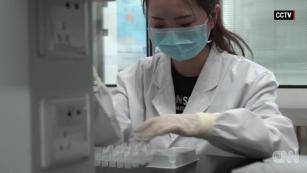
A highly sensitive face covering can detect Covid in the air and alert the wearer via an app on their phone - Andy Wong /AP© Andy Wong /AP


Those diseases spread through droplets in the air released by infected people when they talk, cough or sneeze.

The tiny, invisible molecules can remain suspended in the air for a long time and people catch the illnesses by breathing in a big cluster of the molecules.

Researchers in China tested the mask in an enclosed chamber by spraying liquid containing virus proteins on to the face covering. The sensor responded to just 0.3 microlitres of the liquid.

That is between 70 and 560 times less than the amount of liquid produced by one sneeze and even less than the amount created by coughing or talking.

The sensor contains aptamers, a type of synthetic molecule that can identify proteins in pathogens. The research model was tested with aptamers that can recognise Covid, swine flu and bird flu.

Once the aptamers bound to the virus proteins in the air, an ion-gated transistor alerted wearers to the pathogens via their phones.


BOX: 11 actions to curb Covid and prevent history repeating itself© Provided by The Telegraph

Dr Yin Fang, study corresponding author, of Shanghai Tongji University, said: "Previous research has shown face-mask wearing can reduce the risk of spreading and contracting the disease.

"We wanted to create a mask that can detect the presence of virus in the air and alert the wearer. Our mask would work really well in spaces with poor ventilation, such as lifts or enclosed rooms, where the risk of getting infected is high.

"In the future, if a new respiratory virus emerges, we can easily update the sensor's design for detecting the novel pathogens."

The team now want to develop the mask to detect diseases even faster and create wearable devices that can help people manage other illnesses such as cancer and heart disease.

The findings were published in the journal Matter.


Sunday, 31 July 2022

With a sniff or a swallow, new vaccines aim to put the brakes on Covid-19 spread

 By Brenda Goodman, CNN

Updated 1426 GMT (2226 HKT) July 22, 2022


https://edition.cnn.com/2022/07/18/health/mucosal-immunity-covid-19/index.html?

(CNN)Injected vaccines against the coronavirus that causes Covid-19 have been hugely successful, saving nearly 20 million lives globally in their first year of use and slashing the pandemic's death toll by an estimated 63%, according to a recent study. Yet good as these shots are, they have not stopped the virus from spreading from person to person.

As the SARS-CoV-2 virus spreads, it changes. That's helped it get past our firewalls, the immunity created by vaccines or left behind after we recover from an infection. Which is why, well into the third year of the pandemic, we're in the midst of another wave of Covid-19 caused by the most immune-evasive variant yet, BA.5. And more variants are coming.
Even as vaccine manufacturers race to update the first-generation shots in the hopes of patching up our protection for the fall, other scientists are taking a different approach, making vaccines delivered via nasal sprays or tablets that would deploy more immune defenders to the body's front lines: the lining of the mouth, nose and throat.
    "The hope is to shore up the defenses right there in the nose so that the virus can't even replicate in the nose," said Dr. Ellen Foxman, an immunobiologist at the Yale School of Medicine. "And then someone who has a really effective mucosal vaccination can't even really support viral replication or make viruses that can infect other people.
      "That would be like the holy grail," said Foxman, who helped plan the International Congress of Mucosal Immunology meeting this week in Seattle, which is sponsored by pharmaceutical companies Pfizer, Janssen and Merck.
      If it works, there's hope that mucosal immunity could slow the development of new coronavirus variants and finally bring the Covid-19 pandemic under control.
      There's a long way to go before that happens, however, and many scientists say the approach needs an injection of funding to accelerate the pace of development, much in the same way the billions of dollars doled out by Operation Warp Speed delivered the first generation of Covid-19 vaccines in record time.

      An old approach meets new technology

      The idea behind vaccinating the mucosa -- the lining of "the tube" (as mucosal immunologists refer to it) that runs from our nose and mouths to our lungs and guts -- isn't new. There are nine existing vaccines that work this way, including oral drops that protect against polio, cholera, salmonella and rotavirus, and a nasal spray, FluMist, that inoculates against the flu.
      Most are based on the oldest types of vaccine technologies, using killed or weakened versions of a virus or bacteria to teach the body how to recognize it and fight it off when a real infection gets underway.
      Because of those actual pathogens, some people can't use these kind of vaccines. It's risky to expose certain groups -- including pregnant women and those with weakened immune systems -- to even weakened viruses.
      None has achieved the goal of blocking the transmission of an infection, but that may be because they haven't gotten the same kind of investment as injectable vaccines, says Ed Lavelle, an immunologist at Trinity College in Dublin.
      "What hasn't really happened with mucosal vaccines is kind of huge advances in technology that have happened with injectable vaccines, even before Covid," Lavelle said.
      That may be about to change, however.

      Can nasal spray vaccines put the brakes on new variants?

      More than a dozen nasal spray vaccines against Covid-19 are being tested around the world. Many use new kinds of technologies, like delivering instructions for making the spike protein of the coronavirus through harmless Trojan horse viruses. Others aim to deploy the mRNA technology that was so successful in the injectable vaccines in the form of a nasal spray.
      One company, Vaxart, has even made a tablet that delivers instructions for making parts of the new coronavirus to the gut, which then builds immunity in "the tube."
      In animal tests, hamsters vaccinated in the nose or mouth have been less likely to spread a SARS-CoV-2 infection to uninfected animals that are in separate cages but share the same air.
      "What we found is that if you did an oral immunization, you inhibited the ability for that breakthrough to infect other animals," said Sean Tucker, chief scientific officer for Vaxart.
      The Vaxart tablet, which is about the size and shape of an aspirin, uses an adenovirus -- the same delivery system utilized by the Johnson & Johnson and AstraZeneca Covid vaccines -- to ferry instructions for making parts of the SARS-CoV-2 spike protein into cells in the gut, which stimulates the release of antibodies in the nose and mouth.
      In an early trial that included 35 participants, 46% had an increase of antibodies in their nose after taking the tablet vaccine. Those who did seemed to create a broad spectrum of immunity to a number of types of coronaviruses, and they appeared to hold on to that protection for about a year. That may be a bit longer than injectable vaccines, though more research is needed to confirm those results.
      Tucker is presenting these early results Monday at the Seattle conference. He says they'll also be published as a preprint study in the coming days.
      A phase 2 trial of a tablet with a slightly different formulation, involving almost 900 participants, is also underway, Tucker says. It is scheduled to be completed next summer.
      Most of the mucosal vaccines under development are designed to be delivered as a squirt of liquid or mist up the nose, and many are intended to be used as boosters in people who've had a complete primary series of Covid-19 vaccines.
      "I don't think of them as nasal vaccines. I think of them as nasal boosts," said Jennifer Gommerman, an immunologist at the University of Toronto who specializes in tissue-specific immunity.
      That's important, Gommerman says, because nasal vaccines -- like FluMist -- haven't really worked all that well.
      The next generation of inoculations will be something different, she says. They will build on the body-wide immunity that was created by shots; they'll just redeploy it to the nose and throat where it is needed most, she says.
      "But here, we're actually talking about something else, where we're talking about building on the systemic immunity that was induced by a vaccine to a three shots of mRNA and then training that systemic immunity to go to the upper respiratory tract by boosting through the nose," Gommerman says.
      One such approach was recently tested by Akiko Iwasaki, an immunobiologist at Yale University. According to their preprint study, Iwasaki and her team inoculated mice with a low dose of Pfizer's Comirnaty mRNA vaccine and followed up two weeks later with a boost of mRNA vaccine delivered via a nasal spray. The low dose of the injected vaccine was meant to simulate waning immunity. Other groups of mice got only an injection or only a dose of vaccine in the nose.
      Only the group that got the injection followed by the nasal spray developed robust immunity against the Covid-19 virus.
      "That approach we have shown in the mouse model to be 100% protective against lethal dose of SARS-CoV-2 infection, and it dramatically reduces the viral load in the nose and in the lung," Iwasaki said.

      Going for IgA antibodies

      Mucosal vaccines also target a slightly different part of the immune system than shots.
      Injections trigger the body to make antibodies against the virus that causes Covid-19. Most of these are Y-shaped proteins called IgG antibodies that are programmed to recognized and block specific parts of the SARS-CoV-2 virus along its spikes, the parts of the virus that latch onto and infect our cells.
      A much smaller portion of these are IgA antibodies, and they look like two Ys joined together at their tails and turned sideways so it looks more like a dog bone, Gommerman says.
      Like bouncers at a bar, IgA antibodies are the primary immune molecules on guard in the mucosa.
      These molecules are beefier than IgG antibodies. They have four arms instead of two, and they're special because they're less picky about what they grab onto than IgG antibodies.
      "They might be a little more promiscuous in the way they recognize different variants. And that's obviously a plus," Gommerman said.
      Shots increase IgA antibodies in the nose for a short time, but the hope is that mucosal vaccines will really ramp up the population of these sentries and help them stay active for longer.
      "Whether they'll be able to confer complete sterilizing immunity, that's a very tall order," Gommerman said. "But we should be now working on ways to slow down person-to-person transmission, because this virus continues to mutate and then fools our immune system and gets past that mucosal layer.
      Get CNN Health's weekly newsletter

      Sign up here to get The Results Are In with Dr. Sanjay Gupta every Tuesday from the CNN Health team.

      "This is now a very contagious virus," she said.
        Iwasaki says she would love to move her vaccine out of animal studies and into clinical trials in people.
        "We're still at the stage where we're kind of struggling to raise money, even make the vaccine for human use, because it takes millions of dollars, and we are not sitting on that kind of money for research lab," she said, "so not yet."
        https://edition.cnn.com/2022/07/18/health/mucosal-immunity-covid-19/index.html?

        Wednesday, 20 July 2022

        This Hong Kong farm is using fish and blue lights to grow basil the size of your face

         (CNN)Hong Kong has more skyscrapers than any other city, so it's not surprising that just 0.6% of its land is farmed. The city currently produces less than 2% of the fresh vegetables eaten there — but one agritech startup wants to change that.

        Updated 0657 GMT (1457 HKT) July 20, 2022


        Inside Hong Kong's high-tech vertical farm
        Inside Hong Kong's high-tech vertical farm 00:58

        (CNN)Hong Kong has more skyscrapers than any other city, so it's not surprising that just 0.6% of its land is farmed. The city currently produces less than 2% of the fresh vegetables eaten there — but one agritech startup wants to change that.

        In a 20,000-square-foot industrial warehouse in Hong Kong's Tai Po district, Farm66 grows plants on stacked shelves under LED lights. Protected from pests and pollution, this indoor farm uses no soil and minimal water says Gordon Tam, co-founder and CEO of Farm66. What's more, the controlled environment allows the company to direct the shape and size of the plants.
        Making effective use of limited space, indoor farms in urban areas could help to reduce transport-related carbon emissions and improve food security in cities that rely on imports, says Tam — an issue that was thrust into the spotlight when supermarket shelves emptied during the pandemic.
        So far, the company has raised more than $4 million in Series A funding, says Tam, with backers including the Alibaba Entrepreneurs Fund and startup accelerator ParticleX.
          Now, Tam is looking to scale up production of his smart farming technology, as well as exploring ways to grow crops in extreme environments — including outer space.

          A homegrown startup

          Founded in 2013, Farm66 was an early pioneer in vertical farming.
            In its patented aquaponics system, fish tanks are placed below shelves filled with leafy green herbs and vegetables. The plants filter water for the carp that live in the tanks, and the fish are fed leftovers — imperfect vegetables that can't be sold. Fish waste provides natural fertilizer for the plants, differentiating Farm 66's system from hydroponic systems, which typically use chemical fertilizers, says Tam.
            Using different wavelengths of light, Farm66 can control the shape and size of the plants, enabling it to grow larger produce — like this giant basil leaf.
            Smart sensors monitor environmental conditions, including temperature and humidity, and the LEDs that illuminate the shelves use different light wavelengths to control plant growth.
            "A blue light can increase the size of the leaf," says Tam. "The red (light) makes the leaf smaller, but the stem will be taller."
            For some plants, like lettuce, a large leaf is desirable, whereas for tomatoes or strawberries, smaller leaves help direct more energy and nutrients into the fruit, says Tam. The company has experimented with different growing conditions to produce a variety of plant sizes — including a batch of basil with leaves so large they could cover a person's face.

            A growing opportunity

            Hong Kong's agriculture sector wasn't always so small, says Lam Hon-ming, a professor of life sciences at The Chinese University of Hong Kong.
            In the 1960s, over 25% of Hong Kong's land was farmed for rice, fruit and vegetables, and until the 1970s, the territory produced around 50% of its own food, says Lam. But as the city grew, urban development displaced farmland, and low, seasonal income from farming further disincentivized local food production, he adds.
            Indoor, vertical farms could solve these problems. By controlling the environment, farmers could grow plants more quickly and increase the number of harvests, says Lam.
            Farm66's indoor vertical farm uses an aquaponics system, where fish waste is used to fertilize the plants, and the plants filter the water for the fish tanks at the base of the tower.
            He points to similar-sized cities with limited space such as Singapore — which produced 14% of its fresh vegetables in 2019 — to demonstrate what Hong Kong could do if it embraced vertical farming systems. Other startups in the city are also pursuing space-saving farming solutions: Grow Green, founded in 2016, has developed smart hydroponic planting systems for home gardeners, and Farmacy, founded in 2018, supplies refrigerator-like "mobile farms" to local shops and restaurants.
            And while Hong Kong is short on space, it has a growing number of vacant industrial warehouses, with more than one million square meters unused in 2020, according to government reports. These warehouses would be "ideal" for vertical farms, says Lam.

            From city limits to outer space

            Farm66 is currently operating at less than 30% of its capacity, producing around two tons of vegetables a month, which it supplies to a handful of supermarkets and hotels, says Tam.
            Farm66 is now focusing on research and development, such as robots to help automate tasks like harvesting. Credit: CNN / Dan Hodge
            The high setup costs for indoor, vertical farms is still a barrier, he says, which makes turning a profit difficult. Tam declined to share the company's revenue but said that less than a third comes from vegetable sales. Instead, the company is shifting its focus to research and innovation, and is developing ways to make indoor farming more affordable.
            The company has developed prototype robots to help automate tasks like harvesting and planting, which Tam says will enter mass production later this year. By establishing partnerships with factories in Mainland China to manufacture the robots at scale, Tam believes he can cut costs for future urban farmers.
            Other Farm66 innovations include mini farms for homes, schools and businesses, which have sensors to monitor and automate plant care.
            Tam designed a conceptual "space farm" for an exhibition at the Hong Kong Design Center in 2022. He says the rotating hydroponics system could be a solution in zero gravity environments.
              But Tam's boldest vision is a literal moonshot. He has designed the Future Green Tunnel, a conceptual rotating hydroponics system for zero-gravity environments, and is adapting indoor farming technology to grow plants in space.
              Whether on Earth or in space, Tam hopes that indoor farming will flourish — and produce "high quality, safe vegetables for our next generation."


              This Hong Kong farm is using fish and blue lights to grow basil the size of your face - CNN