Pages

Showing posts with label Sweden. Show all posts

Thursday, 21 December 2017

Want to Live Longer? Get a Dog

You love your dog… But now you have another reason to spoil your four-legged friend: Your pooch is helping you live longer.


9 December 2017

INH Health Watch

A large Swedish study has found that owning a dog extends lifespan.

Researchers at Uppsala University in Sweden tracked the health, mortality, and dog ownership of more than 3.4 million adults. They followed them for 12 years.

The researchers found that dog owners were 33% less likely to die from any cause. And dog owners were 11% less likely to die of the number one killer, heart disease.

Dog ownership was associated with lower risk of heart attack, stroke, and heart failure. The research was recently published in the journal Scientific Reports.
Dog Ownership Boosts 3 Longevity Factors
The researchers say that dog owners experience three positive health effects:
  1. More exercise. Dog owners walk their dogs and are generally more active. A Japanese study of 5,200 adults found that dog owners were 54% more likely to get the daily recommended level of exercise than non-dog owners.
This activity lowers heart rate, helps stabilize blood sugar, and improves overall heart health.
  1. A healthier microbiome. Owning a dog can be as healthy as eating probiotic-rich food or taking probiotic supplements. Dogs bring dirt, and yes, bacteria into your home. Many of these microbes are good for you.
Researchers found dogs increase the levels of 56 different classes of beneficial bacterial species in a home. This infusion of microbes helps keep you healthy and your immune system in top condition. (Cats also contributed to probiotic diversity, but less so than dogs. Cats were found to boost levels of 24 classes of bacteria. 
How powerful is the immune effect? A study at Wilkes University in Pennsylvania found that petting a dog for 18 minutes elevates levels of immunoglobulin A. This is one of the body’s most powerful protectors against infection.
  1. Stress reduction. Dogs provide stress relief through companionship. But they also can act as an introduction to new human friends and facilitate socialization during walks. This reduces loneliness, which is a major risk factor for early death.
A German university study found owning a dog reduces the stress hormone cortisol. It increases levels of oxytocin, a hormone that promotes a sense of wellbeing.
Mwenya Mubanga is a researcher at Uppsala University. He led the new study.
"Dog ownership was especially prominent as a protective factor in persons living alone, which is a group reported previously to be at higher risk of cardiovascular disease and death," Mubanga said. "Perhaps a dog may stand in as an important family member in the single households."
Best Dog Breeds for Good Health
Any dog can help extend your lifespan. But to maximize the health benefits, you want one that encourages you to exercise without being too difficult to care for. In other words, you want a pet that is active…but not too active.

According to the American Kennel Club, two classifications of dog best fit this description:

Sporting dogs. These include golden, Chesapeake Bay, or Labrador retrievers, pointers, and setters. They are friendly, like to spend time with people, and make great walking partners.

Terriers. They might be a little feisty, but they are ready-to-go anytime. They are a great choice if you want a smaller dog that loves to walk. This group includes the fox terriers, West Highland terrier (or Westie), rat terrier, American Staffordshire terrier, Staffordshire bull terrier, or Kerry blue terrier.

One more thing… When you’re ready for a new pet, don’t forget shelter dogs. You’ll be saving a dog’s life. And your new friend might save yours.


inhresearch.com

Tuesday, 5 December 2017

Curious Cook: Vegetarianism and other dietary tales, Part 3

This issue explores the almost existential question of why we eat, and why milk is essential to infants but bad news for adults; lacto-vegetarians, take note.


Before continuing with the discussion about vegetarianism or other dietary choices, a couple of questions should first be asked. One is: Why do we eat? If that sounds a little silly and rhetorical, then try another question: Why do humans have the longest childhood of all known animals, requiring around 20 years before full maturity? No other creature needs such a long time to mature – even whales are considered mature between seven to 10 years of age.
The answers to both questions are related, and complex – and they start with human breast milk.

A little story about human oligosaccharides

Around the end of the 19th century, researchers noted that human infants fed with their mother’s milk had a higher survival rate compared to infants fed on cow or goat milk.
Then around the 1930s a mysterious, indigestible compound called “gynolactose” was discovered in human mammary milk. Later it turned out that gynolactose was actually a collection of over a hundred different complex sugars called human milk oligosaccharides (HMO), and HMO was the third most common component in human milk, after lactose and fat.

milk
Apart from humans, no other species on Earth constantly consumes the milk of another species. — Photo: Fotolia/TNS
However, it was deeply puzzling as to why human mothers expend so much energy to produce oligosaccharides which are indigestible by their infants.
It was in 1954 that the Austrian chemist Kuhn and the American-Hungarian paediatrician Gyorgy discovered that HMO was actually used to nourish gut microbes in infants, specifically an unusual strain with a digestive cluster made up of 30 genes called Bifidobacterium longum infantis (or B. infantis for short).
It appears that B. infantis converts HMO into short chain fatty acids which actively feeds the gut cells of infants, promoting the production of adhesive proteins which help seal the gut from the bloodstream (thereby reducing microbial infections) – and it also produces anti-inflammatory molecules for use by the infant immune system.
There are other interesting and more fanciful theories about the benefits of HMO to human infants which are also not discounted – but the salient fact is that evolution has determined that human mothers produce HMO to protect and develop the guts of infants.
For modern humans, the brain is considered the most important organ for survival – humans actually have no particular attributes which are outstanding in the physical world (apart perhaps from the ability of our opposing thumbs to handle tools effectively).
HMO is a clear indication of the importance of the human gut – and the relationship between the intestines and the developing brains of young humans is a major factor why humans take so long to mature.
Young humans actually do grow at quite a fast rate, though not nearly as fast as most other animals and a reason is that young humans have to balance the development of the brain with the physical development of the body.
Brains are extremely demanding in terms of energy for young humans, requiring around 40% of the energy intake from food compared to only about 20% for adults – other primates use roughly only 8% of their energy for their brains.
This is why young people tend to eat a lot (and not get fat) as the energy cost of growing and developing the synaptic connections in the brain is roughly double the energy of just using the brain.
At the same time, young humans have to develop other organs and skeletal structures as well – and therefore it is necessary to extract as much nutrients as possible from food via the intestines. These nutrients are not just calories but also essential minerals and other compounds such as fats, vitamins, antioxidants, et cetera.
As such, it is biologically very important for humans to maintain healthy intestines from birth – human guts are necessary to extract the huge amount of energy and nutrition needed over a long period of time (around 20 years) to fully develop the brain and the rest of the body.
The length of the intestinal system is also relatively longer in young humans, presumably to be more efficient at extracting nutrients.

eating
We need food so that our bodies do not run short of fuel and die. Photo: AFP

And now, why we eat

The simpler question as to why we eat actually has two answers. The obvious one is that we need energy from food to breathe, think, move, maintain internal organs and disease defences, et cetera.
In short, we need food so that our bodies do not run short of fuel and die.
However, even after our bodies have matured after the initial 20 years or so, the fact is we are still growing – or rather, we are recycling and replenishing our bodies all the time regardless of age.
For example, the human skin is constantly flaking off and renewing itself, and a human adult in good health will attain a new layer of skin every 30 days or so. Adult taste buds are renewed every two weeks, red blood cells every four months – even the liver is regenerated every year, and so on.
The only organs which do not regenerate are the central nervous system (including the brain), the lenses in the eyes and the ovaries of women.
All this rejuvenation again depends on the efficient extraction of energy and nutrients by our intestinal system, which was kick-started by HMO. At this point, it is important to note that as humans get older, the intestinal microbiota tends to change to include and accommodate many more types of bacterial and fungi.
The gut microbiota is an integral part of our digestive processes and simply would have adapted to our most common dietary habits.
After some years, the composition of human intestinal microbiota would normally have stabilised, though this can also often mean that it is likely to react to new, unexpected foods – having a stable gut flora attuned to only one environment is a plausible explanation for why some people get ill eating foreign food or certain new foods.
Unusual or alien foods (especially foreign spices, foreign additives, et cetera) may not be well-received by the gut bacteria or the gut itself and can cause reactions such as intestinal pains, constipation or diarrhoea.
And this sensitivity makes sense, especially if you consider that each human has around 30 trillion human cells symbiotically co-existing with a greater number (40 trillion) of bacteria of various strains – human health depends enormously on bacteria and ingested items which confound or damage our natural bacterial flora also damage our health.

Lactose, or usually a sign of trouble

Curiously, over 65% of human adults are intolerant of lactose, even though lactose is the primary sugar in breast milk and also dairy milk.
While human infants are capable of producing the enzyme lactase to digest lactose, the lactase-phlorizin hydrolase or LPH gene controlling the production of lactase peaks between the ages of two to 11 months and normally declines markedly after about the age of five years.
There appears to be no evolutionary benefit in maintaining the LPH gene past a certain age as lactose is normally only found in human breast milk and lactase is not required once a baby has weaned.
milk
Even though over 65 of human adults are intolerant of lactose, people are encouraged to ingest milk and dairy products on the basis that such products provide extra minerals and nutrients such as calcium and Vitamin D. Photo: TNS
It should be noted that dairy farming is a recent development in human evolution, dating from only around 10,000 years ago – it is also not prevalent around the world and therefore most humans have still not adapted to digesting the lactose in cows’ milk.
Apart from humans, no other species on Earth constantly consumes the milk of another species.
Saying that, the LPH gene in some humans has been found to continue into adulthood due to a genetic mutation identified mostly in communities historically involved with dairy farming.
But the fact remains that most people are incapable of drinking a glass of milk without suffering some discomfort. This discomfort arises due to lactose sitting around undigested in the gut, pulling in water and nutrients like a viscous, sticky sludge, causing diarrhoea, bloating, flatulence and possibly also vomiting.
It is also highly plausible that lactose intolerance can lead to other side effects outside of the intestinal tract, such as skin problems or respiratory issues, for example.
Studies have found that well over 90% of Chinese and Japanese people are lactose intolerant, along with over 85% of Asian Indians and over 75% of Africans.
In these populations, one would suggest that a consumer warning would be appropriate for foods containing lactose, though that is seldom provided, at least not in the EU where over 12% of the population is also lactose intolerant.
In fact, most people are encouraged to ingest milk and dairy products on the basis that such products provide extra minerals and nutrients such as calcium and Vitamin D which should help prevent bone diseases such as osteoporosis.
However, this advice may be flawed as people who drink a lot of milk also exhibit the highest incidence of bone fractures, especially in old age.
A Swedish study in 2014 covering 61,433 women and 45,339 men implied that higher mortality and higher bone fracture rates, particularly hip fractures in women, were linked to higher consumption of milk (though other factors were also likely involved).
However, regular outdoor exercise was linked to a reduced likelihood of osteoporosis.
Interestingly, many dairy products such as yoghurts and cheeses are fermented with bacteria from the lactobacillus and bifidobacterium species which can survive as part of the intestinal microbiota.
Although it has been claimed that these lactic acid bacteria can produce lactase in the gut, no convincing evidence has been found to support this – it is much more likely these strains of bacteria break down milk lactose into other compounds which are more digestible by humans.
Various strains of lactobacillus and bifidobacterium are commonly used in the production of dairy goods and this may be a reason why many people can tolerate dairy-based products rather well, even if they cannot tolerate milk itself.
So if you enjoy dairy products, then a suggestion might be to eat more aged cheeses and probiotic yoghurts rather than milk shakes and cream pies.
This widespread intolerance of lactose by humans might easily be misinterpreted as an intolerance of meat, as meat is often presented with creamy sauces of dairy origin.
Also, many Western desserts after meals are often based on milk products and usually difficult to digest for many people – I personally now avoid dense creamy confections after meals as they simply make me sleepy and slightly nauseous.

Eating (some) meat may be bad

To be brutally honest, eating meat in some places is possibly pretty bad for health – this is due to the extensive use of growth-enhancing agents in some countries during the raising of livestock, or the subsequent treatments during meat processing, or the general poor quality of the meat itself.
Ingesting meat loaded with additives such as antibiotics, hormones, disinfectants, preservatives (such as nitrates and nitrites) can significantly damage human intestinal microbiota as well as other parts of the body.
As an example, the impact of animal growth hormones is considered so severe that the EU has banned for years hormone-treated beef from the United States.
Also, many people think that cooking meat kills all toxins and renders cooked meat safe, even bad meat. This is strictly not true – proper cooking can kill all food bacteria (and parasites) but some toxins produced by bacteria before cooking are often not affected by normal cooking processes.
Examples would be the botulism toxin produced by Clostridium botulinum which requires 10 minutes of boiling before deactivation, the enterotoxins produced by Staphylococcus aureus can survive even longer periods of boiling, and the toxins from Bacillus cereus seem impervious to any levels or durations of cooking heat.

spinach
Workers harvesting Chinese spinach.
Not only meat – plant agriculture is also problematic
But to be fair, it is not just meat that is potentially injurious to health – many plant products are treated and contaminated with pesticides and chemical preservatives as well.
There are hundreds of depressing statistics about the types and degrees of pesticide contamination of cereals, nuts and fruits – and that is just the breakfast items.
Furthermore, I am still personally uncomfortable as to why safety research on genetically modified organism (GMO) food seems to be always restricted to 90 days.
If you are now also curious, a relevant article on GMO is on http://www.star2.com/living/viewpoints/2016/01/10/the-verdicts-still-out-on-gm-food/
The extensive use of pesticides for both intensive and GMO farming is also causing huge ecological damage to world insect populations, particularly bees and other beneficial insects.
In Germany, a 2017 study of nature reserves have found an alarming 75% drop in the number of insects compared to just 27 years ago.
Without insects, it is possible that the global agricultural food chain can be severely disrupted, especially for the many fruits and crops that depend on insect pollination.
Part 4 looks into some awkward questions about our diets, especially for people who love eating meat, such as me.

Saturday, 26 August 2017

How Roche Tweaked an Aging Drug to Keep Profits Rolling In

 The pharma company reformulated a cancer drug to treat MS and jacked up the price.

August 23, 2017

 
PHOTOGRAPHER: SIMON DAWSON/BLOOMBERG


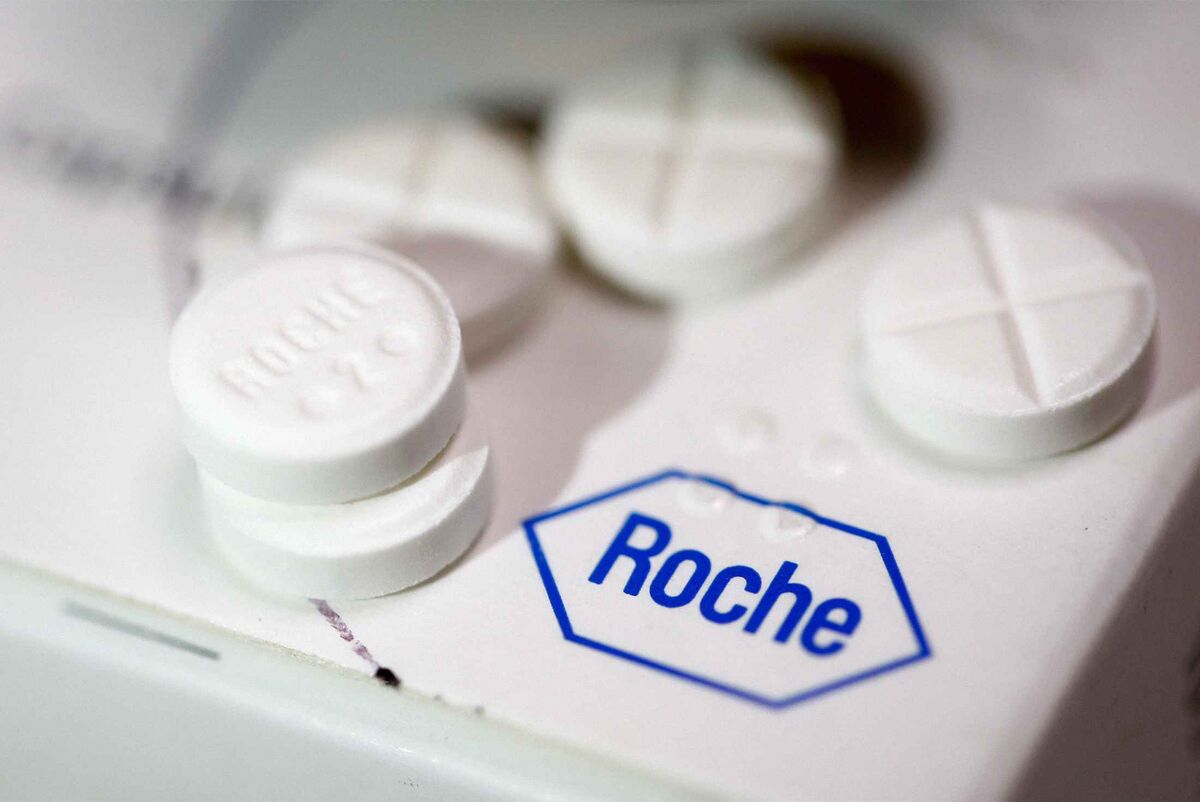
In the remote forests of northern Sweden, Anders Svenningsson’s multiple sclerosis patients have benefited from a drug he’s been prescribing for the past eight years. It doesn’t require weekly injections, doesn’t leave patients feeling achy and feverish; and most important, halts their disease. That drug, Rituxan—originally developed to treat cancer—has become Sweden’s most prescribed medicine for MS, in which the body attacks its own central nervous system. Swedish doctors have great freedom to prescribe treatments they believe are appropriate, but few MS patients elsewhere can get the drug. That’s because its maker, Roche Holding AG, has never tried to sell it for the disease. Instead, Roche this year introduced a nearly identical medication that it markets under a new name and at 10 times the cost.

The tale of the two drugs highlights how pharmaceutical companies tweak aging medications to keep the profits rolling in. With Rituxan facing the expiration of its patent starting in the middle of this decade and another drugmaker due a share of the profit from the medication, Roche didn’t pursue it as a treatment for MS despite studies indicating it probably works. Instead, Roche invested in the offshoot medicine, which would take years to reach the market but enjoy longer protection against generics. That strategy began paying off in July, when the new drug, Ocrevus, wildly outperformed expectations in its first quarter of sales. 


Stephen Hauser, a neurology professor at the University of California at San Francisco who led MS trials for both drugs, says the two have some minor differences. But doctors and patients must decide whether it’s worth buying Ocrevus, which he says is “10 percent more effective, 10 percent easier to administer, but 10 times more expensive.” Ocrevus runs $65,000 a year, while Rituxan costs about $2,400 annually in Sweden and $8,000 to $10,000 in the U.S. for patients who can get it prescribed for MS.

Roche argues that there are significant differences between Rituxan and Ocrevus. Because the newer formula is composed mostly of human genetic components, it has fewer side effects and patients won’t develop as much resistance to it, the company says. “Ocrevus was specifically engineered for long-term use in patients with chronic diseases,” says Daniel O’Day, head of Roche’s pharmaceutical unit.

When Roche decided to abandon Rituxan as a treatment for MS about a decade ago and focus on Ocrevus instead, “I felt it was immoral, because we had very good data” showing the older medication worked, says Timothy Vollmer, a neurology professor at the University of Colorado’s health sciences center. Vollmer says some insurers will pay for Rituxan, so he prescribes the one that will be cheaper for patients, because “I don’t have a reason to distinguish between them other than cost.”

It’s not uncommon for drugmakers to bolster their profits by reformulating medications and charging more for the new versions—though the companies always say they’re safer and more effective. Ocrevus is one of at least 10 MS drugs that have been revamped to boost their moneymaking potential, according to the Blizard Institute, a medical research center in London. Insulin producers have for decades made small improvements to keep prices high. Johnson & Johnsonin 2007 rejiggered an antipsychotic formula to extend its patent protection. And Roche a decade ago developed an eye drug similar to its cancer medicine Avastin but priced about 40 times higher.

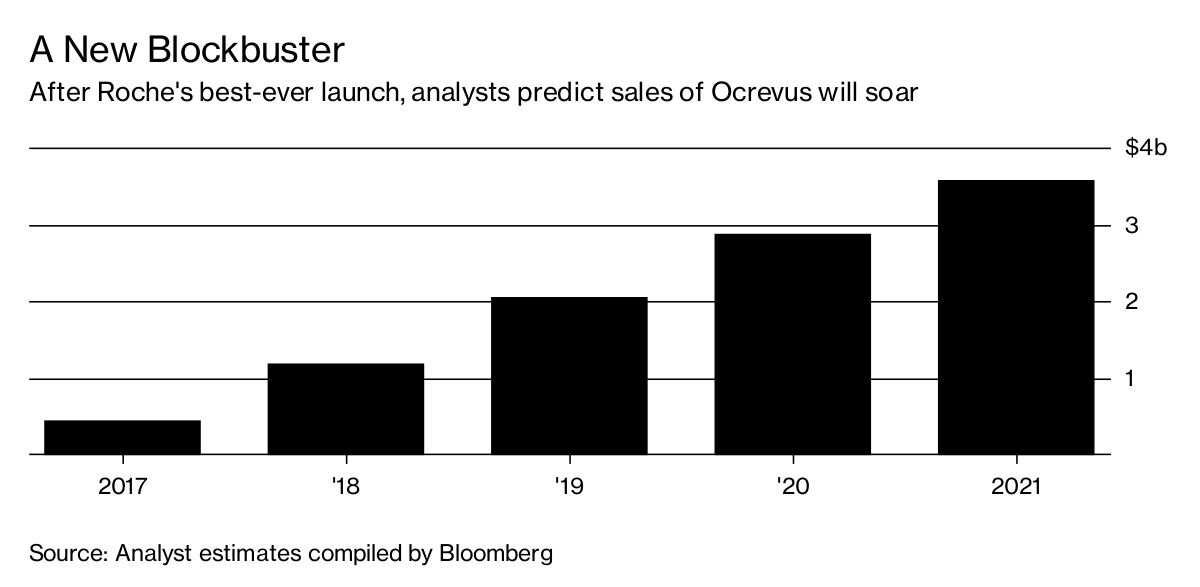
In the U.S., where the Multiple Sclerosis Foundationestimates that more than 400,000 people have the disease, neurologists have embraced Ocrevus. Since it got U.S. Food and Drug Administration approval in March, Ocrevus has generated almost $200 million in sales, the best drug launch in Roche’s history. Approval in Europe is expected this year, and analysts predict it will top $3.5 billion annually by 2021. By contrast, Rituxan, which is widely prescribed for lymphoma, was never cleared for multiple sclerosis and probably never will be. A few thousand Americans with MS take the drug because their doctors prescribe it anyway.

Rituxan was among the first therapies to fight cancer by attaching to a specific protein. Its target is found on a type of white blood cell called a B cell. After it was shown to help people with various autoimmune diseases, researchers surmised it might also prevent the immune systems of MS patients from attacking the brain, spinal cord, and nerves. It was a new theory—doctors had thought another type of white blood cell played a bigger role—but the medicine worked. In 2007, a decade after Rituxan was first approved for blood cancer, a Roche trial showed that MS patients who took the drug had about 90 percent less scarring in their brains than people who took a placebo. Although a second study a year later failed in the toughest-to-treat type of MS, the results were encouraging enough to spur hopes that it would be effective for some of those patients, too.

Annette Langer-Gould, a former assistant medical director at Genentech Inc., the Roche biotech affiliate where Rituxan and Ocrevus originated, helped create a development plan for the two drugs. “How the medications work is exactly the same,” says Langer-Gould, now a researcher at health giant Kaiser Permanente, which has about 1,000 MS patients taking Rituxan. While both use proteins from humans and mice, she says, Ocrevus is “a little less mouse.” Genentech decided to push forward with Ocrevus mostly because the company could charge a higher price, according to Langer-Gould. Rituxan and other treatments for lymphoma were significantly cheaper than MS drugs, she says, but Roche couldn’t arbitrarily increase the price for cancer patients. Roche says the decision “was based on scientific and medical considerations so people with MS could have the medicine with the highest potential benefit.”

Even as Roche was backing away from Rituxan for MS, neurologists began to embrace it on their own. While running an MS center in the Swedish city of Umea, Svenningsson was impressed by trial results. He started prescribing Rituxan and saw a notable improvement in patients’ day-to-day lives. Some 3,500 Swedish MS patients take Rituxan, which has proved more effective than many rival drugs designed for MS, according to the Karolinska Institutet, the Swedish research center where Svenningsson now works. Unlike older treatments that cause flu-like symptoms and sometimes must be administered every other day, Rituxan is given via injection once or twice a year. “As patients got to the end of the trial, they said, ‘Please don’t give me back that old stuff again,’ ” Svenningsson says. “ ‘Let me continue with this.’ ” —With Susan Decker

BOTTOM LINE - Roche declined to pursue research showing cancer drug Rituxan can treat MS, instead focusing on an offshoot the company says is more effective—but costs 10 times as much.

Friday, 21 July 2017

Like it or not, broccoli's good stuff

Turns out our mothers may have been onto something when they told us to eat our vegetables — especially our broccoli.

30 June 2017

Image result for Broccoli

A compound found naturally in broccoli and other cruciferous vegetables may reduce some of the harmful effects of Type II diabetes in overweight adults, according to new research by Jed Fahey, a nutritional biochemist and an associate professor at the Johns Hopkins University School of Medicine, and a team of researchers in Europe and the United States.
An article on the findings appeared in the journal Science Translational Medicine in June.
Fahey, who is director of the Cullman Chemoprotection Center at the medical school, served as an author of the study along with colleagues based in Sweden, Switzerland and elsewhere in the United States.
It isn’t the first time Hopkins researchers have illuminated the healthful powers of broccoli.
Fahey’s predecessor as director of the research center, the renowned pharmacology professor and experimental generalist Paul Talalay, isolated the compound sulforaphane as a phytochemical (a chemical produced by plants) in the early 1990s.
Baltimore faith communities host challenges, health initiatives to encourage healthier living.
Two years later, Talalay made international headlines — and sparked broccoli sales around the world — by demonstrating the compound’s effectiveness in boosting the body’s ability to resist cancer.
He and Fahey also showed that broccoli sprouts — three- to four-day-old broccoli plants — have 50 to 100 times the cancer-fighting power as the mature stalks typically sold in grocery stores.
Popular Science called the findings among the top 100 scientific discoveries of the 20th century, and researchers at Hopkins and elsewhere have since tested the chemical’s effectiveness in helping the body fend off pathologies from autism and osteoarthritis to Parkinson’s and Alzheimer’s disease.
Shedding pounds sensibly and making weight loss stick
This study was the first to test it against Type II diabetes, a chronic and increasingly widespread metabolic disorder that affects more than 29 million Americans and 420 million people around the world, according to the World Health Organization.
The world’s most common form of diabetes, Type II arises when the body can no longer properly use insulin, a hormone that regulates blood sugar. As a result, blood sugar levels soar.
The disorder increases a patient’s likelihood of developing heart disease, eyesight problems, kidney failure and stroke.
Though the study was comparatively small and short-term, the results are tentatively promising for the treatment of diabetes.
“This shows that sulforaphane is useful not only for cancer prevention but it also demonstrates anti-diabetes and many other activities,” said Fahey, who spent 15 years in the biotechnology industry before joining the Hopkins faculty at Talalay’s invitation in 1993.
It was four years ago that Anders Rosengren and Annika Axelsson, research endocrinologists at the Lund University Diabetes Center in Sweden, reached out to Fahey for his help in getting the study under way.
Image result for Broccoli
He and several colleagues had come across several papers suggesting that sulforaphane — a compound that broccoli, cabbage, kale, bok choy and other vegetables in the pungent cruciferous category developed to protect themselves against unfavorable and stressful conditions — might help human beings resist diabetes.
The Swedes' thinking, in scientific terms, was simple.
Research has shown that sulforaphane, by its very molecular makeup, has an unusual effect: it accelerates the body's production of a common but important protein known as Nrf2.
The job of Nrf2, in essence, is to regulate the creation of antioxidants that repair stressed, damaged or decaying cells.
A shot of sulforaphane kicks the creation of those antioxidants into overdrive, bolstering at the cellular level the body's capacity to resist a wide range of malfunctions.
"This molecule [Nrf2] is responsible for shouting out to cells, 'You're in trouble; you're being attacked by sunlight, by ultraviolet light, by toxins. You've got to up your game, you've got to enhance your protective strategy,'" Fahey said. "Nrf2 is a crucial regulator, and sulforaphane is one of the most potent inducers of that regulator."
While the liver of a normal person creates energy by producing glucose, a type of sugar, and releasing it in regulated amounts into the bloodstream, individuals with Type II diabetes can produce as much as three times the needed amount.
If that malfunction occurs because a patient's cells have been weakened by exposure to stressful conditions, the Swedes theorized, perhaps sulforaphane would help.
Their research proceeded in three phases.
First, they chose more than 3,800 drugs whose gene signatures they saw as likely to match up well against the pattern of gene expression associated with Type II diabetes.
They found through a complex form of mathematical cross-referencing that sulforaphane overlapped most closely with the diabetic expression pattern.
The group then began working with Fahey, who is known for the highly potent freeze-dried form of broccoli sprout extract he creates at Hopkins.
A series of experiments using the extract showed that sulforaphane reduced the overproduction of glucose in liver cells the scientists had grown in a lab — and that it did the same in the livers of rats with diabetes.
The final step was to test sulforaphane in humans. The team conducted a 12-week randomized study involving 97 adults with Type II diabetes. About a third of them had a form of the disease that the widely used drug metformin and recommended lifestyle changes had failed to control.
The researchers gave about half of the group a dose of the extract each day, the rest a placebo.
Those who received the extract saw a decrease by an average of 10 percent in their glucose levels — enough, the team says, to reduce complications in the eyes, kidney and blood.
Those with the least controlled cases of diabetes — and subjects who were obese — saw the greatest drops. Subjects who were not obese experienced no appreciable change.
Emily Ho, a nutritional biochemist at Oregon State University, also has studied the health effects of sulforaphane.
The results of the study are "definitely promising" even though "a more comprehensive study with a larger study group is needed, especially to tease out long-term safety and the sustainability of effects in patients," said Ho, the director of Moore Family Center for Whole Grain Foods, Nutrition and Preventive Health at Oregon State.
Fahey agreed that the study calls for follow-up.
"You want to see other people replicate your results or go them one better," he says.
But they are more than enough to support the belief Fahey and his Hopkins colleagues have long promoted — that science has shown people don't have to wait until they develop full-blown illness to fortify their health.
A balanced diet that contains plenty of well chosen whole foods, he said — including broccoli sprouts, the cruciferous vegetable with the most sulforaphane — can provide a range of nutrients that work with the body to forestall illness and extend our "healthspan" in life.
Normally a patient man, Fahey struggles to hide his frustration when he talks about Americans and their eating habits. Science clearly shows that a diet centered on fresh, whole foods can ward off disease.
He can't fathom why so many people still have an appetite for junk food.
"It has been an uphill slog to convince people to eat a healthy overall diet," he says. "We'll keep trying to get the word out."

Sunday, 17 July 2016

Can crowdfunding really cure cancer?

Alexander Masters investigates a pioneering new project 

Writer Alexander Masters started crowd-funding cancer trial project, iCancer


Writer Alexander Masters started crowd-funding cancer trial project, 
iCancer Credit: Pal Hansen 

The first person in the world  to receive the only crowd-funded cancer drug in history will be Jan Smørlung, a village fire inspector, who doesn’t mind us pointing our camera lens at his groin.   ‘Yes, thank you. I am happy to assist the world,’ he says.

A plump, healthy-looking man with a fresh haircut, wearing a white T-shirt, he looks like someone who rows out into misty forest lakes to catch a fish for breakfast. He has two children, six grandchildren and not much time.

For over a decade, Jan’s consultant, world famous clinician Kjell Öberg, has held back the inevitable with every treatment so far known to medicine, from chemotherapy to small  radioactive balls dribbled into Jan’s blood.


Alexander Master's best friend, Dido Davies: '[Dido] was dying of NETs that had begun in her  pancreas – the same disease that killed Steve Jobs – and for 18 months I’d been hunting through the web, trying to find new treatments for her'
Alexander Master's best friend, Dido Davies: '[Dido] was dying of NETs that had begun in her  pancreas – the same disease that killed Steve Jobs – and for 18 months I’d been hunting through the web, trying to find new treatments for her'
Neuroendocrine tumours (NETs) such as his are slow-growing, but unless completely removed by surgery they generally get you in the end. (They usually occur in the intestine, but they are also found in the pancreas, lung and other parts of the body.)

A few months ago, Jan’s tumours lost patience with the shilly-shallying and began to expand unstoppably.    The new crowd-funded drug, financed by 2,000 people living in 40 countries, plus one supremely generous oilman from Geneva, is called AdVince. In a few hours, a timorous  dose will be pumped into a tube between Jan’s legs, along the hepatic artery and into his tumour-infested liver.

First ever crowd-funded cancer drug trial
First ever crowd-funded cancer drug trial Play! 01:51

Cancer trials proceed with agonising slowness. To the patient they can have the feel of a nightmare. These opening doses (known as Phase One of the trial) are to test the safety of the drug, and seem all but homeopathic. They are diluted to be hundreds of times lower than the expected effective dose.

It will be well into next year before Phase Two of the process begins, when Jan will get to try potentially useful quantities of the new drug. ‘Shadows good, shoot straight on the bed,’ mutters Dave, our cameraman, brushing past Öberg, as if the professor were no more than a tea boy.

‘We could pull the curtain round, let’s see how stable the light is …’  ‘Do you know why the drug is called AdVince?’ asks Liz, who is prepping Jan for a website video to celebrate the start of the trial. Jan shakes his head contentedly.

'If I raise the money, will you put my friend Dido on the trial?’ I asked. It was a question that was perhaps ethically abhorrent and quite  possibly illegal

‘Vince was the oilman. He paid three-quarters of the money needed for this trial, on the condition that he would also be allowed to join it. What do you think of that?’ ‘Did he pay for three-quarters of me, too?’ ‘For everyone. But his condition was that he be included, too.’ ‘I thank him with all my heart. He is a good man.’

There are four and a half of us fluffy-headed media types who have flown out here to Uppsala University Hospital, in Sweden, to gawp at Jan’s middle bits: Liz Scarff who, with her partner David Carter, runs a strategic creative consultancy called Fieldcraft Studios; Dominic Nutt, a communications expert (who has just contracted a cold, gone red in the face and disappeared back to our hotel); me, a biographer,  and Stella (daughter of Liz), aged 11 months. None of us knows a thing about medicine.  

Yet without us, Jan wouldn’t be lying here. We are the ones who discovered AdVince lying neglected in Uppsala’s research-lab freezer, formed a campaign group called iCancer and, together with the 2,001 other donors around the world whom Jan has never met and who have never heard of him, raised £2 million to get the drug defrosted and infused into the  top of his thigh. 

We are also here because, during the process, we think we discovered a radical new way to raise money for the vast numbers  of potential medications currently neglected  in laboratories around the world. It is such a  simple idea that it’s astonishing no one has thought of it before.  Jan is taking part in Phase One not just of AdVince, but also of what we’ve dubbed the Plutocratic Proposal.

AdVince is a genetically modified oncolytic adenovirus. In medical parlance, it’s ‘an advanced biologic’. In campaigner talk, it’s a cancer-eating bug. It has been engineered from a virus that causes flu. It is mutant sniffles.    I first heard about AdVince (or Ad5[CgA-E1A-miR122]PTD, as it was then called) four years ago and 5,000 miles away from Jan’s village on the Swedish coast.


I was sitting in my  girlfriend’s apartment in New York, watching a YouTube video about diseased Canadian pigs. My best friend, the biographer Dido Davies, was dying of NETs that had begun in her  pancreas – the same disease that killed Steve Jobs – and for 18 months I’d been hunting through the web, trying to find new treatments for her.

Dido’s tumours had come back. They had seeded in her blood and were crowded  in her liver. The YouTube lecture had been up for three years, had recorded a total of 48 views, and the man presenting the talk claimed his biotech company (whose name he forgot to mention) had discovered a virus in diseased pigs that killed NET cells in humans.

The drug had been approved for clinical tests by the FDA (the Food and Drug Administration – America’s all- powerful and perfectionist medical approval body) and two human trials were under way. I spotted an address on a poster behind the lectern, froze the film, enlarged the picture until I could read the name Neotropix, and rang the company up. No answer. It had gone bust two years earlier.

After AdVince enters Jan’s body, it will swarm down his hepatic artery, confined inside the catheter until the final second, and be released into his tumour-infested liver

 The venture capitalists backing the research hadn’t seen a quick enough return, so had abandoned everything: the company, the drug, the hospitals running the trials, even the patients whose tumours were starting to disappear. It turns out this is  a common situation. But the failure put me on the right track.

A link on the company’s defunct website led me to a series of articles in internationally respected journals by Professor Magnus Essand and Dr Justyna Leja at Uppsala University. They had also developed a virus that specifically  targeted neuroendocrine cancer cells, and  had been forced to abandon their promising work for lack of funds. But they were still answering the phone.

 ‘If I raise the money you need to get this drug back into clinical research, will you promise to put my friend Dido on the trial?’ I asked. It was a question that showed absolutely no understanding of accepted medical practice, was perhaps ethically abhorrent and quite  possibly illegal.


‘Yes,’ said Professor Essand. The first thing I did was the only thing a  part-time hack like me could think of doing: write an article and send it to The Sunday Telegraph, where I’d once published some travel pieces: ‘A virus that kills cancer: a cure that’s waiting in the cold.’ Then I waited.

Monday passed, Tuesday… the article went, appropriately, viral, but my phone stayed silent. Wednesday, Thursday… Two Sundays later, I got a beautifully written response: another article in the Telegraph, by Dominic Nutt.  ‘Would I take an untested cancer treatment myself? Hell, yes!’

He had recently had a neuro-endocrine tumour removed, and said that if he’d had the £2 million I needed, he’d give it to me; only, he didn’t have it.     It felt as though we were characters in a Sherlock Holmes story, calling to each other through the columns of a newspaper.


Cancer trials proceed with agonising slowness. To the patient they can have the feel of a nightmare
Cancer trials proceed with agonising slowness. To the patient they can have the feel of a nightmare Credit: Michael Kirkham
The next day, I met Dom on the balcony of the Wetherspoons pub in Victoria station. He  introduced me to his friends Liz and Dave, whose award-winning company specialises in social media campaigns, and over beer and lemonade we set up iCancer.   Eight months later, the money raised from crowd-funding online was on Professor Essand and Dr Leja’s lab bench.

Beyond the window of Jan’s room there are enormous building works. Cranes hum and clank as they lift concrete hoppers high into the air, then reel them down again at speed to be disgorged  into the sprawling foundations. Uppsala is extending its oncology, radiotherapy and surgery departments with a nine-floor new building costing 2 billion Skr (£165 million).

The Swedish population is growing fast, and cancer is booming. The fact that certain viruses successfully attack cancer cells has been known since the 1890s. What’s taken 130 years to figure out is  a) how to make the effect last longer than a few weeks and b) how not to kill the patient in the process.

Jan is in there because 2,000 people in 40 different countries paid for him to have this chance. That will never cease to amaze meLiz Scarff

When modern scientists began to investigate the field, genetically engineered examples such as AdVince were treated with the same caution as Ebola. One fear was that these modifications of a sneeze might break out of the labs and infect the fuel in aeroplane tanks: regulators actually believed it would make Boeing 747s drop out of the sky.

The film I Am Legend is about an artificially modified cancer-eating measles virus that takes over the world by killing 90 per cent of the population. The film is set in 2012, the same year that our campaign group, iCancer, handed over the money to the University of Uppsala. These days the panic has died down.

After AdVince enters Jan’s body, it will swarm down his hepatic artery, confined inside the catheter until the final second, and be released into his tumour-infested liver.  The reason for the catheter is not to protect Jan from the virus, but the virus from Jan. Professor Essand and Dr Leja’s main concern is that Jan’s immune system will eliminate the drug before it has a chance to attack his tumours.

However, AdVince is a self- amplifying drug: the viruses work by replicating themselves inside the tumour cell until it bursts. So there is just a chance something might happen even in the early, timid doses of a Phase One trial. A nurse knocks on Jan’s door and strides in carrying a metal tray of implements, flustered by the squash and squeeze in the room. Before Jan can receive his innocuous dose he needs to be washed and checked ‘for vital signs’.

‘This is a very big chance for me,’ says Jan merrily, swinging off the bed and beginning  to undress.

‘We are pretty sure he is alive, but it is good to check,’ jokes Professor Öberg, as we leave the room.
‘Essentially what Dave and I do for a living is tell stories on a huge scale,’ says Liz.

‘And  this is just such a brilliant story: here in Sweden is a potential treatment that could help save thousands of people’s lives. Why would you not donate £5, £10, £15? I never for a minute thought we wouldn’t raise the money for the trial.’


According to the Financial Times, the crowdfunding part of our campaign, which Liz set up and ran, is the most successful of its type in web history. Of the final amount, she and Dave raised £700,000 this way.  Yet Liz has not charged iCancer a penny for her work. I have sometimes wondered about this. Why did she choose to join iCancer?

There are dozens of good stories of neglected drugs not  being developed for want of a few pounds.  ‘Aren’t there also inheritable forms of the  disease?’ Liz asks Professor Öberg in the corridor, as we’re waiting for Jan’s injection to begin.

This is unexpected, because Liz usually insists she knows nothing about the illness,  so when she adds, bafflingly, ‘Men to be?’ it sounds as though she’s talking about another sci-fi film in which all the men of the future die, this time of neuroendocrine cancer.

‘Yes,’ says Öberg, also surprised.

VIDEO: Steve Jobs on beating liver cancer
VIDEO: Steve Jobs on beating liver cancer Play! 01:47

‘MEN-1, MEN-2a and MEN-2b are all genetic variants that can be inherited. Why?’ For a second Liz does not reply.  She returns to her notepad and jots down a few marks. ‘My mother has it,’ she says. Half an hour later, the tube penetrates Jan and six years of research, two years of neglect and eight months of fundraising flow into his diseased liver.

Liz sat up sharply when the light above the door into the operating room turned from green to red. ‘Jan is in there because 2,000 people in 40 different countries paid for him,’ she repeated.  ‘They paid for him to have this chance.  That will never cease to amaze me.’  She was close  to tears.

Now that Jan is dosed up and the new drug is getting the testing it needs to see if it’s any good, there’s no longer any reason for us to go on with our work. Dido died three years ago. Vince died eight months after making his extraordinary donation. From my point of view, the money was raised in the hopes of  getting them on this trial.

Dozens of promising new cancer treatments are thrown out. There is nothing wrong with these drugs: they have been developed in leading laboratories by respected scientists

Neither lived long enough to claim the prize. We found AdVince and began our fundraising too late.  These days what worries Dom most is his diabetes, not his cancer. But iCancer will continue. We want now to show that Uppsala wasn’t a fluke: that the fundraising approach which we accidentally developed is a good way to get other neglected drugs out of their freezers and into clinical trials.

Generalise our tactic in a way that does not promote quackery and you have, we believe, the chance to raise billions of pounds of new money for peer-reviewed,  quality medical research.

I call it the Plutocratic Proposal, and I can sum up the idea in three words: ‘sell’ trial places. It’s effectively what I wanted Professor Essand to do for Dido when I first rang him in 2011. It’s what Vince was after, when he made his extraordinary donation.

The trick is to do it sooner, quicker, not towards the end of a patient’s life, but at the point of diagnosis, at the start of a disease. Everything honourable and judicious about the idea depends on those quotation marks around the word ‘sell’.  


'There are four and a half of us who have flown out to Uppsala University Hospital, in Sweden. Liz Scarff, David Carter, Dominic Nutt, me and Stella (daughter of Liz), aged 11 months'
'There are four and a half of us who have flown out to Uppsala University Hospital, in Sweden. Liz Scarff, David Carter, Dominic Nutt, me and Stella (daughter of Liz), aged 11 months' Credit: Michael Kirkham
It’s not a standard sale. What the plutocrat who provides this new type of funding is saying is: ‘I will finance this neglected drug (that otherwise would not  stand a chance of being developed) to be tested in all the poorer patients on a trial. All I ask in return, is that I be allowed to tag along.’

Every year, dozens of promising new cancer treatments are thrown out. There is nothing wrong with these drugs and interventions: they have been developed in leading laboratories by respected scientists around the world.  In pre-clinical studies they have shown remarkable potential to lessen suffering and prolong thousands of lives.

Why are they discarded? Because the researchers have run  out of money.  How much money?    Around £2 million, or roughly just under one half of one per cent of what Sir Philip Green creamed off BHS. The Plutocratic Proposal is venture capitalism with a socialist step.

Unlike ordinary  venture capitalism, the return is not money, but another shot at health, and the investors are shackled to beneficence. The plutocrat can’t skulk off with everybody’s cash to buy a  third superyacht. The Plutocratic Proposal should appeal to both Jeremy Corbyn and Donald Trump.

Last year we published a thonking 11,000- word article on the subject in the Wellcome Trust’s emagazine, Mosaic. It won the 2015 Investigative Science Journalism Award. Oxford University has asked us to write an  ethical analysis of the idea for the Journal of Medical Ethics.  

On our last night in Uppsala, Professor Essand got out his guitar and held a rock concert. It was not a big party. It was in the virotherapy lab canteen, and Professor Essand’s delightful, generous team of international  students jiggled embarrassedly in a circle. Dave and Liz had to return to the hotel to look after Stella and sort out the plentiful footage of  Jan. Dom was still sick in bed. Dr Leja couldn’t join in because she is eight months pregnant.


So I danced with Vince’s widow, Mona. We were wild, flinging out our arms and legs while Professor Essand and his band bellowed. I don’t know why we danced so vigorously. It was wonderful to celebrate the arrival of a new potential medication; it was good to think we might have an idea that could save other neglected drugs; but both the people we had fought for had died.

Go to icancer.org.uk to find out more and watch the film of Alexander Masters’ visit to Uppsala

CANCER BREAKTHROUGHS: A TIMELINE

A history of discoveries that have brought us closer to curing cancer
  • 1923

    Radiotherapy first used to treat cervical cancer
  • 1935

    First link made between sun and skin cancer
  • 1954

    Proof of a link between smoking and lung cancer first published
  • 1956

    First chemotherapy drug, methotrexate, used to treat a rare tumor called choriocarcinoma
  • 1963

    Discovery of the first human cancer virus
  • 1972

    First drug for testicular cancer developed, now 95 per cent of men with it survive
  • 1986

    The first ‘monoclonal antibody’ or targeted therapy approved by the Federal Drug Administration (later examples include Herceptin for breast cancer and Avastin for colorectal, lung and othercancers)
  • 1994-95

    The first breast cancer genes BRAC-1 and BRAC-2 discovered
  • 2008

    The cervical cancer vaccine immunisation programme begins in the UK
  • 2010

    Trials show ‘flexi-scope’ screening could prevent a third of bowel cancers
  • 2011

    International Cancer Genome Consortium formed to map the genetic faults behind 50 types of cancer.
  • 2013

    Trial finds taking the drug anastrazole daily could halve the risk of breast cancer in high risk older women
  • 2016

    Scientists build nanoparticles that act as 'Trojan Horse' vessels that ferry chemotherapy drugs direct to cancers. Two breast cancer drugs are shown to shrink or eliminate tumours in 11 days. Professor Swanton's research shows how our own immune cells can be used to cure 'hopeless case' secondary or metastasised cancers
http://www.telegraph.co.uk/men/health/can-crowdfunding-really-cure-cancer-alexander-masters-investigat/