Pages

Showing posts with label Salt. Show all posts

Friday, 29 November 2019

The health benefits of sauerkraut - BBC Good Food

It's packed with vitamins, fibre and probiotics, but can sauerkraut boost your overall well-being? We look at the surprising research on this fermented food.
Sauerkraut in a bowl with a jar in the background
Sauerkraut is essentially fermented cabbage. Fermentation is a method of preserving food that dates back more than 2,000 years. During the fermentation process, beneficial probiotics, or ‘live bacteria’, are produced, and these probiotics are what give sauerkraut most of its health benefits.
Sauerkraut is a good form of dietary fibre and contains vitamins C and K, potassium, calcium and phosphorus.
Try our simple sauerkraut recipe to make your own at home. One serving of sauerkraut is approximately ½ cup or 50g.

What are the health benefits of sauerkraut?

The beneficial probiotics found in sauerkraut are important for good digestive health, and whilst more research is needed into the exact types of beneficial bacteria found in sauerkraut and other fermented foods, we do know that they ‘feed’ the good bacteria in your gut and can help to combat inflammation.
Research has shown that probiotics help to reduce some digestive symptoms such as gas, bloating, constipation and may be beneficial to those suffering with conditions such as Crohn’s and ulcerative colitis.
There is increasing research on the importance of good gut bacteria in supporting overall long-term health, including how probiotics from cultured foods such as sauerkraut may reduce your risk of conditions such as depression and Alzheimer’s.
Sauerkraut also contains enzymes that help the body to break down food into smaller, and more easily digestible molecules which in turn helps the body to absorb more nutrients.
Sauerkraut in a jar with a spoon on top

Can sauerkraut help to support your immune system?

Most of our immune system is found in our gut, so with its gut-supporting properties it’s easy to see how sauerkraut can also be of benefit to your immune system too. The good bacteria from sauerkraut helps to keep the lining of your digestive system healthy. A strong gut lining stops any unwanted substances or toxins from ‘leaking’ into your body and thereby causing an immune response. These same bacteria may also support your natural antibodies and reduce your risk of infections.

Can sauerkraut help with weight loss?

Some research has shown that consuming probiotic-rich foods such as sauerkraut can reduce your risk of obesity and aid weight loss, although more research needs to be done in this area. Sauerkraut is a good source of fibre which helps to keep you fuller for longer.
Sauerkraut on a spoon resting on a wooden table

What about the salt content in sauerkraut?

Sauerkraut is high in sodium. Just one ½ cup/50g serving will provide approximately a third of your RDA sodium intake for a UK adult, so keep an eye on your salt intake if you add sauerkraut to your diet.

This article was last reviewed on 4th July 2018 by Kerry Torrens.
A nutritionist (MBANT) Kerry Torrens is a contributing author to a number of nutritional and cookery publications including BBC Good Food magazine. Kerry is a member of the The Royal Society of Medicine, Complementary and Natural Healthcare Council (CNHC), British Association for Applied Nutrition and Nutritional Therapy (BANT).
Nicola Shubrook is a nutritional therapist and works with both private clients and the corporate sector. She is an accredited member of the British Association for Applied Nutrition and Nutritional Therapy (BANT) and the Complementary & Natural Healthcare Council (CNHC). Find out more at urbanwellness.co.uk.
All health content on bbcgoodfood.com is provided for general information only, and should not be treated as a substitute for the medical advice of your own doctor or any other healthcare professional. If you have any concerns about your general health, you should contact your local healthcare provider. See our website terms and conditions for more information.
mafigrub
11th Jul, 2017
Recipe: Sauerkraut - Spaghetti cook 350g spaghetti al dente. drain 2 tins sauerkraut. dice 200g bacon & fry until crisp. add drained sauerkraut & 400ml single cream. When heated through, add cooked spaghetti, season & mix well. food of the gods!

https://www.bbcgoodfood.com/howto/guide/health-benefits-sauerkraut

Tuesday, 5 November 2019

CELERY JUICE: MIRACLE JUICE

ALL ABOUT CELERY JUICE


Teeming with powerful anti-inflammatory properties...

Celery juice is teeming with powerful anti-inflammatory properties. This means it’s highly beneficial for people who suffer from chronic and mystery illnesses, including conditions labeled “autoimmune.”  Hashimoto’s thyroiditis, rheumatoid arthritis (RA), fibromyalgia, myalgic encephalomyelitis/chronic fatigue syndrome (ME/CFS), Lyme disease, migraines, vertigo, celiac disease, irritable bowel syndrome (IBS), diabetes, psoriasis, eczema, acne, lupus, Guillain-Barré syndrome, sarcoidosis, Raynaud’s syndrome, Ménière’s disease, gastroesophageal reflux disease (GERD), gout, bursitis, bloating, intestinal cramping, distention, acid reflux, vertigo, constipation, restless leg syndrome, tingles, numbness—all of these symptoms and illnesses are mysteries to medical communities, even though they have names. Their true causes are not yet known by medical research and science.
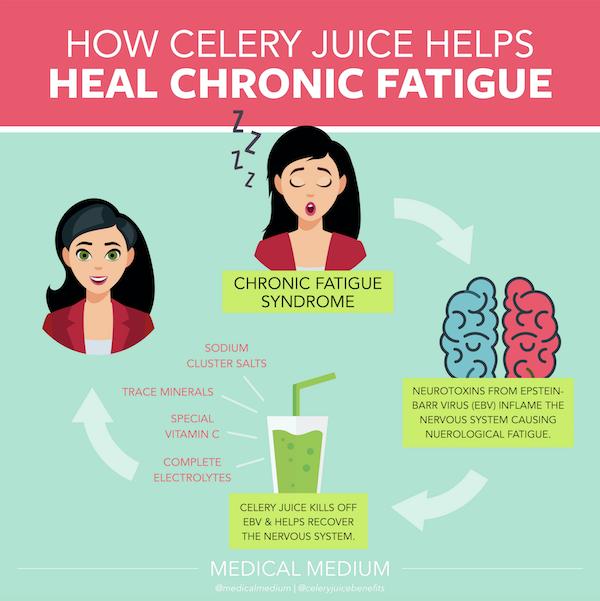
Celery is perfect for reversing inflammation, because it starves the pathogens, including unproductive bacteria and viruses such as Epstein-Barr (EBV), that create it.  
As I reveal in my book, Thyroid Healing: The Truth behind Hashimoto’s, Graves’, Insomnia, Hypothyroidism, Thyroid Nodules & Epstein-Barr, EBV is the actual cause of Hashimoto’s thyroiditis and many other diseases that medical communities call autoimmune. 
THE WONDERS OF CELERY’S MINERAL SALTS
Celery is able to starve pathogens, plus it contains a multitude of undiscovered mineral salts that act together as an antiseptic. When these powerful mineral salts make contact with viruses such as Epstein-Barr, HHV-6, and shingles; bacteria such as Streptococcus; and other pathogens—troublemakers responsible for chronic illness—the salts begin to break down the pathogens’ cell membranes, eventually killing and destroying them.

If you’re worried that the sodium in celery is a problem because you’ve heard that “salt is salt,” know that the sodium in celery is not just salt or the basic mineral sodium. Medical research and science have not yet discovered the different varieties of sodium in celery, nor how beneficial they are. Celery’s naturally occurring sodium actually helps stabilize blood pressure, bringing it down when it’s too high and up when it’s too low. Further, it won’t dehydrate your organs—instead, it clings to toxic, dangerous salts from poor-quality foods and helps draw them out of your body while replacing them with undiscovered cluster salts.

These subgroups of sodium bond together as one and are infused with celery’s other critical chemical compounds and information that’s highly active in healing the body. Science has not yet deconstructed or studied these cluster salts. 

Eventually, research will reveal that these cluster salts work symbiotically and systematically to flush out toxins, dead pathogens such as viruses and bacteria, and pathogenic neurotoxins and debris from every crevice of the body.

Neurotoxins, by the way, are created by viruses such as EBV feeding on toxic heavy metals, including mercury and aluminum. Medical science and research are not yet aware that viruses feed on certain fuel, let alone that they produce neurotoxins as waste. 

Neurotoxins create neurological symptoms, including burning skin, twitches, tremors, spasms, cold hands and feet, balance issues, vertigo, erratic heartbeat, insomnia, and body jerks, that confound doctors.

Now that you know that pathogens like EBV are responsible for chronic illness, you can understand just how critical the antiseptic function of celery’s cluster salts truly is. 

Your white blood cells use these cluster salts as both shield and weapon to go after viruses and unproductive bacteria—and that translates to relief from the numerous symptoms and conditions they cause.

Your body is loyal to you. It’s doing it’s very best to help you be whole and healed.


MORE ON CELERY’S MAGNIFICENT MINERAL SALTS
Mineral salts are critical for our bodies to function optimally. They keep your kidneys and adrenals functioning and raise your gut’s hydrochloric acid so your body can break down and assimilate what you eat—while they balance your pH as well as cleanse and repair your stomach, the rest of your digestive tract, and, most importantly, your liver. They also allow information to travel throughout your body so it can keep itself in balance no matter what’s occurring.

The mineral salts specifically in celery are instrumental in the electricity that governs the body—they’re building blocks for neurotransmitter chemicals, they ignite electrical impulse activity, and they support neuron function. A brain with weak electrical impulses and weak neurotransmitters shuts down and goes into “low battery” mode—which makes celery juice, a battery charger for the brain, an answer to stop this from happening. Mineral salts keep the heart pumping and create the neurotransmitters needed to take information from point A to point B, that is, from neuron to neuron. (Picture a thought as a boat and mineral salts as the ocean: if the ocean dries up, the boat can’t go anywhere.)

That celery’s mineral salts are such an important support for the central nervous system means they are extremely healing for people who are struggling with depression, anxiety, brain fog, confusion, bipolar disorder, memory loss, Alzheimer’s disease, obsessive-compulsive disorder (OCD), attention-deficit/hyperactivity disorder (ADHD), and posttraumatic stress disorder (PTSD), as well as people who have difficulty with focus and concentration.

Celery can really enhance the ability of supplemental GABA, glycine, and magnesium L-threonate to be absorbed by the brain and aid in neurotransmitter performance for sleep support. Celery also improves methylation, that is, the proper absorption and utilization of hundreds of nutrients, including B12 and zinc. 

The electrolytes in celery hydrate on a deep cellular level, lessening your chances of suffering from migraines, anxiety, panic attacks, and more. Celery also stabilizes and supports the adrenal glands, offers stress assistance, and repairs damaged cells inside the liver.

And since celery’s mineral salts are antibacterial, they kill bacteria such as strep, and that encourages a healthy environment for “good” bacteria. Low-grade strep infections are often the actual cause of urinary tract infections (UTIs), chronic sinus infections, acne, IBS, and small intestinal bacterial overgrowth (SIBO), though at this time medical communities aren’t aware that strep infections are involved in these conditions. Now you know that celery juice and its antibacterial properties can help heal all of these conditions, too.

If you suffer from a thyroid condition, take note: celery has the ability to cleanse the thyroid of toxins and bolster production of the thyroid hormone T3. For more on the unknown true cause of thyroid problems like Hashimoto’s thyroiditis, Graves’ disease, thyroid nodules, cysts and tumors, enlarged thyroid, parathyroid disease, and much more, refer to Thyroid Healing.


CELERY JUICE AND AUTOIMMUNE DISEASE
Celery’s ability to break down and flush out viruses is life-changing news for anybody who has been told they have an autoimmune disease. Pathogens such as viruses, including EBV and shingles, are the true cause of the inflammation that’s mistakenly considered an autoimmune condition. Medical communities just aren’t aware of the real cause yet.

The prevailing autoimmune theory is that the immune system is mistaking a part of the body for an invader and has begun attacking it, causing inflammation. This belief developed because by the 1950s, the medical world had become frustrated with not having an explanation for why conditions such as Hashimoto’s, Graves’, lupus, RA, Crohn’s disease, celiac, ulcerative colitis, and multiple sclerosis (MS) were leaving people ailing or even crippled. Close observation of some patients’ blood work revealed the presence of antibodies. A theory took off that the body had become confused and created antibodies to attack itself. It’s vital to remember that this was just one out of dozens of theories—it was never a definitive answer. The whole premise was an unproven hypothesis that the medical establishment came up with because they didn’t have the real answers for people’s suffering. So they pointed the blame at people’s bodies, which took the blame off of medical research and science, and unfortunately, the theory has stuck and become law.

The autoimmune theory is not true. It’s critical to know what’s really happening with autoimmune issues: antibodies are present because your body is fighting a pathogen that scientific testing can’t detect yet. For example, in the case of Hashimoto’s, if antibodies are present, it’s because your body is going after the Epstein-Barr virus. It’s not that your body created antibodies that are attacking your thyroid gland. You can learn more about this in Thyroid Healing.

Again, contrary to current thinking, the body does not attack itself or turn against you. Your body only goes after pathogens, and only two factors cause inflammation: injury and invasion. Pathogens cause both. They’re invaders—foreign bodies in your body—and can also be injurers, sometimes damaging tissue in their travels through your system. (It doesn’t always take both factors to cause inflammation; for example, if you break your leg and it swells up, that’s solely an injury. It does always take at least one of these two causes.)

Sadly, the popular, incorrect autoimmune theory holds people responsible for their sickness. It leads people to believe that their body has betrayed them, turned against them, let them down. When you’re leaving the doctor’s office after being told that your body is attacking itself or attacking a specific organ, it can be emotionally damaging, and that belief itself hinders your immune system. 

Your body is loyal to you. It’s doing it’s very best to help you be whole and healed. It loves you unconditionally. Your own immune system will never harm you, it only works for you. Knowing this truth can kick-start the healing process for someone who previously believed their body was against them.

The autoimmune confusion is one of the greatest mistakes in modern medicine. It’s a prime example of why more than 250 million people in the U.S. alone are living with or suffering from mystery symptoms and conditions with no real relief.

Which brings us back to why celery juice is such a big deal. As celery ushers pathogens out, your body will be much better able to handle whatever life throws your way.


CELERY JUICE AND BALANCING YOUR BODY’S PH
Why is it so beneficial that celery juice strengthens hydrochloric acid in your gut? Because hydrochloric acid is critical to digestion and to keeping your digestive system alkaline.

Although we can hear the word “acid” and think “bad,” gastric acids, including hydrochloric acid, are critical, helpful acids, not to be confused with having an acidic digestive system, which is detrimental to health.

When you eat, food quickly travels down to your stomach to be digested with the help of hydrochloric acid. Although science hasn’t discovered this yet, hydrochloric acid isn’t just one acid—it’s actually a complex blend of seven acids. If hydrochloric acid levels are out of balance or low, your food won’t be sufficiently digested in your stomach. That means the food won’t break down enough for your cells to access the nutrients, and instead the food will just sit there and rot, causing bad acids to develop.


PREVENTING AMMONIA PERMEABILITY, A MAJOR UNKNOWN CAUSE OF ILL HEALTH
This gut rot, or putrefaction, creates ammonia gas, which has the ability to float, ghost-like, out of your digestive tract and directly into your bloodstream. It can also cross into organs such as your liver and brain. This is what I call ammonia permeability.

Millions of people walk around with digestive health problems, and one of the contributing factors is ammonia permeability, along with underlying sluggish liver issues. (The truth about ammonia permeability hasn’t yet been discovered. Similar though mistaken concepts are often referred to as “leaky gut syndrome” or “intestinal permeability.”)

Another condition that worsens low hydrochloric acid and creates ammonia permeability is a sluggish, stagnant, fatty liver. Underlying liver conditions are extremely common. Medical communities don’t yet know how prevalent they really are or what’s behind these issues in the first place. A sluggish, stagnant, fatty liver causes lower bile production, which means the body can’t break down and disperse fats easily, and that also contributes to gut rot, causing even more ammonia permeability. It is vital to understand how to support your liver as almost everyone today has a sluggish liver which is at the core of countless symptoms, illnesses and premature aging and death. Thankfully, there are simple ways to support your liver’s health. I share these in detail in my book, Liver Rescue.

Here’s where our heroic celery juice comes in: It effectively rebuilds the stomach’s complex balance and supply of hydrochloric acid. It also strengthens the digestive system by helping to heal the liver, which leads to an increase in bile production, easing constipation and bloat. Plus by lowering levels of pathogens such as bacteria and viruses and invaders such as fungus and mold, it leads to strengthened intestinal linings. Celery juice is one of the most profound ways, if not the most profound way, to restore digestive health. It is that powerful.


CELERY JUICE FOR BODY AND EMOTIONS
We tend to hold a lot of fear in our guts. Nervousness causes those sensations we know as tummy flips or butterflies in the stomach, and anxiety can run deep through the nervous system, putting our guts in knots. By restoring the entire digestive system, celery juice puts our minds and hearts at ease, too. Use it for its calming effects when you are feeling frightened, panicky, shocked, fretful, nervous, threatened, unsure, afraid, or defensive.

I could go on and on about the benefits of celery juice for all manner of ills—mental, physical, spiritual, emotional. Celery juice is alkalizing, enzyme-rich, electrolyte-enhancing, liver-repairing, blood-sugar-balancing, antiseptic, and more.

Don’t let the simplicity of humble celery mask it’s strength—it’s often the simplest of measures in life that gracefully work wonders in the most complex situations. Celery juice truly is a miracle juice. It’s one of the greatest healing tonics of all time.

https://www.celeryjuice.com/celery-juice-101


Benefits of Celery Juice

Amazing benefits of Celery Juice...

  • Critical for healing chronic acid reflux
  • Fights autoimmune disease, including Hashimoto’s, Lyme disease, lupus, rheumatoid arthritis, and every other autoimmune condition
  • Incredible for constipation and all digestive issues
  • Helps restore the adrenals
  • Contains mineral salts that are critical for the central nervous system
  • Helpful for depression, anxiety, brain fog, confusion, bipolar disorder, memory loss, Alzheimer’s disease, obsessive-compulsive disorder (OCD), attention-deficit/hyperactivity disorder (ADHD), and posttraumatic stress disorder (PTSD), poor focus and concentration
  • Important for skin conditions such as acne, eczema and psoriasis
  • Flushes toxins and pathogenic byproduct from the body
  • Helps stabilize blood pressure
  • Helps eradicate strep bacteria
  • Fights Epstein-Barr and Shingles viruses
  • Brings down toxic liver heat
  • The ultimate gallbladder rehabilitator
  • Eliminates mucus
  • Restores bile production and potency
  • Celery’s natural sodium draws toxic salts out of the body
  • Powerful weapon against SIBO
  • Inhibits viruses, bacteria, and fungus
  • Enhances the immune system
  • Helps repair damaged ligaments & bones
  • Highly anti-inflammatory
  • Powerful way to alkalize the gut
  • Celery juice raises hydrochloric acid 
  • Supports and calms the central nervous system
  • Helps the liver produce bile 
  • Has mineral salts are instrumental in the electricity that governs the body
  • Contains the building blocks for neurotransmitter chemicals
  • Helps heal and prevent gut rot 
  • Helps repair damaged cells inside the liver
  • Cleanses the thyroid of viral byproduct
  • Bolsters production of thyroid hormone T3
  • Helps improve kidney function
  • Helpful for healing allergies
  • Powerful tool for brain health
  • Helps heal Crohn’s, Colitis and IBS
  • Offers stress assistance
  • Strengthens digestion
  • Celery juice blended with papaya is an amazing gut tonic
  • Helps heal addictions
  • Improves methylation
  • Helps prevent gum recession
  • Provides essential mineral salts
  • Helps restless leg syndrome
  • Counteracts acidosis
  • Helps heal POTS
  • Hydrates on a cellular level
  • Helpful healing tool for every symptom and condition
  • Celery juice’s undiscovered mineral salts break down pathogens’ cell membranes, killing and destroying them
  • The cluster salts in celery are used by your white blood cells as both shield and weapon to go after viruses and unproductive bacteria
  • Helps to heal the liver
  • Enhances electrolytes
  • Has undiscovered mineral salts that act together as an antiseptic in the body
https://www.celeryjuice.com/celery-juice-benefits-medical-medium

Friday, 27 September 2019

Real Salt, Celtic Salt and Himalayan Salt

This is what real salt looks like—we all know what regular white salt looks like—and we mistakenly think it is real salt when it is not. The fact is that refined white salt, such as commercial table salt is bad, very bad stuff. Unrefined natural salt on the other hand is good, very good stuff providing many health benefits.

Published
  
on


IN BRIEF

  • The Facts:
    This article was originally written by Dr. Mark Sircus, Ac., OMD, DM (P) (acupuncturist, doctor of oriental and pastoral medicine) and published at Greenmedinfo.com. Posted here with permission.
  • Reflect On:
    Do you know the difference between refined salt and unrefined salt?
Unrefined sea salt is healthy. The blood-pressure-raising effect of table salt can be due to its high content of sodium with not enough magnesium to balance it. This has a magnesium-lowering effect that can constrict the arteries and raise blood pressure. Real salt (of various kinds) contains plenty of magnesium and other important minerals, which is why it usually does not affect blood pressure in a negative way.[1]
Sodium is an essential nutrient required by the body for maintaining levels of fluids and for providing channels for nerve signaling. Some sodium is needed in your body to regulate fluids and blood pressure, and to keep muscles and nerves running smoothly.
Without appropriate amounts of sodium, your body may have a difficult time cooling down after intense exercise or activity. When the body is hot, you sweat. If you do not have enough sodium, your body may not sweat as much and you may then become overheated. This could result in a stroke or exhaustion as well as dehydration.
Sodium is an energy carrier. It is also responsible for sending messages from the brain to muscles through the nervous system so that muscles move on command. When you want to move your arm or contract any muscle in your body, your brain sends a message to a sodium molecule that passes it to a potassium molecule and then back to a sodium molecule etc., etc., until it gets to its final destination and the muscle contracts. This is known as the sodium-potassium ion exchange. Therefore, without sodium, you would never be able to move any part of your body.
Excess sodium (such as that obtained from dietary sources) is excreted in the urine.[2]Most of the sodium in the body (about 85%) is found in blood and lymph fluid. Sodium levels in the body are partly controlled by a hormone called aldosterone, which is made by the adrenal glands. Aldosterone levels determine whether the kidneys hold sodium in the body or pass it into the urine.
Dr. David Brownstein weighs in heavily on this matter saying, “Nobody makes a distinction between unrefined and refined salt. They ‘lump’ all salt together as a bad substance. This is a terrible mistake. There are two forms of salt available in the market place: refined and unrefined. Refined salt has had its minerals removed and has been bleached to give it the white appearance that we are accustomed to seeing with salt. It is the fine, white salt that is available at almost any restaurant or grocery store. Refined salt has been bleached and exposed to many toxic chemicals in order to get it to its final product. It has aluminum, ferrocyanide, and bleach in it. I believe this refining process has made it a toxic, devitalized substance that needs to be avoided.”
“Unrefined salt, on the other hand,” Brownstein continues, “has not been put through a harsh chemical process. It contains the natural minerals that were originally part of the product. Its mineral content gives it a distinct color. The colors of unrefined salt can vary depending on where it is taken from. This is due to the changing mineral content of the various brands of salt. It is the minerals in unrefined salt that provide all the benefits of this product. The minerals supply the body with over 80 trace elements needed to maintain and sustain health.
Furthermore, the minerals elevate the pH (correct acidity) and lower blood pressure. Our maker gave us salt to use in our diet—unrefined salt—with its full complement of minerals. It should be the salt of choice. It is a vital ingredient that needs to be part of everyone’s diet.”
Dr. Brownstein says, “Years ago salt manufacturers decided that pure white salt is prettier than off-white salt and that consumers prefer pretty white salt. So they started bleaching it. They also added anti-clumping agents to increase its shelf life. The problem is that the chemicals added to keep salt from absorbing moisture on the shelf interfere with one of salt’s main functions: to regulate hydration in your body. The sodium chloride in table salt is highly concentrated, denatured, and toxic to your body. Ever put salt on an open cut? It burns!!!
Refined salt has the same effect on internal tissues and causes a negative reaction: your body retains water to protect itself, and your cells release water to help dilute, neutralize, and break down the salt. This loss of water dehydrates and weakens your cells and can even cause them to die prematurely. Natural sea salt is far superior to chemically-treated iodized table salts as it contains all 92 trace minerals, and it’s only 84% sodium chloride while table salt is almost 98%”.
All this adds up to one thing. Table salt, whether marine or not, is toxic—it’s poisonous to the body and is responsible, in great part, to the onset of many terrible diseases including thyroid and metabolic dysfunction.
In addition to sodium and chloride, Celtic Sea Salt® provides other nutrients that naturally occur in salt beds, including trace amounts of calcium, magnesium potassium, iron and zinc.
In accordance with standards set by The World Health Organization and the Food and Agriculture Organization, independent analysis indicates that levels of heavy metals are non-detectable (e.g. arsenic, cadmium, mercury) or well below published safe limits in Celtic Sea Salt®. Perhaps most importantly, Celtic Sea Salt® is not exposed to refinement and bleaching used to manufacture typical table salt and there are no additives. Celtic Sea Salt® is harvested from the ocean using the sun, the wind and shallow clay ionizing ponds, a method passed down through the generations.
Many Americans over consume refined salt by eating processed foods, fast foods and canned foods with salt added. Celtic Sea Salt® is a good alternative as part of a healthier diet. Recommended use is a half teaspoon per day.
Himalayan crystal salt that is mined 5,000 feet deep below the Himalayan mountain range was subject to enormous pressure over millions of years and is over 99% pure. The higher the amount of pressure the more superior or excellent the state of order within the crystalline structure of salt. Many Himalayan salts are sold cheaply but are collected from higher up near the tops of the Himalayan Mountains instead of from the deeper mines. These salts contain more impurities, do not have the same structure and are not as easily assimilated by the body.
Himalayan salt contains 84 minerals and trace elements in ionic state and is a delightful pink color. People often state that they use less of this salt than of other types. Many sizes are available from 3 oz in a salt grinder to larger 1-kg bags (2.2 lb). Salt chunks are also available for making your own “sole,” which is a saturated solution of purified water with Himalayan salt. A specific recipe (see below) must be followed to make sole and results in a solution that has much less sodium than just adding salt to water would have. Daily use of sole is believed to stimulate the peristalsis of the digestive organs, balance the stomach acid, support the production of digestive fluids in the liver and pancreas, regulate the metabolism and harmonize the acid-alkaline balance.

Start Each Day with a Healthy Sole

The ideal way to use Himalayan Crystal Salt is in the form of a sole (so-LAY). Drinking the sole when you awake each morning is like getting up on the right side of the bed. It provides the energizing minerals you need daily to recharge your body, and it helps set the stage for a day of vitality.
Essentially, a sole is water saturated with Himalayan Crystal Salt. The sole contains about approximately 26 parts of salt to 100 parts of water. Prepare the water and salt combination in advance (see directions to the right). Each morning place a teaspoon of the sole mixture in a glass and fill with 8 ounces of pure spring water. Drink it immediately or sip it while getting dressed, checking emails or preparing breakfast. The water helps transport the electrolytes throughout the body to all the many places they are needed.

How to Prepare Sole

Sole is a mixture of water and salt. The object is to saturate the water with dissolved salt so it can’t hold anymore. You’ll know that you’ve created sole when there are undissolved salt crystals in the water. You can’t oversaturate the water with salt. The crystals will simply drop to the bottom of the container.
Place several Himalayan Crystal Salt stones or Himalayan Crystal Salt granules about an inch deep in a glass container. (A canning jar works well.)
Cover the salt with two to three inches of pure, spring water. Let the salt dissolve for 24 hours.
If all the salt dissolves in 24 hours, add more salt to the container. The sole is finished when the water can no longer dissolve the salt and the salt crystals drop to the bottom of the container. There will always be salt crystals in the jar. It doesn’t matter if you have only a few crystals or many. The water is saturated and is now sole.
Cover the container to prevent the water from evaporating. Since salt is a natural preservative, the sole will keep forever. It can’t spoil or go “bad.”
The vibrational energy of the Himalayan Crystal Salt remains in your body for 24 hours.
A teaspoon of sole contains 480 mg of sodium, or 20% of the Daily Reference Value of 2400 mg based on a 2,000 calorie per day diet.
Redmond Real Salt is mined in the United States and is another good unrefined salt that I also recommend. It can be used as a table salt and for cooking and is available in coarse and fine grinds and in a variety of sizes.
Real Salt comes from a mineral rich salt deposit formed by an ancient sea in Utah. It contains 62 trace minerals, and is without additives, chemicals, or heat processing of any kind. Real Salt’s unique pinkish appearance and flecks of color come from the more than 60 naturally occurring trace minerals. The result is a delicate “sweet salt” flavor that you may not have experienced before.
Special Note: I was very disappointed to hear Dr. Max Gerson’s daughter Charlotte Gerson saying, “That sodium is never good, never in any form!” I have put Gerson in the best light in my writings and his organization does hold the high ground for organic raw juicing but there are some things they say that have no grounding in medical science or clinical reality. Talk to Dr. David Brownstein and he will tell you that often the first thing a patient needs is water and salt but its real salt not table salt he is talking about and prescribing for his patients.
I have written a full essay addressing this communication from Charlotte. And I have another essay on using seawater as a medicine and that will be seen in my Treatment Essentials book that is now finished and ready for publication on the 15th of February. To even think of discounting the medical miracles from the sea, which Charlotte is clearly doing, makes me shudder.

Resources

  • [2] These processes in the body, especially in the brain, nervous system, and muscles, require electrical signals for communication. The movement of sodium is critical in the generation of these electrical signals. Too much or too little sodium therefore can cause cells to malfunction, and extremes in the blood sodium levels (too much or too little) can be fatal – http://www.medicinenet.com/electrolytes/article.htm

https://www.collective-evolution.com/2019/06/23/real-salt-celtic-salt-and-himalayan-salt/

Tuesday, 30 April 2019

We are literally eating ourselves to death

One in five deaths globally are linked to poor diet, experts said recently, warning that overconsumption of sugar, salt and meat was killing millions of people every year.
We are literally eating ourselves to death
While adding salt to food, as seen in this filepic, enhances its taste, we are unfortunately oversalting our food to the extent of consuming 86% more sodium than is healthy.

The United Nations estimates that nearly a billion people worldwide are malnourished, while nearly two billion are “overnourished”.
But the latest study on global diet trends, published in The Lancet, showed that in nearly every one of the 195 countries surveyed, people were also eating too much of the wrong types of food and consuming worryingly low levels of healthier produce.
For example, the world on average consumes more than ten times the recommended amount of sugar-sweetened beverages, and 86% more sodium (salt) per person than is considered safe.
The study, which examined consumption and disease trends between 1990-2017, also cautioned that too many people were eating far too few whole grains, fruit, nuts and seeds to maintain a healthy lifestyle.
Of the 11 million deaths attributed to poor diet, by far the largest killer was cardiovascular disease, which is often caused or worsened by obesity.
“This study affirms what many have thought for several years – that poor diet is responsible for more deaths than any other risk factor in the world,” said study author Christopher Murray, director of the Institute for Health Metrics and Evaluation at the University of Washington in the United States.
“Our assessment suggests the leading dietary risk factors are high intake of sodium or low intake of health foods.”
The report highlighted large variation in diet-related deaths between nations, with the highest-risk country Uzbekistan having ten times the food-based mortality rate of the lowest-risk, Israel.
In January 2019, a consortium of three dozen researchers called for a dramatic shift in the way the world eats.
The EAT-Lancet report said that the global population must eat roughly half as much red meat and sugar, and twice as many vegetables, fruits and nuts, in order to avert a worldwide obesity epidemic and avoid “catastrophic” climate change.
Authors of the recent study noted that economic inequality was a factor in poor dietary choices in many countries.
It found that on average, reaching the “five-a-day” fruit and vegetable servings advocated by doctors cost just 2% of household income in rich nations, but more than a half of household income in poorer ones.
“This study gives us good evidence of what to target to improve diets, and therefore health, at the global and national level,” said Oyinlola Oyebode, associate professor at Warwick Medical School in the United Kingdom, who was not involved in the research.
“The lack of fruit, vegetables and whole grains in diets across the world are very important – but the other dietary factor highlighted by this study is the high intake of sodium.” – AFP Relaxnews

https://www.star2.com/health/2019/04/16/salt-sugar-diet-nutrition/


Friday, 29 March 2019

Does this viral photo of kidney stones really show the effect of too many energy drinks?

A graphic image of severe kidney stones has been circulating for years online, with a message about the dangers of consuming too many energy drinks. 

Claudia Tanner 8 months Thursday August 9th 2018

This image has been shared online hundreds of thousands of times – but experts warn it's message is somewhat misleading (Photo: Facebook/Jason Hallman)
This image has been shared online hundreds of thousands of times – but experts warn it’s message is somewhat misleading (Photo: Facebook/Jason Hallman)

One version of the photo, which has been shared hundreds of thousands of times on Facebook, claims that it “belonged to someone who overindulged in energy drinks” and tells other users, “Show this to folks that’s [sic] addicted”. 

But experts say that while guzzling gallons of the stuff isn’t advisable, the viral post doesn’t paint an entirely accurate picture. i spoke to one urologist who warned that he’s seen a rise in young people suffering with the condition which he blames on increased consumption of protein drinks.

What are kidney stones? 

Kidney stones are hard deposits made of minerals and salts that form inside your kidneys. They are quite common with around three in 20 men and up to two in 20 women developing them at some stage of their lives, according to the NHS. Stones can develop in one or both kidneys and most often affect people aged 30 to 60. 

Small kidney stones may go undetected and be passed out painlessly in the urine. But it’s fairly common for a stone to block part of the urinary system which can cause severe pain in the abdomen or groin and sometimes causes a urinary tract infection (UTI). 

Larger stones may need to be broken up using ultrasound or laser energy. Occasionally, keyhole surgery may be needed to remove very large kidney stones directly. 

Is there a link between kidney stones and energy drinks? 

Kidney stones are usually formed following a build-up of certain chemicals in the body, such as calcium, oxalate, uric acid and cysteine, according to the NHS. Most are calcium stones, usually in the form of calcium oxalate. Energy drinks and other caffeinated beverages like coffee, tea and soda contain oxalate, hence the belief that they can cause the problem. 

Spire consultant urologist Subu Subramonian confirmed that the case pictured did appear to be kidney stones. However, he said such a severe case is unlikely to be caused entirely by excessive consumption of energy drinks.

“The appearance suggests that the patient may have a congenital condition such as renal tubular acidosis which predispose them to multiple calcification in the meat and tubes of the kidney due to a fault in the filtration mechanism for calcium in the micro tubes of the kidney. This condition leads to recurrent and multiple stones in the kidney and patient may end up with some kidney dysfunction as well.” 

He explained that kidney stones often have no definite, single cause, and that several factors increase risk. “Other contributing factors in play here could be inadequate water intake (as in most patients with kidney stones) and high consumption of animal protein and salt,” he said. 

“Although energy drinks could be responsible for a number of health hazards such diabetes due to excessive sugar content, there is no direct evidence to link it with kidney stone disease. It has been shown that people with diabetes have more incidence of kidney stones and therefore there might be indirect link.” 

Therefore, drinking a lot of energy drinks isn’t a good idea for their sugar content, but this alone is very unlikely to cause kidney stones. “Kidney stones tend to be calcium based, but it usually has no relationship with consuming calcium through diet and supplements,” added Mr Subramonian. 

The risks of protein drinks 


A diet rich in animal protein, because of its high purine content, which produces uric acid as it metabolises, may increase the risk of uric acid stone formation, experts say. 

Mr Subramonian said: “As a stone specialist, I am more worried more about the recent trend in increased consumption of protein drinks amongst youngsters as I see a lot of these young people coming to my stone clinic with new onset kidney stones. This is a trend I am seeing more recently over the last 10 years as protein drinks are promoted by sports shops, advertisements and even some gym trainers. 

“My advice to the public is to drink at least two litres of water a day and eat a healthy balanced diet to prevent kidney stones.” 

5 steps for preventing kidney stones 

The following advice appears from an expert on a Harvard Health Blog: 

Drink plenty of water: Drinking extra water dilutes the substances in urine that lead to stones. Strive to drink enough fluids to pass 2 liters of urine a day, which is roughly eight standard 8-ounce cups. It may help to include some citrus beverages, like lemonade and orange juice. The citrate in these beverages helps block stone formation. 

Get the calcium you need: Getting too little calcium in your diet can cause oxalate levels to rise and cause kidney stones. To prevent this, take in the  amount of calcium appropriate to your age. Ideally, obtain calcium from foods, since some studies have linked taking calcium supplements to kidney stones. Men 50 and older should get 1,000 milligrams (mg) of calcium per day, along with 800 to 1,000 international units (IU) of vitamin D to help the body absorb the calcium. 

Reduce sodium: A high-sodium diet can trigger kidney stones because it increases the amount of calcium in your urine. So a low-sodium diet is recommended for the stone prone. Current guidelines suggest limiting total daily sodium intake to 2,300 mg. If sodium has contributed to kidney stones in the past, try to reduce your daily intake to 1,500 mg. 

Limit animal protein: Eating too much animal protein, such as red meat, poultry, eggs, and seafood, boosts the level of uric acid and could lead to kidney stones. A high-protein diet also reduces levels of citrate, the chemical in urine that helps prevent stones from forming. If you’re prone to stones, limit your daily meat intake to a quantity that is no bigger than a pack of playing cards. 

Avoid stone-forming foods: Beets, chocolate, spinach, rhubarb, tea, and most nuts are rich in oxalate, and colas are rich in phosphate, both of which can contribute to kidney stones. If you suffer from stones, your doctor may advise you to avoid these foods or to consume them in smaller amounts.


https://inews.co.uk/news/health/does-this-viral-photo-of-kidney-stones-show-the-effect-of-drinking-too-many-energy-drinks/