Pages

Showing posts with label Food Labels. Show all posts

Tuesday, 1 May 2018

What Are the Facts Behind 'Sell By' Dates?

Is it safe to eat food past the "sell by," "best by," or "use by" date? With one exception, there's no federal requirement for food dates, but the terms may give you some insights into your foods' freshness - once you know what they all mean.

Egg Expiration Date


Story at-a-glance

  • “Sell by” dates are there to help retailers ensure proper product turnover when stocking shelves; they’re not a measure of food safety
  • “Best by” or “best before” dates are set by the manufacturer to suggest when to consume the food by for best flavor or quality; they’re also not a measure of food safety
  • A “use by” date is the last date recommended for the use of the product while at peak quality; while it’s typically recommended to follow the “use by date,” many foods can be safely consumed even after they’re “expired”

By Dr. Mercola

Every year, people in the U.K. throw away more than 93 million gallons of milk, 733,000 tons of potatoes and 473,000 tons of bread, according to U.K. supermarket chain Sainsbury's.1 Similarly, the average U.S. family of four wastes more than 2 million calories, which equates to $1,500 worth of food, every year.2
Wilted or spoiled produce, moldy bread, or leftovers that sit too long in the fridge are common contributors to such food waste, but so are potentially good foods that get thrown away solely based on their "sell by" dates.
Labels like "use by" and "sell by" on foods aren't actually an indicator of food safety, as many believe them to be.
A report from the Natural Resources Defense Council (NRDC) and Harvard even found that more than 90 percent of Americans are throwing out food prematurely because of misunderstandings of what such dates actually mean.3
The researchers concluded that food dates generally lead to good food getting thrown away and may at the same time prompt you to eat a food that's actually spoiled because of "undue faith in date labels."

There Is No Universally Accepted System for Food Dating in the U.S.

More than 20 U.S. states require dating of some foods, but such labels vary significantly in different areas of the country. With the exception of infant formula, there is no uniform or universally accepted system used for food dating in the U.S., nor is there any federal requirement for food dates.
In other words, it's a veritable free for all. Food may be labeled with "open dating," which refers to use of a calendar date, or "closed" or "coded" dating, which refers to dates that are written in code for use by the manufacturer.
The latter may be used for shelf-stable products (cans, boxes, etc.) while open dating is typically found on perishable foods including meat, eggs and dairy products.

How to Decipher Food Product Dating Labels

There are other food-dating labels that you may see as well, and while many regard them as interchangeable, each actually has it's own unique meaning, as follows:
Sell By — Not Even Meant for Consumers
"Sell by" dates aren't meant for consumer use at all. They are there as tools to help retailers ensure proper product turnover when stocking shelves, yet many consumers believe it is a measure of food safety.
The dates lead to so much confusion and food waste that the NRDC report authors suggested making "sell by" dates invisible to consumers. That being said, the U.S. Department of Agriculture (USDA) states you should buy the product before the "Sell By" date expires.4
Best if Used By (or Before) — Not a Measure of Food Safety
This date is set by the manufacturer to suggest when to consume the food by for best flavor or quality. However, it is not a measure of safety and foods can typically be safely consumed after the "best by" or "best before" date, often with minimal, if any, changes in taste or texture.
Food manufacturers want you to consume their products at their peak freshness and flavor, which means many set food dates conservatively. The methods used by manufacturers to set food dates vary. NRDC explained:
"Some use lab tests, others use literature values, and yet others use product turnover rates or consumer taste testing …
In consumer testing, some manufacturers will allow for a level of change in quality over time before setting a date limit, whereas others set them more conservatively
… Thus, while open dating appears on the surface to be an objective exercise, consumer preferences and brand protection impact the way most of these dates are determined.
In most cases, consumers have no way of knowing how a "sell by" or "use by" date has been defined or calculated, and the method of calculation may vary widely by product type, manufacturer and geography."
Use By
A "use by" date is the last date recommended for the use of the product while at peak quality. This date is also determined by the manufacturer and may vary widely even between similar products.
The USDA recommends, "If a product has a "use by" date, follow that date." However, they also note:5
"Use by" dates usually refer to best quality and are not safety dates. Even if the date expires during home storage, a product should be safe, wholesome and of good quality if handled properly."
The exception is infant formula — the only food product with a federally regulated date label, as the nutrients in the formula may decline over time or the product may separate.
Federal regulations require that formula consumed by the "use by" date must contain the quantity of each nutrient listed on the label. It also must maintain quality so that it can pass through an ordinary bottle nipple without clogging. Infant formula should not be used after the "use by" date.6
Three-Digit Codes on Egg Cartons
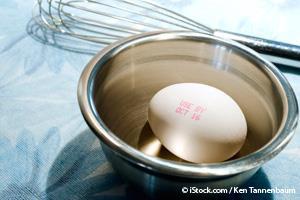
Eggs with the USDA grade shield (such as Grade AA or Grade A) must display the pack date, which is the day the eggs were washed, graded and placed in the carton.
The pack date is a three-digit code that represents the consecutive day of the year (January 1 is 001 and December 31 is 365).
The "Sell by" date on the carton must be within 45 days of the pack date, although eggs are typically safe to use for three to five weeks after you purchase them.
If you're wondering if your eggs are still good, put them in a bowl of water. If they sink, they're fresh; if they float, they're not good to eat.

Is It Safe to Eat Moldy Food?

Mold that's visible may appear to exist in contained areas on your food — a gray furry spot here or a few green dots there. However, beneath this visible mold are likely deep roots that may have invaded the rest of the food.
In cases where the mold is dangerous, its toxic elements may be contained not only in these threads but also throughout the food.
For this reason, if you see mold anywhere on a soft, easily penetrable food such as soft cheese, soft fruits and vegetables (tomatoes, peaches, cucumbers, etc.) and bread, you should discard it.
You may also need to toss nearby foods that may have touched the moldy area, as mold can spread quickly and easily, especially in produce. Moldy foods that you throw away should be put into a small paper or plastic bags so the mold cannot escape.
Do not attempt to sniff the moldy food to see if it's spoiled, as this can introduce mold spores into your respiratory tract. In the case of harder foods (hard cheese, cabbage, bell peppers, carrots, etc.), it's acceptable to cut off the moldy spot and about 1 inch around it (to ensure you've removed any roots).
When doing this, be sure the knife does not touch the mold and contaminate the area you are cutting. You can find more information about how to determine when a moldy food should be kept or discarded here.7

Can Thawed Meat Be Refrozen?

You've taken a roast out of the freezer, thawed it, then realized you're not going to be able to cook it when you planned. Can you safely put it back in the freezer or does this pose a safety risk? Go ahead and put it back in the freezer.
It's one of the most widely circulated myths that refreezing food is dangerous. While putting a thawed piece of steak or brick of cheese back into the freezer might lead to changes in taste or texture, it's perfectly safe and poses no risks to your health (provided it was thawed safely in the first place).
One of the greatest factors impacting whether your food is safe isn't whether it's been previously frozen but rather is related to how much time it spends in the temperature "danger zone" (between 40 and 120 degrees F).8 The worst way to thaw frozen food is to let it sit out on your kitchen counter. Thawing frozen meat, poultry or seafood by running warm water over it is also risky from a food-safety standpoint.
If you need to thaw meat or poultry quickly, you can run cold water over it or submerse it in cold water, changing the water every 30 minutes until it's thawed.9 If you use this latter method for thawing, it should be cooked immediately — not refrozen or put back in the fridge.
Freezing your food can be useful to help cut down on food waste. While I generally recommend consuming your food as fresh as possible, research suggests frozen foods may contain comparable nutrients as fresh foods and at times be even more nutritious.10 Most foods can be frozen successfully, provided you store them correctly in your freezer.
However, freezing does alter or degrade the quality of some items. Spices and seasonings are particularly vulnerable; sour cream, cabbage, celery, lettuce, radishes and sauces made with milk are other examples of foods that generally do not freeze well.11

Food Dates Were Created Because of Processed Foods

I recommend buying your food locally, preferably from a small organic farm you can visit and inspect for yourself. This guarantees that you get the freshest foods right from the start, giving you a few extra days of leeway before they spoil. It was only in the last few decades that food dates were even deemed necessary, and it coincided directly with an increase in processed foods — and a detachment of the consumer from where their food was grown. According to the NRDC report:12
"Expiration dates on food arose out of a concern for the food's freshness, not its safety. As Americans moved off farms over the 20th century and grew more distant from their source of food, they began losing the ability to tell how fresh their food was.
This was partly because they were purchasing it in a store and didn't know its history, and partly because the knowledge of how to store and handle fresh food was progressively lost as processed foods became prevalent. Forced to trust manufacturers and grocery stores to supply them with fresh food, consumers began demanding verification of its freshness."
The best solution, for your health and also for clarity on how old your food actually is, is to return to the traditional practice of buying most of your food fresh from the farm or farmer's market.
https://articles.mercola.com/sites/articles/archive/2016/04/18/food-sell-by-dates.aspx?

Sunday, 23 July 2017

How to count on food – Part 6

If you are reading this after a meal, and you are in an Asian country, the chances are reasonably high that you have just eaten some rice or rice-based foods...


How to count on food – Part 6
Antibiotics are some of the common additives in feeds for farmed meat and seafood and residue may exist in the processed end product. Photo: VisualHunt


Read : Part 1  Part 2  Part 3   Part 4   Part 5  Part 6


If you are reading this after a meal, and you are in an Asian country, the chances are reasonably high that you have just eaten some rice or rice-based foods. If so, then you have almost certainly also ingested tiny amounts of various arsenic-based compounds, which are sort of free additives – though of course they are rather undesirable ones.
Arsenic, in various concentrations, is very common in rice because arsenic is a metalloid element found practically everywhere on the planet (it is the 53rd most common element on Earth) – and rice is particularly efficient at extracting it from the irrigated soil in which it is grown.
Technically, arsenic compounds exist as both organic and inorganic forms – organic arsenic compounds contain one or more carbon atoms while inorganic arsenic compounds do not have any carbon atoms.
Inorganic arsenic compounds are much more common in soil and irrigation waters (and thus in rice) – and unfortunately, they are also significantly more toxic than organic arsenic compounds, especially the inorganic trivalent forms such as arsenic trioxide, sodium arsenite and arsenic trichloride.
Pentavalent inorganic arsenic compounds such as arsenic pentoxide, arsenic acid and arsenates (lead arsenate, calcium arsenate, et cetera) are less toxic and also pretty common but they can be metabolised into trivalent arsenic by human digestive systems.
A sobering example of arsenic poisoning is Bangladesh, where around 80 million people are affected by arsenic contamination. Around 43,000 people die each year in the country from this poison – and the symptoms are starkly summarised by an excerpt from a medical review published in 2011: “Chronic arsenic exposure is associated with many human health conditions, including skin lesions and cancers of the liver, lung, bladder and skin. It is also associated with many non-cancer health conditions, such as adverse reproductive outcomes, neurological disorders and impaired cognitive development in children.”
However, please note that not all the arsenic in Bangladesh is obtained from eating rice as much of the drinking water there is also severely contaminated. However, it does indicate the toxicity of arsenic, and led to the US Department of Food & Drug Administration (FDA) in 2016 acting to limit the maximum permitted level of inorganic arsenic to just 100 ppb (parts per billion) for infant rice cereals – probably because toxicity is linked to the amount of arsenic ingested relative to body weight.
The Environmental Protection Agency in the United States also limits the amount of inorganic arsenic in drinking water to just 10 ppb.
Regardless of the somber situation in Bangladesh, there is generally no need to worry too much about arsenic in rice as supplies are tested regularly for arsenic content, at least in Western countries.
If you are still concerned, a validated technique is to soak rice overnight in water and then cooking the rice using a 5 to 1 ratio of water to rice, then throwing away the excess water. This method eliminates arsenic content by 80%.
A curious application of arsenic is its use in chicken feed as it has been found that organic arsenic helps fight parasitic infections and promote tissue development (weight gain) in poultry.
The problem is that the ingested safe organic arsenic compounds gets metabolised into toxic inorganic arsenic compounds (methylated phenylarsenical metabolites) by the digestive system of chickens – as such, adding arsenic to chicken feed is now banned in both the European Union and the United States.
However, it seems that the practice of feeding organic arsenic to chickens is still prevalent in many other countries.

Antibiotics with your steak, sir?

More free but unwanted common additives are the antibiotics used in the farming of animals. The biggest concern is that such use promotes the resistance of mammalian bacteria to the antibiotics, many of which are also used in humans.
The menu of antibiotics used in animals is impressive as the list includes chlortetracycline, procaine penicillin, oxytetracycline, tylosin, bacitracin, neomycin sulfate, streptomycin, erythromycin, linomycin, oleandomycin, virginamycin, bambermycins, et cetera.
The good news is that the use in animals of many of these compounds is now banned in the EU (especially those compounds with human medical applications); the bad news is that they are still heavily administered in most other countries, including the United States.
The other problem is that ingesting food laced with antibiotics can also promote within humans, bacterial resistance to antibiotics – potentially rendering future treatment with the same types of antibiotics ineffective.
As an indication of the scale of the problem: in the United States, animals consume 70% of ALL medically-important antibiotics produced, compared to just 30% for humans – a scary statistic indeed from Britain’s Review of Antimicrobial Resistance published in December 2015.
The same concerns also apply to shrimps, prawns and other seafood, so much so that imports of such seafood from China and various Asian countries are subject to heavy restrictions in both the United States and the EU – the antibiotics used include nitrofurans and chloramphenicol.

A dash of pesticides in your greens?

Apart from potentially poisoning humans when ingested, pesticides can have a significant impact on local fauna. Some impacts are very serious – a class of insecticide called neonicotinoids or neonics have been found to kill bees and other pollinators. Without pollination of plants by these insects, much of the world’s ability to produce food crops, vegetables and fruits would be severely compromised – and it is such a grave problem that the EU has banned the use of the three most common neonics: imidacloprid, clothianidin and thiamethoxam.
Strenuous monitoring of pesticides in the EU has resulted in 97.4% of crops in 2013 testing below the Maximum Residue Limits (MRL) permitted – imported foods, on the other hand, are five times more likely to exceed the MRL.
Several pernicious pesticides which are heavily used abroad, including the United States, are also banned in the EU – examples are Paraquat (linked to Parkinson’s disease); 1,3-Dichloropropene (linked to human cancers); Glyphosate, also known as Round-Up (the most heavily used pesticide in the United States, banned in some EU countries, linked to several serious human diseases) and Atrazine (linked to cancers and birth defects).
Even so, the EU dispersed almost 400,000 tonnes of pesticides in 2015 – of which 173,000 tonnes are fungicides and bactericides, 131,000 tonnes are herbicides and moss killers while 21,000 tonnes are insecticides and acaricides).
In case you are curious, acaricides are chemicals used to kill ticks, mites and other members of the arachnid subclass Acari.

Clandestine additives

Unintended additives such as inorganic arsenic compounds, antibiotics and pesticides are never included in the list of ingredients of processed foods, even though they are often not destroyed by food processing. Presumably the costs and efforts associated with such additional disclosures are not practical for the food industry – even the food regulators do not seem interested in exposing such information.
The catalogue of such “free” hidden food additives can be a very long list, ranging from mercury and polychlorinated biphenyls (PCB) in deep sea fish, flesh colourants (eg. synthetic astaxanthin) in farmed seafood to Bisphenol A (BPA) accumulated in food from plastic containers.

Natural is not always natural

To make things more confusing, many foods labelled as “natural” may not always be natural in the sense that you and I would understand it. While the ingredients may all be from natural sources, it is not natural to have, for example, a compound such as E325 (sodium lactate) injected into chicken meat as a preservative.
The self-evident argument is that a chicken by itself will never have sodium lactate included in its natural configuration, even if E325 is itself derived from natural sources.
Still, these obvious facts do not stop many food producers from marketing their products as “made from natural ingredients” or some derivation of “natural product”.

Maltodextrin

If this series has prompted you to inspect processed food labels more carefully, you would very likely have come across a compound called maltodextrin – it is used so ubiquitously that it does not even have an E-number as it is considered by the food industry as a normal ingredient, such as fish or flour or meat.
Maltodextrin has some interesting properties – it is usually artificially derived from wheat, corn, rice or potato starches by enzymatic processes and can be produced in various molecular lengths by varying the number of glycosidic bonds of starch glucose molecules.
The length of maltodextrin molecules determine its sweetness, which is denoted by the Dextrose Equivalent (DE) scale of between 3 and 20 – the higher the DE, the shorter the maltodextrin molecule and the sweeter the compound. Above a DE of 20, maltodextrin is practically just short strands of simple glucose molecules and is often then called glucose syrup.
Regardless of the DE scale, maltodextrin is easily broken down during digestion into glucose – this can have a significant impact on blood sugar levels.
Hence over-consumption of maltodextrin is not really suitable for people with blood sugar control issues as it is not different from ingesting sugars – but often without any warning from the sweetness of food.
One reason why maltodextrin is so commonly used is that it is manufactured in many configurations which can substantially improve the “mouth feel” of food without adding any disagreeable flavours.
Here is how it works: At a DE of 3, maltodextrin is practically flavourless, and the long glucose chains would also exist in polymeric (or grouped, bunched-up) configurations – the lower the DE, the greater the polymerisation of maltodextrin molecules.
So the density and textures of maltodextrin can be controlled by adjusting the DE (or polymerisation) of the compound – long-polymer maltodextrin is even used as a fat substitute in low-fat meat products as it can have the mouth feel of fat.
As such, maltodextrin is a very versatile compound and used extensively as thickeners and fillers, matching the textures of the required processed food items. It can also be added to drinks to improve the specific gravity of liquids.
Foods with long-polymer maltodextrins also tend to last longer as its molecules cannot be broken down by bacteria or fungi easily (eg. the maltodextrin added to beers to increase specific gravity is not affected by the fermentation yeast) – hence it is also used as a preservative.
There are no known major toxicity issues with any molecular configuration of pure maltodextrin, primarily because eating this compound is the same as ingesting glucose.
However, concerns may arise from the lack of sweetness and ubiquity of maltodextrin – these factors might induce blood sugar-related health issues with unwary consumers.
Also, maltodextrin is derived from commercial starch sources which may have been contaminated by pesticides – which can then find their way into foods with the compound.

Now, about that packaging

During commercial food production, ingredients usually lose nutrients during the processing unless some nutrients are added in artificially; eg. vitamin C (via E300), calcium (via E516), iron (via E579), et cetera.
Hence, the nutrition labels on the tins and packages indicate the residual nutrients that should be present when you finally open the processed food container.
What is interesting is that, especially in hermetically-sealed tins, the further degradation of nutrients happens only very slowly inside the tin.
So a tin opened a year or more after production would have retained a high percentage of the nutrients that were present during canning.
In many ways it is remarkable that nutritious food can be preserved and presented in such a convenient format, considering how the original ingredients would have normally rotted away within a very short space of time.
However, cooking canned contents, as with cooking fresh foods, would also result in some loss of nutrients (especially vitamins) due to the heat involved.

The nutrition panel

In the EU, all packaged foods now require a nutrition panel to indicate the nutrients in the products. The nutrition panels in Europe are different from those in the United States and other countries because of the different standards and legal requirements in various countries.
antibiotics
Picture 1: Colour-coded interpretation chart on food labels.

antibiotics
Picture 2: Actual food label – note that the percent numbers at the bottom indicate percentages of the daily adult recommended amounts for the respective food groups.
Some additional useful information is also sometimes offered voluntarily by large food suppliers, such as colour-coded tags for sugar, fats and salt related to a product (Picture 2 – note that the percentage numbers at the bottom indicate percentages of the daily adult recommended amounts for the respective food groups). And you will need a colour-code interpretation chart (Picture 1) to understand what it all actually means.
But generally, you are much more likely to see less friendly nutrition panels such as the following (Picture 3).
antibiotics
Picture 3: Example food nutrition panel.
Obviously, the important things to note about this label and other food nutrition panels are the calories, sugar and salt contents – note that in the EU, the unit “kcal” (kilocalorie) is used to represent 1,000 calories whereas in the United States, the unit used is “Cal” (Calorie).
The World Health Organisation (WHO)’s over-generous daily guideline for sugar consumption is 25g and consuming 100g of this food item would be consuming over a third of that daily sugar limit.
The WHO also recommends a limit of 6g of salt a day and 100g of this food would be over a tenth of that amount.
As you go through various meals, it would be helpful to keep a running total of the calories, sugars and salt that you are consuming and ensure that you keep within reasonable limits for the day as often as possible.
What is interesting about the Fats information in this example label is what it is NOT telling you.
If you sum up the saturates, mono-unsaturates and polyunsaturates, the total comes to 3.6g, which is 0.2g less than the total of 3.8g. The difference is almost certainly due to unreported trans-fats, a particularly unhealthy fat to ingest but very convenient for use in processed foods. On this basis alone, I would personally not eat this food item.
And this series sums up what I look for and understand from the data gleaned when I scrutinise ingredient lists and nutrition labelling. Although it is always preferable to cook fresh foods, often it is exigent to get some nutritious packaged food which can save time and effort.
Processed food is not always automatically bad for health – and often they can taste quite good too, which always seems a bit of a miracle considering the heavy processing they must undergo before arriving in a tin in front of you.
But at least, you now have a better idea how and why.
This ends our series on food labels. Next up is the science of ageing beef and a couple of experiments you can do at home to improve your steak.


Read : Part 1  Part 2  Part 3   Part 4   Part 5  Part 6

http://www.star2.com/living/viewpoints/2017/07/23/how-count-food-part-6/

Saturday, 29 October 2016

Soylent Sickness

Life hacks are designed to be simple and quick solutions to some of life’s complex problems. Sometimes it’s a tip or another way of looking at a problem that makes it ... 

October 26, 2016

Food Quality

Story at-a-glance

  • Developed by a technology entrepreneur, Soylent has produced a nutritional product claiming to meet all your daily requirements in a powder or bottle
  • Now facing their second production problem in the three years they’ve been in business, Soylent denies any issue with contamination or flaws in production
  • Soylent proudly uses as many GMO foods as possible, increasing your toxic load of pesticides and ignoring independent research demonstrating significant health effects
By Dr. Mercola
Life hacks are designed to be simple and quick solutions to some of life’s complex problems. Sometimes it’s a tip or another way of looking at a problem that makes it easier to address the challenge. In the case of Rob Rhinehart, serial entrepreneur, he decided to hack his food supply.
Having spent $100,000 without success from the $170,000 he and his partners had received from Y Combinator, Rhinehart stopped looking at technological advancements.
He had become fascinated with the idea of reducing his food bill and the time it took to cook and eat. Without any education in nutrition, food preparation or biology, he used the last of the money to start Soylent.1
While his new company has a large fan base, the product will have difficulty living up to the hype based on the nutritional premise behind the product line and the manufacturing foundation of the product.
Although using a meal replacement may allow you slightly increased productivity, eating meals with friends and family has a distinct emotional and psychological benefit to your health.2,3,4
In recent weeks their newest product line, Soylent Bar, has been recalled as consumers are suffering from hours of vomiting, dehydration and diarrhea, some requiring hospitalization. The first health issues were reported September 7, and the company is still struggling to determine the source of the problem.5

Can You Drink Your Daily Nutritional Requirements?

The primary premise behind Soylent is that you can drink your complete nutritional requirements and never have to eat food again. Taking advantage of a large community of people who continually strive to find more hours in their day, Rhinehart hit upon a marketing strategy that launched his company and built a strong fan base.
Other companies have produced liquid nourishment they claim are supplements to your regular food intake, reportedly designed to improve your vitamin intake without compromising taste and quality.
However, manufactured liquid food cannot adequately replace the nutrients and micronutrients your body extracts from organic, whole foods.
Ambronite, a self-proclaimed “supermeal” in a bottle, marketed as a meal replacement drink, has a similar idea about natural food sources. Founded in 2013 and carried in 35 countries,6 co-founder Simo Suoheimo told International Business Times:7
"The main thing with longer space voyages that we're currently seeing, the trend in this sort of research, is stemming from the fact that we haven't really solved nutrition science.
We're still very much in the beginning of understanding what nutrients play a part in human survival and indeed optimizing performance.
The fact is that with the current knowledge it's really hard to create a complete product with synthetics because we don't even know yet what we have to include in there. Whereas products based on real actual foods solve this pretty well."

Soylent Soy Not Soylent Green

In the 1973 science-fiction film “Soylent Green,” an overpopulated futuristic society was reduced to living on wafers, called Soylent Green. Only at the end of the film do consumers learn the wafers have been made of human flesh.
In the early months, Rhinehart was encouraged to change the name of his company, but said he liked the self-deprecating nature of the name. His idea was to poke fun:8“The general ethos of natural, fresh, organic [and] bright — this is the opposite.”
The early recipes used canola oil for lipids and fats, maltodextrin (another name for sugar) and oat flour for carbohydrates, rice for protein and sucralose (key ingredient in artificial sweetener Splenda) to mask the taste of the vitamins.9
It is outwardly apparent from observing dietary habits that you can survive on less than optimal nutrition. But the resulting poor health, obesity, heart disease, diabetes, cancers and other illnesses make it less than an ideal choice.
Scientists are not yet aware of how your body uses phytochemicals and other nutrients that have not yet been identified. Dr. Walter Willett, Harvard School of Public Health chair of the nutritional department, was quoted in The New Yorker, saying:10
“It’s a little bit presumptuous to think that we actually know everything that goes into an optimally healthy diet. [You can live without plant chemicals.] But you may not live maximally, and you may not have optimal function. We’re concerned about much more than just surviving.”

Proud to Use Genetically Engineered Foods Despite Overwhelming Evidence of Risks

In this documentary you’ll discover some of what happens when we use genetically engineered (GE) foods. Scientists are only beginning to uncover the long-term effects of splicing the genes of one living creature into another.
However, Soylent isn’t convinced by independently funded research and has relied on information from the American Medical Association (AMA), World Health Organization (WHO) and the European Commission, claiming no credible evidence exists that genetically modified (GM) foods are unsafe.11 However, even WHO admits that:12
“Different GM organisms include different genes inserted in different ways. This means that individual GM foods and their safety should be assessed on a case-by-case basis and that it is not possible to make general statements on the safety of all GM foods.”
Then, in 2015, 19 of the 28 countries in the European Commission decided it was in the best interest of their citizens to say “No” to genetically modified organisms (GMOs) within their borders, and all 28 countries require labeling of foods containingGMO products.13 According to Soylent:14
“All of our products use bioengineered algae as a source of lipids and essential omega fatty acids. Produced efficiently in bioreactors, rather than on farmland, these single-celled organisms require far less resources than traditional agriculture.”

Genetic Engineering Is Not Clear Cut

Although many organization claim that “GMO foods are safe,” this statement is far from the truth for two different reasons. In the first place, genetically engineering any plant or animal is not as clear cut as moving one puzzle piece from one plant or animal to another.
This is a laboratory-based technique that has produced unexpected and toxic results when scientists begin tampering with the DNA of living organisms. Manipulating the genetics of a plant or animal is very imprecise.
Pesticide-producing plants designed to increase crop yield, and an inability to adequately predict the long-term effects of GM plants and animals in the food supply chain, only increases your risk of illness and disease.
In one 90-day trial researchers were able to detect organ disruption in the kidneys and livers of laboratory animals that “could be the onset of chronic diseases.”15
The researchers noted that at that time there was no time limit for studying the effects of GMO food on humans and suggested it should be made compulsory to study these effects longer than 90 days, and should include multigenerational studies to assess long-term health and fertility issues.
This is plain common sense, since no one alive today will eat GMOs for mere months unless they’re eating a wholly organic diet from birth until death.

Toxic Chemical Exposure Increases When Total Food Supply Is GMO

Soylent promises their customers that the drinks and bars they sell can meet all your nutritional needs. Some of their customers have taken this to heart and completely eliminated other food sources. This may be a very dangerous choice, as plant-based GMO products are genetically manipulated to withstand powerful pesticides allowing farmers to use higher and higher doses to kill weeds that are becoming resistant to chemical control.16,17 
This means you are exposed to greater amounts of toxic chemicals with the increased number of GMO products you consume. If your total nutrition comes from a product using mostly GMO-based nutrients, then it stands to reason that unless those ingredients are first completely cleansed of pesticide residue and pesticides bred into the plant are removed (which is currently not possible), you are increasing your toxic load with each meal.

Current Bar Recall Is Not the First Problem Soylent Has Experienced

Soylent’s new bars are being recalled due to their causing severe illness, but this isn’t the first problem this company has faced since its inception in 2013. In 2015 they introduced 2.0, their signature drink in a bottle. Whereas before customers mixed a bottle of lipids with powder and water, the 2.0 drink came premixed in a slick white plastic bottle.
Mere weeks after the product’s introduction, shipments were delayed.18 Amid customer complaints, the company admitted that some of their bottles were growing mold on the exterior surfaces. However, images sent to Motherboard clearly show mold growth both on the exterior and interior of their bottles.19
The current problems with the Soylent bar will not disappear quickly. One Reddit user has compiled 58 reports of gastrointestinal distress since September 7.20,21 The original report in Ars Technica listed 33 reported illnesses on October 10, but the list jumped to 58 by October 16. Rosa Labs, manufacturers of the Soylent bars released this statement:22
“After these reports, we have retrieved remaining bars from our consumers and have personally consumed many of the remaining bars without adverse effects. We have also sent them for further microbiological testing and all tests have come back negative. Based on this we remain very confident in the safety of the bars.”
Soylent has theorized the problem results from an intolerance or sensitivity to one of the ingredients in the bars. Although Soylent said the manufacturing facility, Betty Lou’s in McMinnville Oregon, is inspected annually, an online U.S. Food and Drug Administration (FDA) database indicates the last inspection was done in 2014 with a “voluntary action indicated” result.23

Is Artificial Sweetener to Blame?

BuzzFeed quotes sources close to Soylent’s production who believe the gastrointestinal problems may be related to the amount of sucralose in the bar, but the company has no current plans to reduce the amount.24 Each bar contains 30 milligrams (mg) of sucralose, the key ingredient in the artificial sweetener Splenda.25
Despite the company’s interest in laying responsibility for the vomiting and diarrhea at the doorstep of sucralose, Diet Coke and Pepsi One both have 40 mg of sucralose in one can of soda, 10 mg more than a Soylent bar.26
That said, sucralose does come with other health concerns. In 2013, the Center for Science in the Public Interest (CSPI) downgraded sucralose from “safe” to “caution” after preliminary findings suggested sucralose consumption caused leukemia in mice.27 The study was finally published in early 2016, demonstrating male mice who consumed sucralose had a greater potential of developing leukemia and malignant tumors in their lifetime than did the female mice.28 The researchers concluded:
“These findings do not support previous data that sucralose is biologically inert. More studies are necessary to show the safety of sucralose, including new and more adequate carcinogenic bioassay on rats. Considering that millions of people are likely exposed, follow-up studies are urgent.”
Lisa Lefferts, senior scientist at CSPI, addressed concerns that in this study mice received doses of sucralose higher than currently recommended by the FDA. She was quoted by EatClean.com saying:29
"[E]ven if you consume less, that doesn't mean there's no problem. When something causes cancer at high doses, it generally causes cancer at lower doses, the risk is just smaller."

SAD NEWS: House Passes DARK Act Compromise

The House passed a compromise to the DARK Act that will force food distributors to disclose the presence of genetically engineered (GE) ingredients with a smartphone scan code. President Obama has signed the bill that removes states’ rights for labeling GMOs. The bill is full of loopholes, which may allow genetically modified ingredients to slip through unannounced.

Genetically modified organisms (GMOs), aka GE foods, are live organisms whose genetic components have been artificially manipulated in a laboratory setting through creating unstable combinations of plant, animal, bacteria and even viral genes that do not occur in nature or through traditional crossbreeding methods.

GMO proponents claim that genetic engineering is “safe and beneficial,” and that it advances the agricultural industry. They also say that GMOs help ensure the global food supply and sustainability. But is there any truth to these claims? I believe not. For years, I’ve stated the belief that GMOs pose one of the greatest threats to life on the planet. Genetic engineering is NOT the safe and beneficial technology that it is touted to be.

The FDA cleared the way for GE Atlantic salmon to be farmed for human consumption. Thanks to added language in the federal spending bill, the product will require special labeling so at least consumers will have the ability to identify the GE salmon in stores. However, it's imperative ALL GE foods be labeled clearly without a smartphone scan code because not everyone owns a smartphone.

The FDA is threatening the existence of our food supply. We have to start taking action now. I urge you to share this article with friends and family. If we act together, we can make a difference and put an end to the absurdity.

Boycott Smart Labels Today

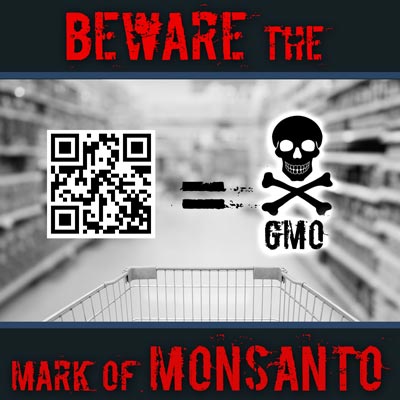
When you see the QR code or so-called Smart Label on a food product, pass it by. Products bearing the Grocery Manufacturer’s Association’s (GMA) Smart Label mark are in all likelihood filled with pesticides and/or GMO ingredients.

The GMA’s 300-plus members include chemical technology companies, GE seed and food and beverage companies. Monsanto, Dow and Coca-Cola are just some of the heavy-hitters in this powerful industry group, which has showed no qualms about doing whatever it takes to protect the interest of its members.

Don’t waste your time searching through their website, which may or may not contain the information you’re looking for. If they insist on wasting your time and making your shopping difficult, why reward them with a purchase?

A little known fact is that the GMA actually owns the "Smart Label" trademark that Congress has accepted as a so-called “compromise” to on-package GMO labeling, and that’s another reason why I believe the Smart Label mark is the mark of those with something to hide, such as Monsanto.


Will you financially support a corrupt, toxic and unsustainable food system, or a healthy, regenerative one? There are many options available besides big-brand processed foods that are part of the “GMA’s verified ring of deception.” You can:
  • Shop at local farms and farmers markets
  • Only buy products marked either “USDA 100 percent Organic” (which by law cannot contain GMOs), “100 percent Grass-Fed” or “Non-GMO Verified”
  • If you have a smartphone and you don’t mind using it, download the OCA’s Buycott app to quickly and easily identify the thousands of proprietary brands belonging to GMA members, so you can avoid them, as well as identify the names of ethical brands that deserve your patronage
Last but not least, encourage good companies to reject QR codes and to be transparent and clear with their labeling. This will eventually ensure that all GMO foods can easily be identified by the GMA’s “verified ring of deception” mark that is the Smart Label.

Campbell’s, Mars, Kellogg’s, ConAgra and General Mills all vowed to voluntarily comply with Vermont's GMO labeling law by labeling all of their foods sold across the U.S. Will their plans change now that the law has been passed by Congress and signed by the President? That remains to be seen, but if you like these companies, I would encourage you to reach out to them and ask them to remain steadfast in their promise.

Non-GMO Food Resources by Country

If you are searching for non-GMO foods, here is a list of trusted sites you can visit.

http://articles.mercola.com/sites/articles/archive/2016/10/26/soylent-gmo-foods.aspx