Pages

Showing posts with label Cats. Show all posts

Sunday, 2 August 2020

Why do we think cats are unfriendly?


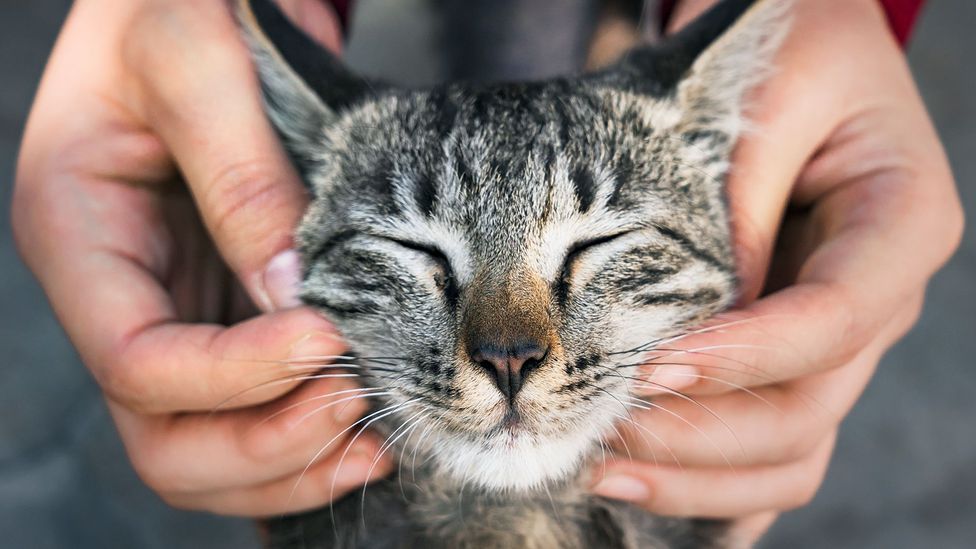
Cat being stroked (Credit: Getty Images)


BBC Future has brought you in-depth and rigorous stories to help you navigate the current crisis, but we know that’s not all you want to read. So, now we’re dedicating a series to help you escape. We’ll be revisiting our most popular features from the last three years in our Lockdown Longreads.  
You’ll find everything from the story about the world’s greatest space mission to the truth about whether our cats really love us, the epic hunt to bring illegal fishermen to justice and the small team which brings long-buried World War Two tanks back to life. What you won’t find is any reference to, well, you-know-what. Enjoy.
Dogs seem almost biologically incapable of hiding their inner moods – shuffling, snuffling, tail-wagging clues to contentment, nervousness or sheer, unadorned joy. Despite what the famous painting might want to tell you, dogs would be terrible poker players. We pick up their cues all too easily.
Cats also have sophisticated body language – their moods are signalled through twitching tails, ruffled fur, and the position of ears and whiskers. A purr usually (but not always) signals friendliness or contentment. They’re a usually reliable method of working out if the cat is in friendly mode or best left alone.
You might also like:
While we can reasonably be sure of a dog’s bond with us, despite the thousands of years domesticated cats have kept us company, they still suffer something of a bad PR image. The independence that many see as a bonus is seen by others as aloofness or selfishness. Their detractors claim they only really show affection when a food bowl is empty.
Cat owners will claim this is all nonsense, of course, and that their bond with their cat is as strong as any dog owner’s. But why does this image of the aloof, unfriendly cat remain? And is there any truth to it?
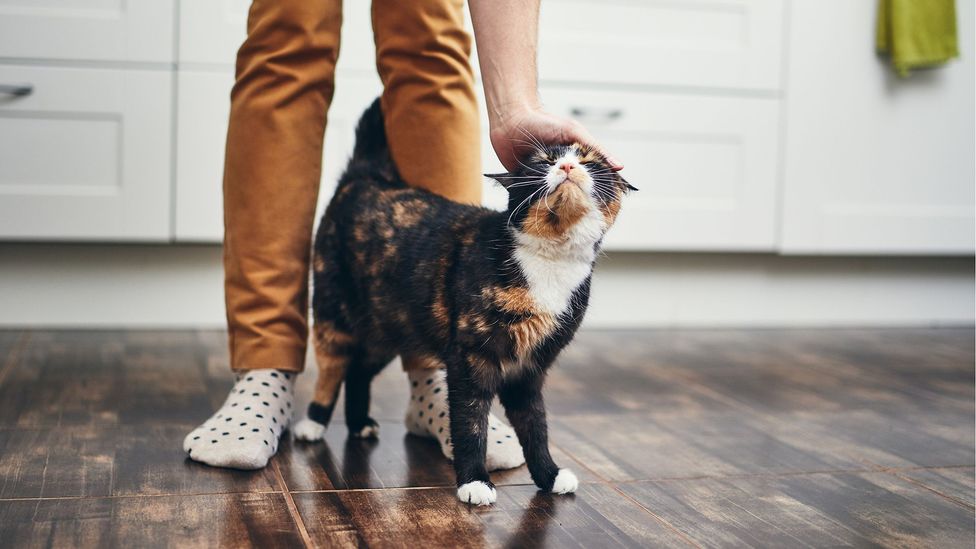
Some people believe cats are only affectionate as a way of getting food (Credit: Getty Images)

At the very least, the image of the “independent” cat has done it little harm in terms of popularity as a pet. It’s thought there are as many as 10 million domestic cats in the UK alone. Some 25% of households were believed to have at least one cat when a study was undertaken in 2012.
One clue to the cat’s image may come from how they were domesticated in the first place. It was a much more gradual process than that of dogs – and cats were very much in the driving seat. The earliest domesticated cats started appearing in Neolithic villages in the Middle East around 10,000 years ago. They didn’t depend on their early human hosts for food – they were encouraged to fetch it themselves, keeping crops and food stores safe from rats and other vermin. Our relationship with them was, from the outset, a little more at arms’ length than dogs, who helped us hunt and relied upon humans for a share of the spoils. (Find out why cats and other pets might hold the key to the obesity crisis.)

Dogs and humans are very similar and have lived together a long time. In a way it has been co-evolution - Karen Hiestand

The cat that may be currently curled up on your sofa or glaring at you from its vantage point on top of the bookcase shares many of its instincts with that of its pre-domestic ancestors – the desire to hunt, to patrol territory, guarding it from other cat; they are much closer to their old selves than dogs. Our taming of cats has only partly removed them from the wild.
“Mostly, it’s just human misunderstanding of the species,” says Karen Hiestand, a vet and trustee of International Cat Care. “Dogs and humans are very similar and have lived together a long time. In a way it has been co-evolution. With cats, it is way more recent. They come from a solitary ancestor that isn’t a social species.”
The African wildcat we domesticated our housecats from, Felis lybica, tends to lead a solitary life, mostly meeting when it is time to mate. “Cats are the only asocial animal that’s been domesticated. Every other animal we’ve domesticated has a social bond with other members of its species.”
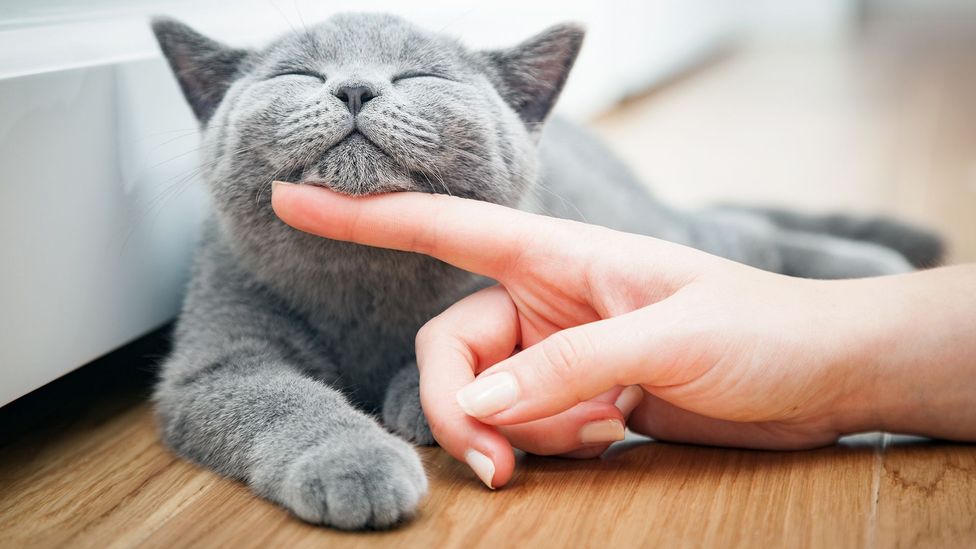
When cats have their basic needs such as food and litter taken care of, they are more likely to seek out companionship (Credit: Getty Images)

Given that cats are such an outlier among the animals we live with, it’s no wonder that we might have been getting their signals wrong.
“Because they are so self-determined and can take care of themselves, cats are becoming more and more popular,” Hiestand says. “But whether the lifestyle suits them is another question. Humans are expecting cats to be like us and like dogs. And they aren’t.”
Research into cats’ emotions and sociability has long lagged behind that on dogs, but in recent times it has gathered pace. Much of it is in its early stages, but already research has shown that cats’ sociability towards humans is quite a complicated spectrum.
“It is highly variable, driven by genetics, and the sociability part can come from what they experience in the first six or eight weeks. If they have positive experiences in the early part of their lives, they’re probably going to like humans and want to hang out with us.”

Just like dogs, cats do a lot of communication with their bodies rather than through sound

Even the domestication of cats itself is a spectrum. Feral strays often hide or flee from humans, behaving far more like their wild ancestors. In places such as the Mediterranean and Japan, colonies of “community cats” thrive in fishing villages, friendly enough to ingratiate themselves with locals who feed them. In Istanbul, for instance, the semi-stray cats are fed and looked after by locals, and have become part of the city’s identity, even spawning a recent documentary film.
Then there are the cats that live with us, but even this subset is a spectrum; some keep a relative distance, while others positively thrive with human company. (Find out if your cat is controlling you.)
So, if we’re wanting a strong bond with our cats, what should we be looking out for?
Just like dogs, cats do a lot of communication with their bodies rather than through sound. “I think it’s a lot harder for people to read their body language compared to dogs,” says Kristyn Vitale, a PhD researcher studying cat behaviour. That’s not necessarily the cat’s fault.
One vital feature may have allowed dogs to leapfrog cats to our affection. A study from Portsmouth University found that dogs have learned to mimic the expressions of infants, which triggers a desire to nurture in their human owners. The change seems to have been the development of a muscle which raises the inner eyebrow – and it’s not something found in their wolf ancestors. “Puppy dog eyes” aren’t just a cliché, they’re an evolutionary trick which has strengthened the bond between dogs and people.
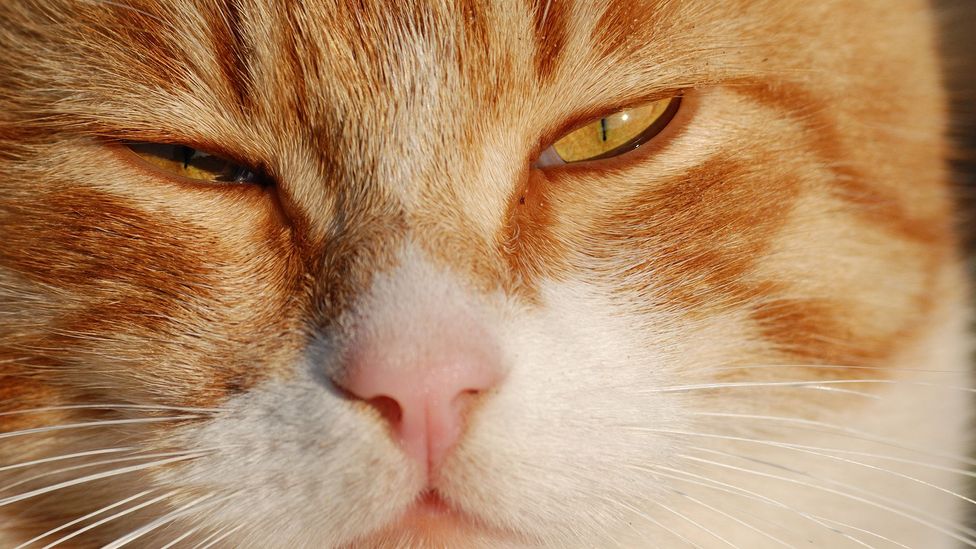
Slow blinking is a sign of affection from cats (Credit: Getty Images)

The bad news for cats? They lack this muscle. As a result, cats’ stares can look cold and unfriendly, and two cats staring at each other can often be a prelude for fisticuffs. But a slow blinking stare – one that your cat probably gives towards you from the other side of the room – is something else entirely; it’s their way of expressing love. Even turning their heads to one side isn’t necessarily disdain, but a sign of their relaxation.
Vitale draws attention to her study at Oregon State University, in which cats and dogs were left in a room by their owner, with the owner suddenly returning some time later. “One interesting thing is that the majority of cats who were secure with their owners, when they returned, they greeted them and went back to exploring the room, with little moments of coming back. Dogs did similar,” Vitale says. “If the dog has run around the room, playing with toys and occasionally coming back to the owner, we wouldn’t worry so much.” Researchers called this “secure attachment” – calmness when the owner returned, suggesting a strong emotional bond.

Relaxed cats are more likely to want to make friends


“Humans’ expectation bias for the animal impacts their behaviour,” says Vitale. By trying to force cats to behave more like dogs – showering us with attention – we’re trying to push them away from their natural behaviour.
Hiestand says that our historic inability to see cats’ temperament as different to dogs is part of the issue. Even experts with years of training are not immune. “I went to a conference in 2007 and felt like an absolute idiot,” she says. “There was all this basic information about cats that I didn’t know, such as that they like their water and their food in separate places. This research is all quite new, but once you have the humility that what you thought you knew about them is wrong, you start to learn stuff that’s interesting.”
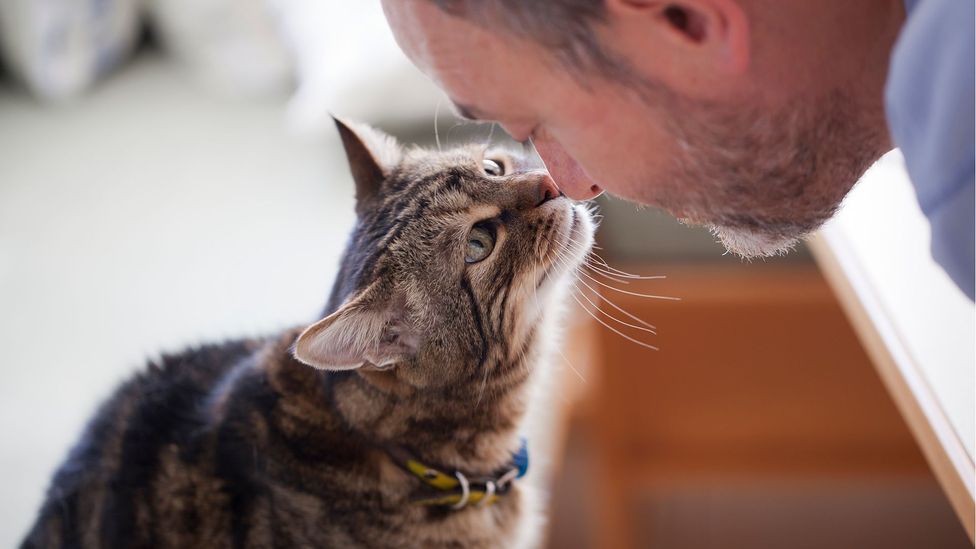
If cats have positive contact with humans early on, they're more likely to want to form bonds with us (Credit: Getty Images)

Take the way cats rub themselves against their owners. This used to be thought of as a kind of territory marker, like wild cats might do on trees or other landmarks in their territory. But when they do it on people, it’s usually a sign of affiliation – the cat is transferring its scent onto your skin, and at the same time transferring yours onto its fur. This is what feral cats do with other cats they are allied with. It is a way of creating a “common scent” which distinguishes friend from foe.
Ultimately, Hiestand says, one thing is key – relaxed cats are more likely to want to make friends. “They want their water and their food and their sleeping arrangements and their litter tray just right, and when they are right, they’re able to start exploring those social bonds.”
So, the next time you come home to find a cat quietly surveying you from the couch, or lazily yawning as they pad their way into the hallway, don’t be disappointed. In their own, quiet way, they’re letting you know it’s good to see you.
--

Friday, 6 March 2020

Dogs, cats can't pass on coronavirus, but can test positive

Pet cats and dogs cannot pass the new coronavirus on to humans ....

6 March 2020

A dog is seen at a pet shop in Hong Kong, Thursday, March 5, 2020. Pet cats and dogs cannot pass the new coronavirus to humans, but they can test positive for low levels of the pathogen if they catch it from their owner. (AP Photo/Kin Cheung)
© Provided by Associated Press A dog is seen at a pet shop in Hong Kong, Thursday, March 5, 2020. Pet cats and dogs cannot pass the new coronavirus to humans, but they can test positive for low levels of the pathogen if they catch it from their owner. (AP Photo/Kin Cheung)

HONG KONG (AP) — Pet cats and dogs cannot pass the new coronavirus on to humans, but they can test positive for low levels of the pathogen if they catch it from their owners.
That's the conclusion of Hong Kong's Agriculture, Fisheries and Conservation Department after a dog in quarantine tested weakly positive for the virus Feb. 27, Feb. 28 and March 2, using the canine's nasal and oral cavity samples.
A unidentified spokesman for the department was quoted in a news release as saying. “There is currently no evidence that pet animals can be a source of infection of COVID-19 or that they become sick."
Scientists suspect the virus known as SARS-CoV-2 that causes the disease originated in bats before passing it on to another species, possibly a small wild mammal, that passed it on to humans. 
However, experts from the School of Public Health of The University of Hong Kong, the College of Veterinary Medicine and Life Sciences of the City University of Hong Kong and the World Organisation for Animal Health (OIE) have unanimously agreed that the dog has a low-level of infection and it is “likely to be a case of human-to-animal transmission."
A woman wearing face mask, walks her dogs in Hong Kong, Thursday, March 5, 2020. Pet cats and dogs cannot pass the new coronavirus to humans, but they can test positive for low levels of the pathogen if they catch it from their owner. (AP Photo/Kin Cheung)© Provided by Associated Press A woman wearing face mask, walks her dogs in Hong Kong, Thursday, March 5, 2020. Pet cats and dogs cannot pass the new coronavirus to humans, but they can test positive for low levels of the pathogen if they catch it from their owner. (AP Photo/Kin Cheung)
The dog, and another also in quarantine which has tested negative for the virus, will be tested again before being released. The department suggested any pets, including dogs and cats, from households where someone has tested positive for the virus should be put into quarantine.
In general, pet owners should maintain good hygiene, including washing hands before and after handling animals, their food and supplies and no kissing them. People who are sick should avoid contact with pets and a veterinarian's advice should be sought if changes in a pet's health conditions are detected.
“Apart from maintaining good hygiene practices, pet owners need not be overly concerned and under no circumstances should they abandon their pets," the spokesman said.
https://www.msn.com/en-my/news/world/dogs-cats-cant-pass-on-coronavirus-but-can-test-positive/ar-BB10O9XD?

Wednesday, 19 February 2020

Feline language decoded: What is your cat trying to tell you?

Cats speak their own language, not only using sounds, but also gestures and scents that humans don’t understand all that well. 
Sometimes they purr, sometimes they claw at the furniture. What does it all mean?

Feb 6, 2020
Viola Ruedele

Image result for dpa:cats speak their own language, not only

When your cat struts, holding its tail in a vertical position, approaching you with the tip of its tail bent while nuzzling against your legs, it's a good sign, experts say.

“This means your cat is feeling friendly, wants to greet you and wants to lavish you with attention,” says Daniela Schrudde, a veterinarian at the Berlin-based Welttierschutzgesellschaft animal welfare society. By rubbing its head against you, your cat is telling you it accepts you as one of its own, she says.

Cats have glands behind their ears that release smells when they want to mark their territory, and they like to do this whenever their owner comes home. But the message gets lost in translation - humans can’t pick up the scent.

Experts also advise you to stand still and talk to your cat, rather than wordlessly approach it.

“This feels less threatening to the cat than when the owner approaches it,” says Schrudde. If the cat comes closer, then you can give it a cuddle. 

Another common scenario is the cat lying on its back or side, blinking or with its eyes closed, cleaning itself. This means the cat is feeling content and relaxed. Cats also take little breaks from cleaning themselves when there is something new for them to discover. And in these moments, they welcome being stroked, says Schrudde.

While many cats love cuddles, there are of course some scenarios in which it is advisable to approach one’s feline with care, according to Schrudde. 

Those wanting to pamper and stroke their cats should approach them cautiously. 

“If the animal sits up, then it is better to pause and talk to the cat, so that it doesn’t feel threatened,” she says. 

“Not every cat wants to be stroked in the stomach,” Schrudde adds. And if your cat sits down on your laptop or your newspaper, this means it is bored and would like to be occupied with something. 

What does it mean when the tip of your cat’s tail swishes back and forth while the rest of its body remains still, spine hunched?

Your cat is feeling afraid or aggressive, and wants some peace and quiet. Schrudde advises that you exercise caution. Cats express their moodiness by wagging their tail, which is sometimes misunderstood by animal lovers who also have dogs.

“If the cat’s aggression is directed at a certain object, then it should be removed,” she added. Otherwise, it is a good idea to wait until the animal's ears have returned to their normal position.

According to Schrudde, when a cat claws at furniture, “they are telling you that the spot belongs to them.” 

She suggests standing firm with your cat, even if it’s a difficult thing to do, and preventing it from scratching furniture from a young age by offering it alternatives. 

“Your cat can sharpen its claws and expend excess energy on a scratching post,” says Schrudde. 

If a cat urinates outside the litter tray, this could mean a lot of things. “Your cat could be having kidney problems, causing it pain when it urinates,” she says. Otherwise, it might also be cat flu.

But it could also be a psychological issue. “Cats are very sensitive,” Schrudde says. Your cat could be protesting about some kind of change they are not happy with, which could be as small a deal as their new bowl being a different colour.  

Schrudde recommends taking your cat to the vet to find out whether its issues are physiological or psychological.

Alongside expressing themselves using a variety of gestures and behaviours, cats also have a wide repertoire of noises.

The famous ‘meow’ sound is mostly directed at humans, says Susanne Schoetz, a professor of phonetics based in Lund, Sweden. Cats, being very smart, have noticed that people communicate with words, and have adapted accordingly. When a cat’s meow is high-pitched, it is usually feeling weak and wants attention, according to experts. 

Meows turn to coos when your cat needs something quite urgently, like food or a toy.

A deep, long growl indicates that the cat is feeling aggressive or defensive. This is how your cat tells foes not to come any closer.

A deep and short growl, on the other hand, means “good” or “thank you!”

Purring can have all sorts of meanings. It can indicate contentment, hunger, fear or pain. To interpret your cat’s purrs, you should consider the circumstances, says Schoetz. 

“If your cat is lying on your lap, then it is feeling content. But on a visit to the vet, it would probably be feeling anxious.” 

According to Schoetz, those who really want to figure out what their cat is trying to tell them should focus more on the quality of the noises they make. For example, a gentle, calm sound indicates that your cat means you no harm. 

To those still struggling to understand their feline friends, the best advice is to patiently listen and make note of behavioural changes, Schoetz adds. 

https://www.dpa-international.com/topic/cat-trying-tell-feline-language-decoded


Image result for dpa:cats speak their own language, not only
https://www.pinterest.com/pin/591097519826174059/visual-search/?x=16&y=16&w=530&h=671


Different Types of Cat Languages

Posted on October 18th, 2017 by admin
Types of Cat Languages
We don’t exactly know it but our cats speak to us on a daily basis. It’s true. They may seem cold and snobbish on the outside but even the subtlest hint of looking at you says something so much about them. As a cat parent, it’s very crucial to understand cat languages.

http://www.missioncats.net/blog/different-types-of-cat-languages

They can’t speak to us through words but they do express through body movements. There’s a great number of Cat Hotel in San Francisco area that could tell you a few of these body languages since they’re experts when it comes to taking care of your cats. But for a more extensive list of this delicate cat language, read on and see if your cat does any of these behaviors.
  1. Peering over the shoulder shows interest.
    cat peering over the shoulder shows interestDo you ever catch your cat looking over her shoulder whenever you say something? That doesn’t mean she saw a mouse she wants to hunt. It actually means that she’s listening and very interested to whatever you’re mumbling about. Mostly, it’s either because the tone of your voice is really soothing or just plain irresistible.

  1. A tail that sticks straight up signals being friendly.
    cat tail that sticks straight up signals being friendlyAside from showing confidence and contentment, when your cat’s tail is as straight as a flag pole on a Monday morning, it means you can approach her with love and affection because she’s being super friendly.

  1. Sitting straight with tails in front displays attention.
    Sitting straight with tails in front displays attention
    Your cat does pay attention to you, and you should be glad. Whenever you see her sitting up straight with her tail right in front of her, with eyes just staring right to your soul, that’s when she’s giving you all of her attention.

  1. Lying down carelessly signifies being relaxed.
    cat lying down carelessly signifies being relaxed
    Most cat parents think that when cats are sleeping, they are relaxed. But sometimes they’re not. Right when you want to caress their fur, they’d go all blades on you and scratch you. But when you see them lying down gently on their back, as if they don’t care, that’s when you can give a little bit of patting on the back.

  1. Lying on the back exposing tummy means trusting.
    cat lying on the back exposing tummy means trusting
    When your cat suddenly lies down on the floor showing its belly to you doesn’t mean that she wants you to rub her belly. Sometimes it just means that she trusts you won’t do anything stupid to her and entrusts her entire life to you.
  
  1. Sleeping sometimes means being content.
    cat sleeping
    Some cat parent finds it quite vexing to see their fury babies just sleeping the day away, without making any interactions. In some way, that’s actually good because it means that she’s content with the life you’re giving her.

  1. Stiff body with tingling ears means being cautious or conflicted.
       
    cat's stiff body with tingling earsThis would be all too familiar if you catch your kitty cat in action face to face with a dog. When your cat sees something that frightens her, she usually twinges her ears and acts uncomfortable.
   
  1. Reaching for things shows being playful.
    cat reaching for things Your cats often climb on to the counter and reach some stuff that you don’t want them to reach. Sometimes you just got to understand this behavior because they’re actually just being playful.

  1. Scratching signals being excited.
      
    cat scratchingBeing a cat parent means bracing yourself for damaged furniture and tapestries because your babies just love to scratch everything. But little do you know that it actually shows how excited they are to meet you or to know that you’re already home.

  1. Rubbing its skin means marking territories.
    cat rubbing its skinIf your cat constantly rubs itself against you, that’s when you know you don’t own your cat but your cat actually owns you. You’re her property now so you better do what she wants you to do and feed her generously while you’re at it.

  1. Floppy ears displays being anxious.
    cat floppy earsYour cat gets anxious probably when you go out of the house and leave her alone. You probably don’t notice that but next time, if you see her tail sagging on the floor, with her ears flopping on its side, then you should probably either cancel that appointment or take her with you.

  1. Crouching on the floor shows predatory mode.
cat crouching on the floorIf you’re afraid of cats, all you need to do is to see if your cat’s crouching on the ground like a predator sensing a prey and then you’ll know that a mouse is somewhere in your vicinity.

  1. Tucked body and tail signifies being worried.
cat tucked body and tailYour cat gets worried to. If you want to know what worries her, just observe what things make her want to crawl into a ball and act all strange.

  1. Loud meowing and aggressiveness means being threatened.
    cat loud meowingThis is a basic cat language that all owners know. It’s not a good idea to threaten cats unless you want to get your face scratched.

  1. Arched back and flattened ears shows being terrified.
    cat arched back and flattened ears
    Whether it’s a loud noise or a stranger she hasn’t met before, when you see your cat’s back arched at a point and looking all confused, that actually means that she’s afraid of something.

  1. Wagging tail displays irritation.
cat- wagging tailYou know when your cat irritates you when she wags your tail at you while looking at you in a very judgmental way. So if your cat finds you vexing, it’s a great idea to stay away and let her cool off.

  1. Rejection of food means being disgusted.
cat rejecting foodIt’s not that she’s picky when it comes to food or that she’s full. It actually means she doesn’t like what you’re feeding her and basically her liver can’t contain whatever it is that you’re giving her.
 
After reading this list, you should probably be an expert when it comes to decoding your cat’s actions. It really pays off when you get to understand your fur babies because you will know how to act around them and what to do when they’re acting in a certain way.If you couldn’t find your cat’s behavior in this list, feel free to add them on the comments below.
http://www.missioncats.net/blog/different-types-of-cat-languages


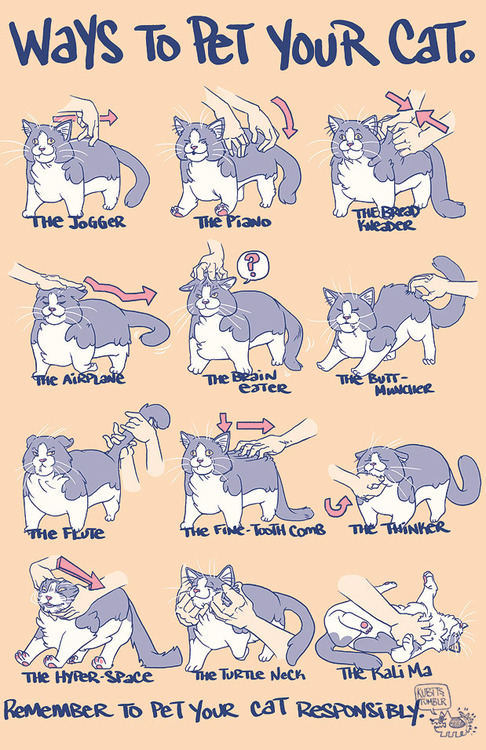
Ways to Pet Your Cat

https://laughingsquid.com/ways-to-pet-your-cat/


Image result for cat body language chart

https://www.pinterest.com/pin/251216485450135451/


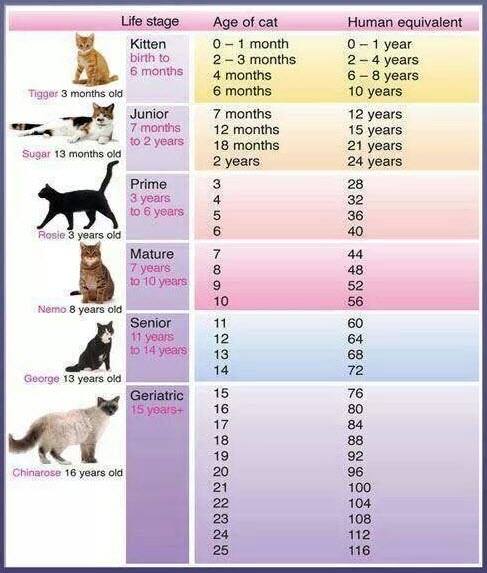
how old is your cat

https://www.pinterest.com/pin/508484614163565661/


The Wild and Friendly Bengal Cat Breed Bengal Cat Origins A relatively new cat breed the Bengal cat was first bred in North America. This royal looking cat breed was initially created by cross…MoreMore -- Read more details by clicking on the image. #CatsBreed
https://www.pinterest.com/pin/344806915218526106/


Body Language of Feline Anxiety Poster (Handouts) – Dr. Sophia Yin #catbehaviorlifestyle

https://www.pinterest.com/pin/728035095988418936/


https://www.pinterest.com/pin/712765078501241229/


Cats have their own language, and if you manage to learn it you will be rewarded!

https://www.pinterest.com/pin/742882901007497968/


We Are Quite Sure You Are All Familiar With These Every Day Situations With Your Cat (Comics)

https://www.pinterest.com/pin/783274560168811771/


Open Book: All Black Cats Are Not Alike – Chronicle Books – Medium #Books

All Black Cats Are Not Alike


Wednesday, 27 November 2019

How to Protect Yourself From 5 Diseases You Can Get From Your Pet

The unconditional love of a dog or cat can boost health by lowering stress. And walking a dog every day can reduce your risk of obesity and heart disease.

 INH Research
But your pet can give you more than loyalty and companionship… They may pass on illnesses, too. They’re called zoonotic diseases, and some of them are serious, even deadly.
Here are five animal-transmitted conditions every pet owner should know about…
1. Toxoplasmosis
Cat owners–especially pregnant women–need to be aware of this disease. Toxoplasmosis can infect a fetus and cause miscarriage or birth defects. A protozoan organism in contaminated cat feces causes this illness.1 That’s why pregnant women should let someone else clean the litter box.
Keep your face as far away as possible from kitty litter dust when scooping. It’s also a good idea to wear a protective mask over your mouth and nose. This cuts your chances of inhaling the microscopic protozoa. Protective eyewear is smart, too. You can find both at any drug store.
2. Salmonella
Most of us know you can get salmonella poisoning from contaminated food. But pets can also transmit this serious intestinal ailment. Turtles and lizards are the most common carriers. Dogs, cats, birds, and horses may harbor it, too.2
Although your vet can test your pet for salmonella, the best protection is to wash your hands after handling any animal.
3. Parrot Fever
This bacterial infection comes from breathing in fine airborne particles…from the dried feces of infected birds. This includes common pet birds such as parakeets, parrots, cockatiels, and macaws. Human symptoms include muscle aches, fever, and chills.
To avoid the disease, clean your bird’s cage often and wear protective goggles and a mask while doing it. Also, take your bird to the vet right away if it shows signs of illness. Treating your pet can eliminate the chance of parrot fever infecting you.
4. Cat Scratch Disease
Fleas pass the bacteria that causes this illness from cat to cat. But humans can contract it through a cat bite or scratch.3 People suffer flu-like symptoms. Some even go on to develop serious problems, such as heart valve damage.
Keep your risk low by controlling fleas on your cat. One natural way to do this is to dilute five drops of lavender essential oil in three tablespoons of water. Then apply it to your cat’s collar. Also avoid play that can lead to scratches. And always wash cat bites and scratches with soap and water as soon as they occur.
5. Roundworms
Puppies and kittens often pass the eggs and larvae of these intestinal parasites through feces. Roundworm infections usually aren’t serious, but can cause nerve or eye damage in some people.4
Deworming your kitten or puppy is the first step to lowering your risk of infection. You can take them to a holistic vet or add an herbal formula for removing intestinal parasites to their food or water. These liquids are available online. And always wash your hands after dealing with droppings.
Bonding with your pets lowers stress and fights obesity… But it comes with risks. Here are 5 bugs you can catch from your pet and how to avoid them.
References:
1http://www.cdc.gov/parasites/resources/pdf/npi_toxoplasmosis.pdf
2http://www.fda.gov/ForConsumers/ConsumerUpdates/ucm048151.htm
3http://www.cdc.gov/healthypets/diseases/cat-scratch.html
4http://www.petsandparasites.org/dog-owners/roundworms/