August 30, 2016
Story at-a-glance
- This past spring, Monsanto released Roundup Ready Xtend cotton and soybean seeds, designed to tolerate both Roundup and dicamba, an older toxic herbicide known for its tendency to cause unintended crop damage
- The seeds were released even though the U.S. Environmental Protection Agency (EPA) had not yet approved Monsanto’s “new and improved” low-drift glyphosate/dicamba formulation to be used on them
- Faced with Roundup resistant pigweed, farmers illegally sprayed older dicamba products on their Roundup Ready Xtend plants, causing crop decimation across 10 states from dicamba drift
By Dr. Mercola
After two decades of planting glyphosate-tolerant crops, resistant weeds have overtaken farm fields across the U.S., leaving farmers to battle an increasingly difficult situation. At least 35 weed species are now resistant to glyphosate, the primary ingredient in Monsanto's broad-spectrum herbicide Roundup.1
Studies2 have also linked glyphosate to increases in Sudden Death Syndrome (SDS), a deadly plant disease that causes plants to turn yellow and die — including crops that have never been sprayed with the herbicide but were planted in a field that received an application the previous season.
In an effort to skirt disaster, Monsanto developed a new breed of genetically engineered (GE) seeds tolerant to other pesticides besides Roundup. This, they claim, is the answer to rising weed resistance — a side effect the company said would not occur from the use of their GE seeds in the first place.
We now know, without any shadow of a doubt, they were wrong. And there's every reason to believe they are wrong about their next generation of GE seeds as well. If anything, it will likely boost weed resistance, continue driving the increase in pesticide use and make our food even more toxic.
Monsanto Makes Another Massive Mistake
Earlier this spring, Monsanto released a new crop of soybean and cotton seeds called Roundup Ready Xtend, designed to tolerate being drenched in not just glyphosate-based Roundup but also dicamba, an older and highly toxic herbicide known for its tendency to cause unintended crop damage. As noted by Mother Jones:3
"[T]he dicamba products currently on the market are highly volatile — that is, they have a well-documented tendency to vaporize in the air and drift far away from the land they're applied on, killing other crops.
Monsanto's new dicamba, tweaked with what the company calls 'VaporGrip' technology, is supposedly much less volatile."
Alas, while the U.S. Department of Agriculture (USDA) had approved the seeds, the U.S. Environmental Protection Agency (EPA) had not yet signed off on Monsanto's "new and improved" glyphosate/dicamba formulation to be used on them.
At present, the use of dicamba on cotton and soybean crops is restricted to pre-planting or post-harvest burndown applications only. It is illegal to spray dicamba on the crop itself.
It would have been prudent to not sell the seeds until the, allegedly, safer and less volatile dicamba formulation was approved and ready for market, but Monsanto decided not to wait, thinking farmers could simply use Roundup in the meantime.
However, facing an infestation of pigweed, which has developed resistance to Roundup, farmers took to illegally spraying older dicamba products on their brand new Roundup Ready Xtend plants, thereby setting off a chain reaction of crop decimation.4
According to the EPA, crop damage and crop losses blamed on dicamba drift have been reported in 10 states: Alabama, Arkansas, Illinois, Kentucky, Minnesota, Mississippi, Missouri, North Carolina, Tennessee and Texas.
In Missouri, 117 complaints "alleging misuse of pesticide products containing dicamba" have been filed. The illegal use of dicamba has affected more than 42,000 acres of a diverse array of crops, including peaches, cantaloupes, watermelons, rice, peas, tomatoes, peanuts, alfalfa, cotton and soybeans.
Arkansas Considers New Dicamba Rules to Protect Crops From Drift Damage
In response to 25 formal complaints over dicamba drift damage,5 the Arkansas Pesticide Committee has brought forth a proposal to expand mandatory buffer zones and outright ban the use of certain dicamba products during the growing season, from mid-April until mid-September.
Fines may also be raised to dissuade illegal spraying.6 When asked what actions Monsanto would take against the farmers who used their product with an illegal herbicide, they told the Northwest Arkansas Democrat Gazette7 that revoking farmers' licenses for product use was "difficult if not impossible."
"For its part, Monsanto says it expects the EPA to approve the new, improved dicamba formulation in time for the 2017 growing season, and that it never expected farmers to use old dicamba formulations on the dicamba-tolerant crops it released this year," Mother Jones writes.
"If the VaporGrip formulation does indeed control volatization as promised, the drift incidents of 2016 will likely soon just be a painful memory for affected farmers. If not, they portend yet more trouble ahead for the PR-challenged ag giant."
Environmental Groups Predict the Worst Is Yet to Come
Meanwhile, environmental groups like the Environmental Working Group (EWG) and Save Our Crops Coalition (a "grassroots coalition of farm interests organized for the specific purpose of preventing injury to non-target plants from exposure to 2,4-D and dicamba"8) are not surprised with the present chain of events.
In a recent blog post, EWG agriculture policy director, Colin O'Neil, and research analyst Emily Cassidy write:9
"[On August 9, 2016] Steve Smith, chair of the Save Our Crops Coalition, wrote an open letter10 to Hugh Grant, Monsanto's chairman and chief executive officer, that said, essentially, we told you so.
For years, the Save our Crops Coalition … has warned that illegal use of generic dicamba would occur and that dicamba drift would be especially hazardous. Now it appears that environmentalists' worst fears are coming true. This situation is likely to only get worse. What can be done?
For starters, Congress should update the nation's outdated federal pesticide law to ensure that there are adequate buffer zones around neighboring farms, schools, hospitals and churches, as well as mandate stricter enforcement and higher penalties for non-compliance.
Congress should also reward good stewardship … [T]he incentives created by Congress are backward. The federal government does not give enough support to reverse these damaging practices.
One thing is clear: If pesticide regulation continues to be a Wild West, then farmers and consumers can expect pesticide drift to expand."
Dicamba Likely to Worsen Toxicity of Food Supply
According to research11 published in 2014, phenoxy herbicides, which include 2,4-D and dicamba, are clearly associated with three distinct types of non-Hodgkin's lymphoma (NHL), a type of blood cancer that originates in your lymphatic system.
It's the sixth most common type of cancer in the U.S., with an estimated 69,000 Americans diagnosed each year. Worldwide, NHL accounts for an estimated 37 percent of all cancers.
Besides cancer, other documented health hazards associated with these herbicides include developmental and reproductive problems. This is particularly chilling considering the fact that use of these herbicides have risen several-fold since the early 2000s, and their use will increase even further now that 2,4-D and dicamba-tolerant crops have been approved. (Dow AgroSciences' Enlist corn and soybeans are resistant to glyphosate and 2,4-D.)
Monsanto Betting Big on Dicamba
In April 2016, Monsanto announced a $975 million expansion plan for its Luling, Louisiana facility where dicamba is produced. As with its Roundup Ready seeds, the primary reason for creating these genetically modified (GM) seeds it to expand the market for the chemicals that go with them.
For decades, Roundup ruled supreme, becoming the most commonly used weed killer in the world. Now, Monsanto is betting on dicamba, apparently without much thought to the health and environmental effects it will wreak as farmers start to douse our food supply with both glyphosate (recently classified as a probable human carcinogen) AND dicamba (which despite its known toxic profile can be found in over 1,100 different weed killer formulas sold in the U.S.)
After all, volatility and drift is not the only hazard with dicamba. Whether Monsanto's "VaporGrip" formula works or not, this chemical poses health and environmental threats over and above those of glyphosate. I shudder to think what scientists may find in the years to come when they start investigating the synergistic effects of this Roundup/dicamba combination on health.
What's certain is that Monsanto will do everything it can to make dicamba the new go-to solution, just like Roundup was before its serious health and environmental hazards became more widely known. As reported by Mother Jones:12
"Within a decade, the company wrote, the new GM crops will proliferate from the U.S. Midwest all the way to Brazil and points south, covering as much as 250 million acres of farmland (a combined land mass equal to about two and a half times the acreage of California) — and moving lots of dicamba."
Signs and Symptoms of Dicamba Exposure
Dicamba (as well as 2,4-D) acts like auxins — natural plant hormones that control plant growth. When a plant is treated with dicamba, it begins growing in abnormal ways, typically resulting in plant death. As mentioned, dicamba has a long history of use as a weed killer both in agriculture and other places, such as lawns, golf courses and along roadsides. Exposure can occur via inhalation or skin contact. Signs and symptoms of dicamba exposure include:13
- Dizziness
- Coughing
- Skin irritation
- Vomiting and loss of appetite
- Muscle spasms
Signs that your pet may have been exposed, either by eating treated plants or walking through an area where dicamba has been applied include:
- Shortness of breath
- Muscle spasms
- Excessive saliva production
- Birds may exhibit signs of wind drop, loss of motor control and weakness.
Pesticide Cocktails Threaten Human and Environmental Health
In this 37-minute video, Charles Benbrook, Ph.D., an American agricultural economist and former research professor at the Center for Sustaining Agriculture and Natural Resources at Washington State University, discusses the use of GE crops and how they affect your health and environment.
Originally marketed as a means to reduce the use of pesticides, GE crops have led to the creation of resistant weeds and an increased use of chemicals to control them. Just as bacteria can develop a resistance to antibiotics, so can weeds develop a resistance to herbicides.
Stacked trait refers to the combination of two or more genetically engineered genes spliced into a single plant. Monsanto's Roundup Ready 2 Xtend seeds is one example. The seeds are engineered to tolerate both Roundup and dicamba. But will stacked trait plants actually slow down or even prevent resistance? Hardly. The more likely scenario is that it will simply speed up the process of resistance, making more weeds resistant to more chemicals.
There's also the problem of synergy, which is what happens when two or more compounds combine to create an effect that is larger than the sum of their parts. Research shows that combining two chemicals increases the toxic effect compared to using each chemical in isolation. In the past, the EPA has claimed it could not assess the potential synergistic effect of the chemicals without data.
However, in late 2015, the EPA discovered that synergistic chemical reactions were actually recorded in patent applications at the U.S. Patent and Trademark Database. Nathan Donley, a scientist with the Center for Biological Diversity, told EcoWatch:14
"It's alarming to see just how common it's been for the EPA to ignore how these chemical mixtures might endanger the health of our environment. It's pretty clear that chemical companies knew about these potential dangers, but the EPA never bothered to demand this information from them or dig a little deeper to find it for themselves."
Tips to Help You Avoid Pesticides
Research has linked long-term pesticide exposure to infertility, birth defects,15,16 endocrine disruption,17 neurological disorders18and cancer.19 It is only a common sense conclusion that ingesting and being exposed to fewer pesticides would result in improved health. Here are some basic suggestions to help you reduce the amount of pesticides you and your family are exposed to.
•Eat organic foods. In a survey of 1,000 Americans, 71 percent expressed a concern over the number of chemicals and pesticides in their food supply.20 If you're among them, the best strategy at your disposal is to buy organic produce, pastured, organic meats and dairy products.
Investigate the farmers markets in your area and consider planting your own garden to supply produce through the summer months. Although buying organic foods may be slightly more expensive today, they help to reduce your overall health costs in your future.
If you cannot afford buying everything organic, print out the EWG's 2016 "dirty dozen" list for most pesticide-contaminated fruits and vegetables. These you'll want to buy organic. You can purchase the conventional versions of produce that tend to be the least contaminated, thereby spending the extra money where it counts the most. You can find the EWG's 2016 Dirty Dozen and Clean 15 lists in my previous article, "Which Fruits and Vegetables Have the Most Pesticides?"
•Clean up your lawn and garden care. Don't apply chemical pesticides or herbicides to your yard, and if you use a lawn care service, don't allow them to use them. Remember that a neighbor's lawn chemicals can potentially contaminate your property as well. Also avoid lawn care and other gardening products that contain insect growth regulators (IGRs), especially if you have pets.
The focus of organic lawn care is to produce a healthy lawn and soil using natural organic fertilizers. An organic lawn has grass roots grown deep into the soil, which makes them less vulnerable to drought, weeds, insects, disease and other stressors. There are many excellent online resources about how to naturally control weeds and improve soil health, and in many communities' organic lawn care services are readily available.
The same goes for pests. Ants, wasps and other bugs can all be safely combated. Boric acid powder, for example, has been found to be a very effective deterrent to roaches and ants. Sprinkle some in the inner corners of your cabinets and in the corners under your cabinets.
Pests will carry it back to their nests on their feet and kill the remainder of the infestation. Boric acid is non-toxic for animals and only kills the insects. For natural pest solutions, check out the book "Dead Snails Leave No Trails" by Nancarrow and Taylor.
•Talk with your school board about lawn care at your children's school. Pesticides sprayed on the school lawn and play areas can increase your child's exposure. You may be able to change how they care for the lawn when you educate the administration about the risks involved to the children.
•Play in a healthy environment. Before joining a golf club, talk with the course superintendent about the pesticides they use to control weeds and insects. Bring members together to request cleaner and safer lawn care. Talk to your city administrators about the care given to the lawn in your local parks. Educate them about the risks to adults, children and pets from pesticides.
SAD NEWS: House Passes DARK Act Compromise
The House passed a compromise to the DARK Act that will force food distributors to disclose the presence of genetically engineered (GE) ingredients with a smartphone scan code. President Obama has signed the bill that removes states’ rights for labeling GMOs. The bill is full of loopholes, which may allow genetically modified ingredients to slip through unannounced.
Genetically modified organisms (GMOs), aka GE foods, are live organisms whose genetic components have been artificially manipulated in a laboratory setting through creating unstable combinations of plant, animal, bacteria and even viral genes that do not occur in nature or through traditional crossbreeding methods.
GMO proponents claim that genetic engineering is “safe and beneficial,” and that it advances the agricultural industry. They also say that GMOs help ensure the global food supply and sustainability. But is there any truth to these claims? I believe not. For years, I’ve stated the belief that GMOs pose one of the greatest threats to life on the planet. Genetic engineering is NOT the safe and beneficial technology that it is touted to be.
The FDA cleared the way for GE Atlantic salmon to be farmed for human consumption. Thanks to added language in the federal spending bill, the product will require special labeling so at least consumers will have the ability to identify the GE salmon in stores. However, it's imperative ALL GE foods be labeled clearly without a smartphone scan code because not everyone owns a smartphone.
The FDA is threatening the existence of our food supply. We have to start taking action now. I urge you to share this article with friends and family. If we act together, we can make a difference and put an end to the absurdity.
Boycott Smart Labels Today
When you see the QR code or so-called Smart Label on a food product, pass it by. Products bearing the Grocery Manufacturer’s Association’s (GMA) Smart Label mark are in all likelihood filled with pesticides and/or GMO ingredients.
The GMA’s 300-plus members include chemical technology companies, GE seed and food and beverage companies. Monsanto, Dow and Coca-Cola are just some of the heavy-hitters in this powerful industry group, which has showed no qualms about doing whatever it takes to protect the interest of its members.
Don’t waste your time searching through their website, which may or may not contain the information you’re looking for. If they insist on wasting your time and making your shopping difficult, why reward them with a purchase?
A little known fact is that the GMA actually owns the "Smart Label" trademark that Congress has accepted as a so-called “compromise” to on-package GMO labeling, and that’s another reason why I believe the Smart Label mark is the mark of those with something to hide, such as Monsanto.
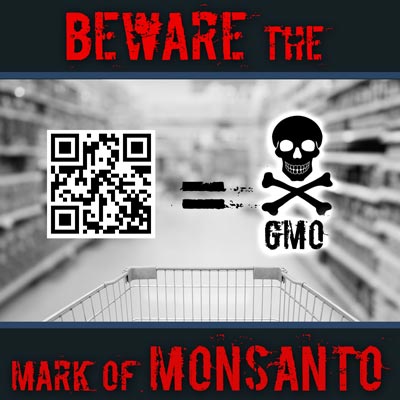
Will you financially support a corrupt, toxic and unsustainable food system, or a healthy, regenerative one? There are many options available besides big-brand processed foods that are part of the “GMA’s verified ring of deception.” You can:
- Shop at local farms and farmers markets
- Only buy products marked either “USDA 100 percent Organic” (which by law cannot contain GMOs), “100 percent Grass-Fed” or “Non-GMO Verified”
- If you have a smartphone and you don’t mind using it, download the OCA’s Buycott app to quickly and easily identify the thousands of proprietary brands belonging to GMA members, so you can avoid them, as well as identify the names of ethical brands that deserve your patronage
Last but not least, encourage good companies to reject QR codes and to be transparent and clear with their labeling. This will eventually ensure that all GMO foods can easily be identified by the GMA’s “verified ring of deception” mark that is the Smart Label.
Campbell’s, Mars, Kellogg’s, ConAgra and General Mills all vowed to voluntarily comply with Vermont's GMO labeling law by labeling all of their foods sold across the U.S. Will their plans change now that the law has been passed by Congress and signed by the President? That remains to be seen, but if you like these companies, I would encourage you to reach out to them and ask them to remain steadfast in their promise.
Non-GMO Food Resources by Country
If you are searching for non-GMO foods, here is a list of trusted sites you can visit.
- Organic Food Directory (Australia)
- Eat Wild (Canada)
- Organic Explorer (New Zealand)
- Eat Well Guide (United States and Canada)
- Farm Match (United States)
- Local Harvest (United States)
- Weston A. Price Foundation (United States)

