Pages

Monday, 13 February 2017

Wrong Vegetable Oil Increases Heart Attack Risk

A debate raged in the 1960s as to which dietary factors were responsible for the epidemic of coronary artery blockage.
One side claimed saturated fat to be a factor because it raised blood cholesterol.

September 2016
By William Faloon
William Faloon
William Faloon
Heart attack rates peaked in the United States in 1968.
In this era, it was not unusual for a man under age 60 to die from sudden cardiac arrest.1
A debate raged in the 1960s as to which dietary factors were responsible for the epidemic of coronary artery blockage.
One side claimed saturated fat to be a factor because it raised blood cholesterol. They pointed to studies showing that vegetable fat sources such as corn and safflower oil lowered cholesterol and would therefore reduce heart attack risk.
These vegetable sources of oil contain high amounts of omega-6 fats. Excessive consumption of omega-6s can create chronic inflammatory reactions.2 Inflammation is involved in the development of atherosclerosis.3,4
The natural health community long ago urged people to limit their intake of omega-6 fats and add plentiful quantities of omega-3 (from fish sources) and monounsaturated fats (from olive oil and nuts).
Battling against these recommendations are endless commercial advertisements promoting corn and safflower oil brands as being heart healthy.
A study just published in The British Medical Journal uncovered startling data from a huge human study initiated nearly 50 years ago. It turns out that while omega-6 oils reduce cholesterol, those individuals who consume too much may be at higher risk of death, especially in people over age 65.5
In other words, the nearly five-decade practice of replacing butter and other saturated fats with corn oil and other omega-6 fats was an apparent mistake.
This issue of Life Extension Magazine® describes the benefits of heart healthy extra virgin olive oil and why it should be ingested in lieu of most saturated fats and certain vegetable oils.
As late as 2009, the American Heart Association stated that a diet low in saturated fat and moderately high in omega-6 fatty acids was probably beneficial for the heart.6
This advice was based partially on evidence that people who ate lots of beef and butter were at higher risk for coronary artery disease.7,8
While avoiding high intakes of saturated fats makes sense, we have long warned about the dangers of consuming excess amounts of omega-6 fats, which permeate today’s American diet.
The typical American diet contains a ratio of 17 omega-6 fats for every 1 omega-3.9
A review of the scientific literature reveals that an optimal ratio of omega-6 to omega-3 in the diet is roughly 4 to 1, though some propose that the ratio should be 2 omega-6 fats to 1 omega-3.10-12 Other researchers have recommended a 1:1 ratio, meaning that equal amounts of omega-6s to omega-3s should be ingested for optimal health.11-14
What’s overlooked is the role that monounsaturated fats and their accompanying polyphenols play in heart health and overall longevity. The easiest way of including them in one’s diet is to use plentiful quantities of extra virgin olive oil along with a handful of walnuts.

Revealing Analysis of Previous Data

Revealing Analysis of Previous Data 
A new analysis of old human data revealed startling statistics that made headline news stories earlier this year.15 It turned out that people who consumed a diet high in omega-6-rich corn oil had higher overall risk of death than those who consumed butter.
This is not to say eating lots of butter is beneficial. We know it raises cholesterol and increases certain types of cancer.16,17 What this analysis published in The British Medical Journal5 revealed is an ominous possibility of increased risk of death in people over age 65 who:
  • Used liquid corn oil in place of other cooking fats (including hydrogenated oils)
  • Used vegetable oils high in omega-6s on food such as salads
  • Used corn oil-based margarine in place of butter
People who followed the above diet reduced their average saturated fat intake by about 50%, but increased linoleic acid (an omega-6 fat) ingestion by more than 280%!
This large increase in percentage of omega-6 fats is likely to have caused the adverse effects in people who thought they were consuming a heart-healthy diet.
The evidence for this report came from an analysis of data obtained from a human study conducted nearly 50 years ago. Corroborating this finding are results from randomized controlled studies that show consuming diets rich in omega-6s do not necessarily reduce the risk of heart attack or overall mortality despite reductions in total and LDL cholesterol.18,19
Since excess omega-6s increase systemic inflammation and they are chemically modified into highlyoxidative fats, it’s easy to make a connection as to why ingestion of omega-6-rich corn oil and derived products (like soft tub margarine derived from corn oil) are in fact dangerous to overconsume.
You’ve probably watched thousands of commercials in which corn oil and other omega-6 fats were promoted as being heart healthy. Cardiac patients for decades were urged by physicians to switch from saturated to omega-6 fats. This dietary change did not reduce heart attack incidence. The need to include beneficial omega-3s is still overlooked by many in the medical mainstream.

Longevity Benefits of Olive Oil

Revealing Analysis of Previous Data 
A large volume of published data has emerged in support of the wide-ranging health benefits of including lots of olive oil in one’s diet.20-26
Olive oil, rich in monounsaturated fat, is a major component of the Mediterranean diet, which consistently confers longevity benefits in human populations.27-32
Not only does olive oil reduce vascular risks (heart attack,33-38 stroke39,40 and hypertension41,42), but compelling evidence indicates that it may also reduce incidence of several forms of cancer.43-47
While olive oil is rich in monounsaturated fats, it also contains polyphenols that have shown unique health benefits.21,48-52
A notable recent study included 7,216 men and women at high risk for cardiovascular disease who were randomized into various diet groups. After a median follow-up of only 4.8 years and adjustments for other risk factors, those who consumed the most extra virgin olive oil enjoyed a 39% reduced risk of cardiovascular disease and 35% reduced risk of cardiovascular mortality.53
For each 10 gram per day increase of extra virgin olive oil consumption, there was a 7% decreased risk of cardiovascular mortality.53

Olive Oil Superior to Cardiac Drugs

The huge (35%) reduction in cardiovascular mortality and relative lack of side effects from extra virgin olive oil is highly impressive. In fact, if a drug were developed with these benefits and excellent safety profile, it would be a blockbuster.
This does not mean you should avoid medications properly prescribed by your physician. What it reveals is the huge impact that dietary factors like extra virgin olive oil have on human longevity.
It also exposes what may be a fallacy in the decades-long advice for cardiac patients to cut back on all forms of fat. While Dean Ornish and Nathan Pritikin documented reversals of coronary disease in heart attack patients who consumed ultra-low fat diets, it is very difficult to comply with these near-zero fat diets in real world settings.
Adding extra virgin olive oil (in place of omega-6 fats like corn oil) is both tasty and easy to comply with.

No Surprises for Longtime Readers of Life Extension Magazine

Revealing Analysis of Previous Data 
The stream of new studies validating the health benefits of extra virgin olive oilshould come as no revelation to longtime readers of Life Extension Magazine.
We’ve been avid proponents of extra virgin olive oil and its beneficial polyphenolsfor decades.
Recent studies you’ll read about in this month’s issue reveal even greater health benefits to consuming extra virgin olive oil than were previously documented.
One concern we have with commercial olive oil is that some brands are diluted with cheap omega-6 oils. The reason for this is that extra virgin olive oil costs more to produce than corn, safflower and other oils.
For readers concerned about getting 100% extra virgin olive oil, we’ve identified a source that is grown in California that takes extraordinary steps to ensure their product is extra-pure.
http://www.lifeextension.com/Magazine/2016/9/Wrong-Vegetable-Oil-Increases-Heart-Attack-Risk/Page-01

Sunday, 12 February 2017

What lies in our diets – Part 1

The impact of modern fake news as it relates to the recent American presidential election is something that struck a lot of people as unconscionable and ridiculous – but try ...


What lies in our diets – Part 1
What lies in your diet? Do you feed yourself wholesome, digestible ‘bites’ or swallow pseudoscience out to make you part with your money? Photo: AFP/Istock


The impact of modern fake news as it relates to the recent American presidential election is something that struck a lot of people as unconscionable and ridiculous – but try telling that to the misinformation experts or the new president who concocted all sorts of lies for their own profit or ego.

Fake news isn’t new and has been around practically forever – as examples: to promote Christianity, Jesus was constantly misrepresented as a white man (this still continues even today), and politicians, businesses and espionage agencies have always used subtly managed misinformation.

Regardless of politically-influenced fake news, the world has also been ploughing through another barrage of contemporary fake news for decades – and this heap of plausible half-truths, aptly termed as pseudoscience, can influence the diets, medications and health of millions.

Pseudoscience


Let’s start by asking why pseudoscience is often believed. There are several answers, all of them relatively simple, but mainly it is because pseudoscience targets and validates people’s desperation, fears, personal beliefs or aspirations.

Other reasons are ignorance, sheer gullibility, lack of objectivity, inability to think critically, laziness and stuff like that.

There is also the Dunning-Kruger Effect where people with inadequate knowledge develop a delusional superiority about subjects they do not understand – this is possibly a worthy subject for another article.

The main intention of pseudo-science, as with fake news, is to invoke either hope, outrage or fear so that people would become less sceptical and more inclined to believe in the following waves of pseudoscience – the second, more sinister aim is usually to sell people something they do not need.

The exact origins of these odious lumps of pseudoscience are not always obvious – once a pseudoscience wave starts, hundreds of websites may suddenly appear in google searches and even your social media might get flooded.

The only certainty about most pseudoscience is that it is a strategy to make money, especially from gullible or desperate people.

The cosmetic industry is one riddled with pseudoscience – there are creams with “diamond peptides”, for example, which cost small fortunes even though there is clearly no such thing for peptides are short biological chains of amino acids whereas a diamond is pure carbon and the two cannot react as there are no free hydrogen bonds in diamonds.

Whereas the food industry is often keen to hide various artificial ingredients in its labelling, the cosmetic industry seems to love labelling all sorts of spurious meaningless items added in tiny proportions, especially if they have complex or fake (self-invented) chemical names.

Just be informed that most cosmetic creams are based on simple emollients which are either oil- or water-based and ridiculously cheap to produce.

Bad science


Pseudoscience is often confused with bad science – but there is a significant difference. A couple of cases of bad science are the Eskimo diet and its alleged efficacy against heart disease, and also the supposed link between ingesting saturated fats and heart disease.
Both these subjects were covered recently in this column and the connections were found to be erroneous and examples of confirmation bias and imprecise scientific analysis.

Basically, they were examples of less than brilliant science, but somewhat forgivable given the technology and the data available at the time.

However, with pseudoscience, the intent from the outset is to suggest something special, a golden benefit, a wondrous remedy which is hidden and outside the remit of “normal” science.

A classic example of pseudoscience is the marketing of “ionised” water or alkaline water or alkaline “ionised” water and their related machinery which can cost over US$3,000 (RM13,000) each.

It doesn’t matter how they call it – the facts are that water (unless it is distilled) is ALWAYS ionised and alkalinity is (unnecessarily) introduced via hydroxides catalysed from mineral salts in the water or introduced by the machines themselves via packets of salt.

I have written about these machines before – the only perceivable advantage is that people would drink more water and hydrate themselves better after spending so much money on them.

But there is no scientifically verifiable data that these simple, cheap, easily-produced, overpriced contraptions and their alkaline waters have any health benefits.

This vitamin called ‘B17’


One particularly odious branch of pseudoscience targets desperate people who have, or fear, cancers or other major illnesses – there are so many of these “alternative treatments” that they are investigative items for science researchers dedicated to debunking them.

However, as a little example, we can briefly dissect a surprising and very recent one shared by friends on social media. You may have come across pills or treatments involving “vitamin B17” for curing and preventing cancers.

The name itself is problematic for there is no such thing as “vitamin B17”, at least, not in medical nomenclature. Laetrile is the commercial name for “vitamin B17” and is a synthetic form of a natural compound called amygdalin which is found in the raw seeds of some nuts and fruits.

Amygdalin is a glycoside (a compound which has a sugar attached via a glycosidic bond), had been discovered by French scientists in 1830 and had been trialled as a cancer treatment in 1892 in Germany – it was found to be too toxic and discarded.


You may have come across pills or treatments involving “vitamin B17” for curing and preventing cancers; there is no such thing as “vitamin B17”, at least, not in medical nomenclature.
You may have come across pills or treatments involving ‘vitamin B17′ for
curing and preventing cancers; there is no such thing as ‘vitamin B17′,
at least, not in medical nomenclature.

The reasons for the toxicity was not discovered until later – it was due to the action of a family of enzymes called glucosidases on amygdalin, resulting in two further compounds called gentiobiose and mandelonitrile.

The problem compound is mandelonitrile when it is further hydrolysed by the body into benzaldehyde and hydrogen cyanide – it was well-known that hydrogen cyanide in relatively small doses simply kills mammalian cells, including both cancerous and normal cells, resulting in poor health and eventually death.

As an aside, the words “amygdala” is Latin for almonds and “mandel” is German for almonds – and bitter almonds contain significant quantities of amygdalin. However, don’t worry – bitter almonds are never sold in the shops simply because they are too poisonous. It is plausible that some plants evolved amygdalin as a deterrent against mammals eating their seeds.

Regardless of the actual chemical reactions in the body to laetrile and amygdalin, it is a cheap compound to produce – and deceitful or misguided people (who may not really understand any science) are still peddling the stuff today as a remedy for cancer.

The story of laetrile is interesting for this compound is probably the foundation stone of modern “alternative treatments”. It precipitated the eventual formation of the American “Committee for Freedom of Choice in Medicine” (CFCM) in 1972 – an organisation dedicated to promoting and marketing questionable cures for cancers and other serious diseases under the guise of freedom of choice.

The convoluted tale of how laetrile became a cancer treatment started long ago in 1902. Based on observations of placenta tissues through a microscope, Scottish embryologist John Beard developed the idea that cancer cells and cells developed during pregnancy called trophoblasts are one and the same thing.

He further suggested that trophoblasts were destroyed by an enzyme called chymotrypsin secreted by the pancreas – and if not enough chymotrypsin was produced to kill off and manage trophoblasts, cancers would form and grow.

In 1945, “Doctor” Ernst Theodore Krebs, Jr. founded the John Beard Memorial Foundation to develop and apply Beard’s ideas. When the initial experiments did not work out well, Krebs decided that a compound developed by his father, laetrile, was more effective than chymotrypsin.

He then patented laetrile, and to boost his claims for the compound, unilaterally announced laetrile as “vitamin B17”, claiming that a deficiency in this “vitamin” is the cause of cancer.

You can still read these same claims restated daily on the internet. You should also know that Krebs had failed medical school and also flunked science courses in other colleges – his “doctor of science” degree was from a defunct bible college in Oklahoma which had no science department. And in a final piece of irony, the word “krebs” in German actually means cancer.

Regardless, some doctors at the time saw laetrile as a way to becoming instant cancer treatment experts – there was poor medical regulation during that period in the United States.

One such doctor was Dr John Richardson, a GP with no specialist training and a nondescript reputation. However, his practice suddenly took off when he became a “cancer specialist” offering laetrile treatment – his declared personal income went from US$10K in 1971 to US$173K in 1973, eventually reaching several million dollars by 1976 when he finally lost his medical licence.

By the 1970s, the role of amygdalin and laetrile in the creation of hydrogen cyanide in the body was known, eventually resulting in the arrest of Dr Richardson for his illegal treatments (though he was not convicted due to legal technicalities).

By then, there were more casuistic people involved in the “cancer cure” business and after the arrest of Dr Richardson, they founded the Committee for Freedom of Choice in Cancer Therapy, later becoming the CFCM – they had realised a lot of money can be made from desperate, terminally-ill patients and wanted to give very sick people the choice of how they can spend their money.

It appears that several similar shady confederations have existed ever since then, promoting untested and unreliable products in waves of media self-marketing – this happens mostly on the internet these days.

As a footnote, in 1980 the US National Cancer Institute undertook a second trial using laetrile – this time it was a full clinical trial and out of over 170 patients, not one was cured or even stabilised long-term. Those that did not die during the trial had increased tumours, as also observed in patients without any treatment.

Laetrile is now banned in both the United States and the European Union as a cancer treatment. A 1981 paper published in an oncology journal reviewed the history and pharmacology of laetrile and concluded that it is “the slickest, most sophisticated, and certainly the most remunerative cancer quack promotion in medical history”.

An often quoted fallacy is that doctors and pharmaceutical companies don’t accept simple cures for diseases like cancer because they won’t make big money from it, especially if the treatments involved cheap “natural” compounds.

If that is the case, then poorer countries would be using these cheap treatments and the cancer survival rates there would be significantly better than developed Western countries.

However, where data is available, the notable trend is a higher incidence of deaths for the same cancers in the poorer countries. Also the exigencies of life in poorer countries should have forced the doctors there to use the best low-cost alternative treatments and statistics would then be readily available for how they worked on patients – however, it seems that even doctors in poor countries prefer to stay away from such alternative treatments and a plausible reason may be that these treatments have been tried and simply do not work.

This is not to say that the most expensive, newest treatments are automatically the best – there is always a degree of cost-recovery (by the pharmaceutical company) and experimentation with any new medication, so for the people who need treatment for complicated conditions, there is sometimes a (difficult) decision to make, hopefully based on the best advice from competent medical professionals.

Also it is admitted that some pharmaceutical companies intentionally overcharge outrageously – a classic case is Turing Pharmaceuticals over the drug Daraprim. Regrettably, there is not much that can be done apart from naming and shaming these excessively greedy corporate practices.

At the same time, the alternative treatment industry not long ago charged a British girl US$77,000 (RM340,000) for cancer treatments that involved intravenous transfusions of solutions of baking soda into her bloodstream – each intravenous drip costed her US$550 (RM2,450) for a cooking compound that is sold for pennies. And sadly, she died as well, after several expensive trips to the US for treatment.

The circumstances leading to her death is the subject which will be investigated further in the next part – for it has a lot to do with food and practically nothing to do with good science, despite being the basis of the diets of millions of people.

Read Part 2

Babysitter donates liver to baby girl months after meeting her

A babysitter donated a part of her liver to save the life of a baby girl she had known for just three weeks. Kiersten Miles says it was 'such a small sacrifice'


Lucy Pasha-Robinson                          


kiersten-miles-talia-liver-transplant.jpg
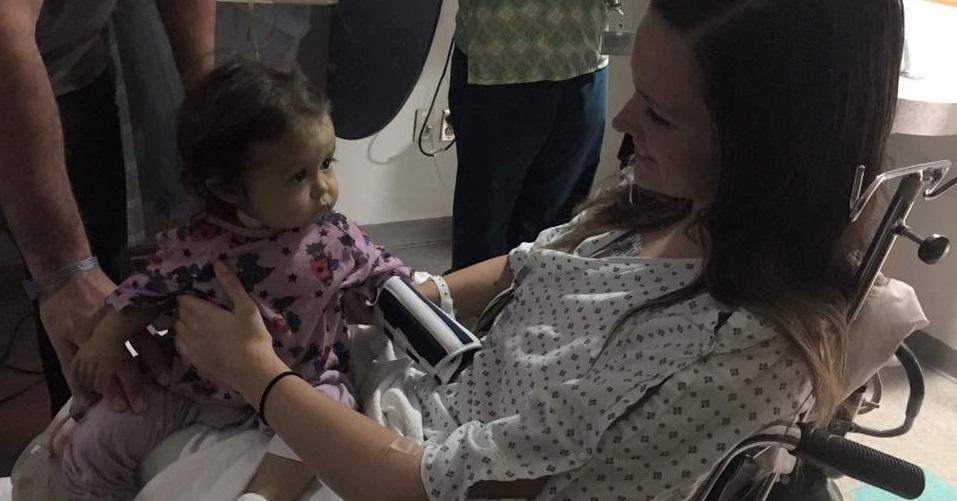
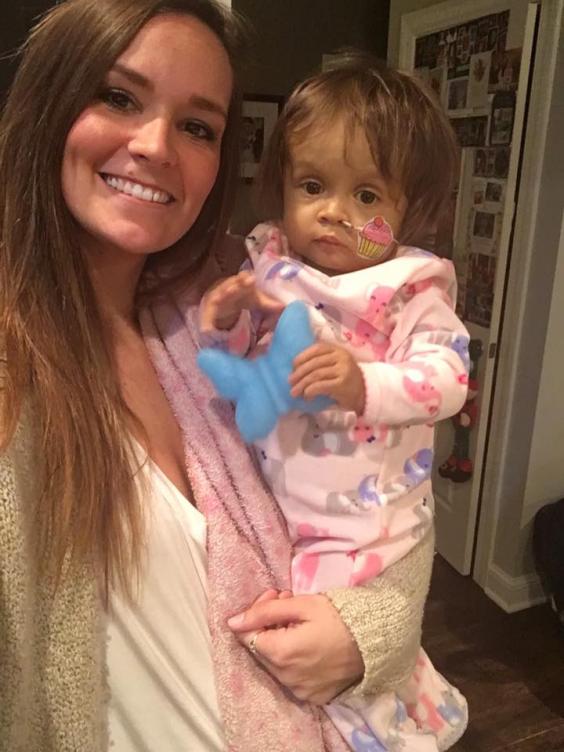
Kiersten Miles pictured with baby Talia after their operations Facebook


Kiersten Miles first met the Rosko family last June after a mutual friend recommended her to look after their 16-month-old daughter Talia.


They told her the baby was suffering with Bilary Atresia - a life threatening condition which causes the liver's ducts to become backed up with bile, destroying cells and the liver itself. 


As a result the little girl required a liver transplant and the 22-year-old college student immediately volunteered to see if her organ matched.


“It's such a small sacrifice when you compare it to saving a life," the college student from New Jersey told the US broadcaster WTXF. "Some of her doctors said she possibly wouldn’t have made it past two-years-old." 


She added: "All I had to do was be in the hospital for a week and a 5-inch scar. I don’t know, it just seemed like such a small sacrifice to me." 


15977778-10154822926184799-2161721858674433509-n.jpg
Kiersten Miles pictured with baby Talia before their operations (Facebook)
After discovering she was a match, Ms Miles immediately volunteered to donate a part of her liver, undergoing a major surgery that would last for five hours. 


But Talia's parents, George and Farra initially questioned her decision.


Ms Rosko said: "I'm like: 'Kiersten, this is a serious surgery. You have to talk to your parents. It's not like donating blood."


Ms Miles told her that she had already discussed the donation with her mother and they had agreed it was the right thing, she added.


After six-months of tests, Ms Miles was operated on at the Hospital of the University of Pennsylvania.


Part of her liver was removed and then transported to Talia who was operated on at the Children's Hospital of Philadelphia.
Both operations were successful and both Talia and Ms Miles are said to be recovering well.


She will never be able to donate again, even if she decides to have children of her own in the future and they require a similar organ donation.  


“I can never donate again, so they had to tell me in the future so if I have a child in a similar situation or a different one and they need a liver even if I’m a 100 per cent match I can’t donate. You can only donate once,"she told Fox News.


She added that she had no regrets about her decision.


Talia "was 9 months old when I started watching her," she said. "She’s so helpless. She can’t tell anyone what’s wrong with her. She can’t spread the word and ask for help."


http://www.independent.co.uk/news/world/americas/nanny-kiersten-miles-donates-liver-baby-girl-talia-rosko-months-caring-a7559246.html